
METRO Magazine Logo
MenuMENU
SearchSEARCH

Chicago unveils proposed BRT lane configurations

Plans for the Central Loop East-West Transit Corridor include designated bus-priority lanes on two miles of streets The Loop BRT corridor will serve Union Station, Ogilvie Transportation Center, CTA subways and Navy Pier with more than 1,700 buses per day, making it one of the busiest bus routes in the nation. Expected to start service in 2014.

February 21, 2013
Chicago unveils proposed BRT lane configurations

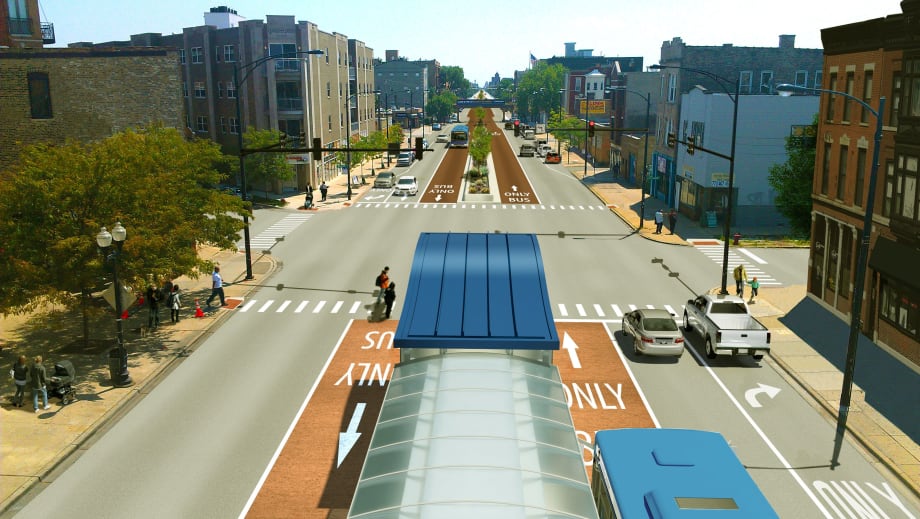
A rendering of the Western Ashland BRT. Photo courtesy Chicago Transit Authority.

3 min to read


A rendering of the Western Ashland BRT. Photo courtesy Chicago Transit Authority.

The Chicago Department of Transportation (CDOT) and the Chicago Transit Authority (CTA) unveiled the proposed lane configurations for the Loop streets to be used by the planned bus rapid transit (BRT) system that is scheduled to start service in 2014. Through careful planning and design, the lanes will provide a balanced separation of bus, bike and regular traffic lanes.

The agencies also unveiled renderings of the design for the new off-street transportation center just south of Union Station, which will provide key connections with other modes of transport to the BRT system.

BRT plans for the Central Loop East-West Transit Corridor include designated bus-priority lanes on two miles of streets: Madison, Washington, Canal and Clinton. The Loop BRT corridor will serve Union Station, Ogilvie Transportation Center, CTA subways and Navy Pier with more than 1,700 buses per day, making it one of the busiest bus routes in the nation.

BRT improvements designed to make bus travel more reliable and appealing to customers include: colored pavement markings and enhanced signage clearly delineating the bus lanes; level-boarding; queue jumps for buses at key intersections; distinct bus shelters; bus tracker digital displays; sidewalk improvements and protected bike lanes.

“By using a balanced approach to configuring the roadways for BRT, we will make cost-effective improvements without dramatically changing the current traffic setup,” said CDOT Commissioner Gabe Klein. “At the same time, we will provide transit connections to downtown businesses and major destinations more reliable, fast and easy.”

Under the proposed lanes configuration, eastbound Washington will feature a colored bus-only lane that will be serviced with island bus-boarding platforms. Two auto lanes will remain for traffic through the Loop. A bike lane against the southern curb would be protected from auto traffic by the bus lane and boarding platforms.

On westbound Madison, the bus-only and auto lanes would be similar to the current configuration with curbside bus-boarding platforms. The westbound protected bike lane would be relocated to Randolph Street.

“Washington and Madison are two of CTA’s most traveled bus corridors with buses arriving every two to three minutes,” said CTA President Forrest Claypool. “The new configuration will speed up six routes on these busy streets and 15 total routes throughout the entire Central Loop BRT corridor, providing more efficient service for those making east-west connections in the Loop.”

CDOT will construct and manage the Central Loop BRT project, which is being financed by a $24.6 million Federal Transit Administration grant and $7.3 million in local Tax Increment Financing funds.

CDOT is in the process of acquiring a surface parking lot located south of Jackson between Canal and Clinton to build the transportation center. It will provide sheltered staging areas for CTA buses and a vertical connection to an existing Amtrak underground passageway, allowing commuters to access Union Station without crossing at street level.

BRT improvements could improve overall bus travel times through the Central Loop corridor by three to nine minutes per trip. While buses are only 4% of the vehicles traveling through the corridor, they carry more than 47% of the commuters making trips in vehicles.
Topics:BRTBus

More Bus

paratransit bus
SponsoredMarch 16, 2026

Measuring the True Cost of Paratransit Fleets

What truly drives the cost of a paratransit fleet? Beyond the purchase price, seven operational factors quietly determine maintenance frequency, downtime, and long-term service reliability. This whitepaper explores how these factors shape lifecycle cost and what agencies should evaluate when selecting paratransit vehicles.

Read More →
Cover photo for METROspectives with The Bus Coalition
Busby Alex RomanMarch 13, 2026

Inside The Bus Coalition’s Push for Stronger Federal Transit Investment

In this conversation, TBC’s Executive Director Ed Redfern, President Corey Aldridge, and Washington Representative Joel Rubin outline the coalition’s key policy priorities, the challenges facing transit agencies, and how industry stakeholders can work together to strengthen the voice of bus transit at the federal level.

Read More →
Cover photo for Biz Briefs dated March 6, 2026
Technologyby Staff and News ReportsMarch 6, 2026

Biz Briefs: Tolar Manufacturing Supports PSTA Spark Service and More

Stay informed with these quick takes on the projects and companies driving progress across the transportation landscape.

Read More →
Ad Loading...
Passengers boarding a PRT bus
Busby StaffMarch 2, 2026

Pittsburgh Unveils 'Bus Line Refresh' Plan

Originally introduced in 2023 as the Bus Line Redesign, the effort has evolved into a more targeted update that maintains familiar routes while improving reliability, frequency, evening and weekend service, and connections across Allegheny County.

Read More →
Stickers and a paper bus for S3 bus line
Busby StaffMarch 2, 2026

Seattle's Sound Transit Breaks Ground on S3 Bus Line

S3 will connect communities along SR 522 with fast, reliable, battery-electric bus service from Shoreline South Station to Bothell via Kenmore and Lake Forest Park. 

Read More →
PRT bus stop with articulated bus.
Busby StaffFebruary 20, 2026

Pittsburgh Regional Transit Announces All-Door Boarding on the University Line

All-door boarding will allow passengers to pay while entering the front, middle, or rear doors of the University Line’s 60-foot articulated buses.

Read More →
Ad Loading...
Patrick Scully, president at Complete Coach Works.
Managementby StaffFebruary 18, 2026

Complete Coach Works Names Patrick Scully President

He succeeds the company founder, Dale Carson, who remains chairman of the board. 

Read More →
A MARTA articulated bus.
Busby StaffFebruary 13, 2026

Atlanta's MARTA Sets Date for 'A-Line' BRT Launch

The five-mile Rapid A-Line connects Downtown Atlanta to Capitol Gateway, Summerhill, Peoplestown, and the Beltline’s Southside Trail.

Read More →
A Picture of Ster Seating's Parent/Child transit seating product.
Technologyby StaffFebruary 10, 2026

Ster Seating, Maryland Transit Launch First Parent/Child Transit Seat in North America

The configuration uses Ster Seating's Gemini seat platform to create a family-friendly floor layout specifically engineered to accommodate parents traveling with young children.

Read More →
Ad Loading...
Rendering of Sound Transit's Renton Transit Center
Busby StaffFebruary 5, 2026

Seattle’s Sound Transit Breaks Ground on New Transit Center

The Renton Transit Center project will relocate and rebuild the Renton Transit Center to better serve the regional Stride S1 line, local King County Metro services, and the future RapidRide I Line.

Read More →