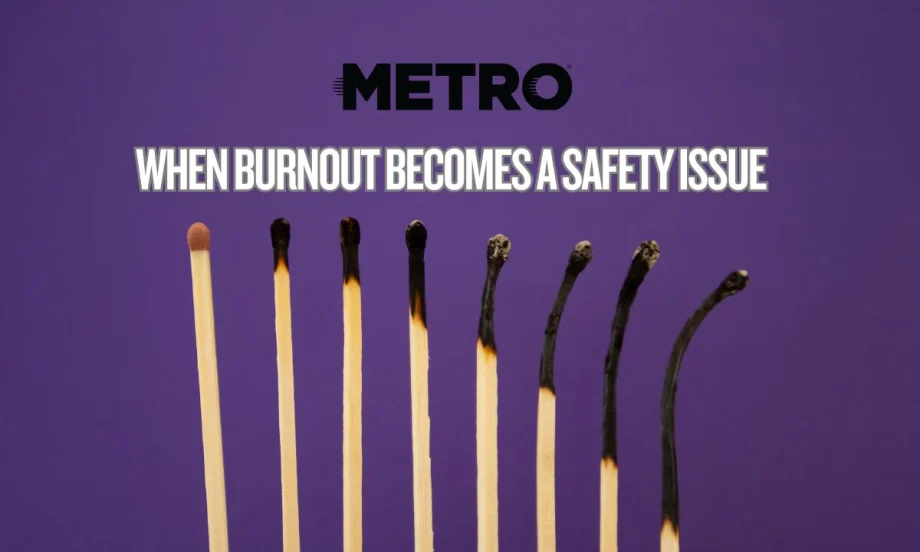
Operator fatigue, stress, and unresolved trauma are increasingly recognized as critical factors influencing safety and performance.
Credit:
METRO
7 min to read
Stress, unresolved trauma, and chronic burnout can significantly impair operator performance, increasing the likelihood of accidents.
Addressing these issues involves recognizing their impact and implementing strategies for mental health support and recovery.
Agencies can enhance operator safety and well-being by providing resources and frameworks that mitigate stress and burnout.
*Summarized by AI
It’s every agency leader’s nightmare. A bus operator falls asleep at the wheel, causing a fatality. The investigation reveals that the operator remained within duty-hour limits and had ample hours between shifts. The drug screen is negative. A medical report shows he was cleared for sleep apnea the previous year, and he testifies he slept 6.5 hours the night before. So what led to the accident?
It could be a biological condition. The operator may have severe burnout or PTSD, resulting in abnormally low cortisol production.
Ad Loading...
Cortisol is a hormone that helps regulate blood sugar, blood pressure, and inflammation, and supports the sleep-wake cycle. It’s also a vital steroid hormone that floods the body when the brain’s threat alarm detects danger to one's safety. In addition to other hormones, cortisol prepares a person to fight harder and run faster to survive an immediate threat.
When potentially traumatic events occur, and a person is unable to shake off the survival hormones, their body’s threat alarm may remain stuck on high alert, continuing to release these chemicals even after the threat is over, causing hyperarousal, agitation, and anxiety.
Conversely, traumatic events that dysregulate a person’s nervous system may ultimately signal their body to produce less cortisol over time rather than more. That’s when staying awake and alert becomes more difficult.
Severe Burnout Can Produce the Same Results as Trauma
Even if a person has no history of trauma, long-term workplace stress without periods of rest keeps these survival hormones on speed dial, eventually exhausting the adrenal system.
According to the World Health Organization, burnout is a syndrome resulting from workplace stress that is not successfully managed. Three dimensions characterize it:
Feelings of energy depletion or exhaustion.
Increased mental distance from one’s job, or deep cynicism related to one's job.
Reduced professional efficacy.
A 2025 study by Moodle, reported in Forbes, suggests that burnout among American workers is at an all-time high of 66%. However, not all American workers experiencing burnout will have lower cortisol levels. Feeling cynical and ineffective about one’s job probably won’t lower cortisol production, but once a person feels extreme emotional and physical exhaustion, lowered cortisol production may be at play.
A 2015 study by the Institute of Stress Medicine in Sweden found that patients with the most severe burnout symptoms tended to have smaller adrenocorticotropic hormone (ACTH) responses, the hormone that stimulates cortisol release.
Most people’s cortisol levels peak in the morning after waking, with alertness and analytical skills sharpest between 9 a.m. and 11 a.m. Usually, there is a post-lunch dip in energy and alertness between 2 p.m. and 4 p.m. That’s why our cognitive skills are sharper in the early parts of the day, rather than later.
But if the body downregulates cortisol production during the morning hours due to psychosocial stress, an individual is likely to experience drowsiness, muscle weakness, and low blood pressure, potentially leading to disastrous consequences in industries where focus is essential.
In the transportation industry, where employees experience cascading stress without breaks, have little control over their schedules, and spend hours behind the wheel or in a control center without adequate time to clear stress hormones, the risk of severe burnout and reduced cortisol production is higher.
The Special Needs of Evening and Night Shift Workers
Cortisol production becomes even more complicated for individuals working the night shift.
Research on second- and third-shift employees shows lower serum cortisol levels upon waking after a daytime sleep than their first-shift worker counterparts have when they wake in the morning. Although cortisol levels rise when second- and third-shift workers first wake, the increase is significantly blunted compared with those on the first shift.
During the night, cortisol levels may initially rise to unhealthy levels in this population, particularly when the shift has high absenteeism and limited security backup. To make matters worse, night shift workers’ circadian rhythms are disrupted because they don’t experience sunlight. Night-shift workers are typically isolated from family and supportive communities, increasing their susceptibility to severe burnout.
How Do You Determine if Low Cortisol is the Culprit?
Blood tests are the primary method for evaluating cortisol levels, with tests typically measuring the hormone produced by the adrenal glands. To get an accurate picture, blood tests are taken in the morning and afternoon to assess the natural daily cycle of biological activity. Cortisol levels can also be measured by saliva or urine testing.
When physicians order routine blood work, they do not automatically check cortisol levels. A physician will order a specific hormone test only if a patient reports symptoms and presents with physical signs suggestive of adrenal or pituitary gland dysfunction.
Agencies are taking a closer look at how burnout and mental health impact operator safety behind the wheel.
Credit:
Michael Dantzler
Education as a First Step in Diagnosis
The transit industry has been conducting fatigue education campaigns for more than 40 years. However, it hasn’t linked fatigue to burnout or reduced cortisol levels.
Education campaigns targeting frontline employees about the biological consequences of severe burnout are key to addressing this safety hazard. If employees are aware of the symptoms, they are more likely to discuss their concerns with their physician.
One of the biggest challenges to low cortisol production is recognizing it in oneself. That’s why it is just as important to educate safety managers, shop and street supervisors, dispatchers, and medical personnel on the specific behavioral and physical indicators. These signs include dizziness upon standing, fatigue, difficulty understanding directions, and a sense of being foggy and out of touch with the present surroundings.
Burnout Prevention is the Best Course of Action
While managing burnout is an individual responsibility, workplace culture plays a vital role.
We know that an employee's experience directly affects employee engagement and workplace morale. If the culture is “suck it up and silently keep it moving,” employees will eventually grow fatigued by the stress. Leaders can communicate their commitment to employees’ well-being by implementing three actionable strategies to rebuild a culture of resilience.
Prioritize Psychological Safety
Supportive relationships are a key driver in maintaining mental and physical health. Feeling marginalized at work increases the risk of toxic thinking about leadership’s motives. It is natural to become cynical about the work environment when an employee feels they have no outlet to express their perspective. This is especially true if employees fear retaliation for raising their concerns.
A psychologically safe workplace is one where employees feel comfortable sharing ideas, occasionally disagreeing with management, and self-reporting mistakes.
To shift the culture, establish a psychological safety committee with representation from frontline staff, middle management, human resources, and medical personnel. Empower it to conduct listening projects and enact strategies to reset and repair workplace relationships. Explicitly promote the psychological safety committee as an empowered body to address and overcome a culture of fear and silence.
Develop a Robust Peer Support Network
When supervised by a behavioral health professional, establishing a peer support network can be as valuable as providing access to an employee assistance program with professional therapists.
In an industry where employees often fear that a therapist may not fully grasp the unique difficulties faced by transit workers or might unfairly judge their choices, connecting with a peer who has shared similar experiences can serve as a vital link toward eventually seeking professional therapeutic help for complex mental health challenges.
The key ingredients to a successful peer support program include:
A seasoned behavioral health professional to identify, recruit, and train peer support team members.
An administrative employee to assist the behavioral health professional in operations.
Ongoing training and supervision to ensure accountability to the principles and limits of a peer support program.
A confidential referral system.
Independent evaluation of the program’s effectiveness.
Understanding the human factors behind operator accidents is becoming a key focus for transit safety leaders.
Credit:
METRO
Include Psychological First Aid Training in your Critical Incident Management Plan
Managers and supervisors oversee, coach, and discipline their frontline. They’re also first on the scene of major accidents, assaults, and other critical incidents. Preparing supervisors and managers with Psychological First Aid training equips them with skills that most leadership training does not typically cover.
However, Psychological First Aid training is vital to maintain an organized response to natural disasters, fatal accidents, and other overwhelming events. Psychological First Aid is not professional counseling, but a humane, empathetic response to an individual who has experienced a traumatic event. It focuses on safety, stabilization, and connecting people with resources. When employees who experience a traumatic incident are met with an empathetic leader who helps them through the event, they are more likely to return to work sooner and less likely to experience long-term traumatic effects.
The Business Case for Implementing Preventive Burnout Strategies
While dedicating resources to preventive strategies requires an upfront budget commitment, the financial burden of operator accidents far exceeds this initial investment.
According to Risk and Insurance Magazine, public transit accidents cost the industry billions of dollars annually. As of late 2025, liability costs for transit authorities were climbing at an annual rate of 9%. Claim frequency is increasing by 4% per year, and the average cost per claim is rising by 5%. In 2024, the projected average liability claim severity for transit authorities was expected to hit $21,571.
Crucially, this figure does not account for the hidden costs of burnout, such as mental health expenses, absenteeism, "quiet quitting," and high employee turnover. Therefore, building a human-centered, resilient work culture is necessary and fiscally sound, representing the path the industry must take for long-term growth and sustainability.
Quick Answers
Stress can impair cognitive function, decision-making, and reaction times, leading to increased risk of accidents and errors in operation.
Unresolved trauma can lead to symptoms like anxiety and distraction, which may reduce an operator's focus and ability to perform their duties safely.
Chronic burnout can lead to fatigue, disengagement, and decreased vigilance, all of which can increase the likelihood of mistakes and accidents occurring.
Agencies can implement regular stress management and mental health support programs, facilitate access to counseling services, and encourage work-life balance to enhance operator well-being.
Proactively addressing stress, trauma, and burnout can reduce accident rates, improve operator efficiency and job satisfaction, and ultimately lead to a safer work environment.
The Delaware River Port Authority and PATCO have transformed their internship program into a hands-on professional development experience that introduces students to the breadth of transportation careers — and creates a pipeline for future employees.
Once viewed primarily as transit operators, agencies are now leveraging land, partnerships, and long-term planning to boost ridership, expand housing, and strengthen communities.
An Urban Institute evaluation found that a fare-free transit program increased ridership, reduced transportation barriers, and improved access to jobs, healthcare, and other essential services.
Advances in data and analytics are giving transit agencies new opportunities to refine maintenance practices, improve efficiency and make more informed decisions about asset performance.
Mentorship programs at VTA and King County Metro are transforming the experience of new bus operators — boosting retention, improving safety, and strengthening connections among frontline workers, unions, and management.
With more operators nearing retirement and investor interest on the rise, now is the time to plan your exit strategy. Here’s how to prepare your business for a successful sale that avoids leaving money on the table.