



OCTA accelerates transportation project construction
Measure M, which is helping to fund the projects, is expected to help Orange County make more than $13 billion worth of transportation improvements by 2041.

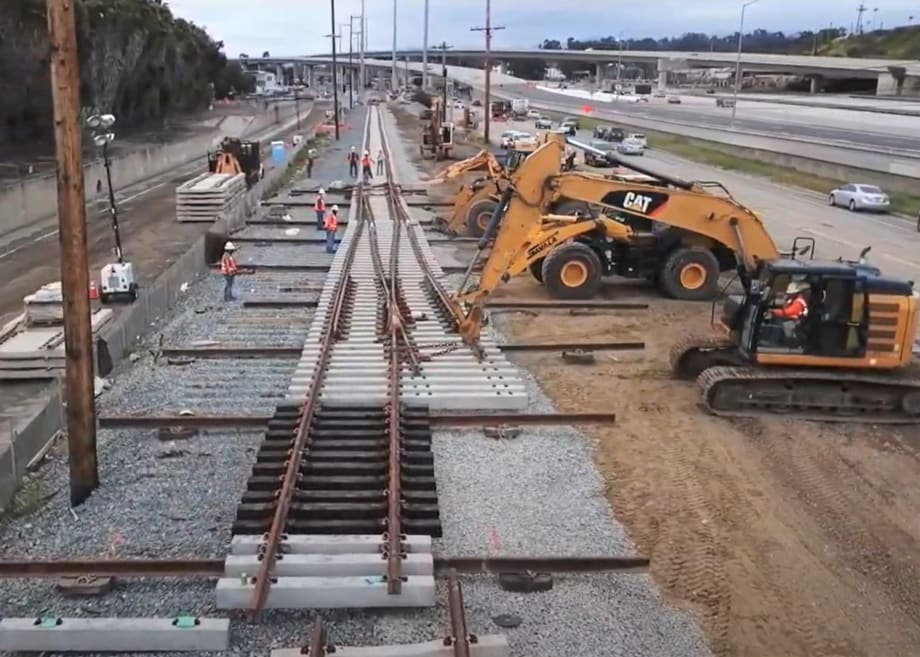
Work crews construct part of the Laguna Niguel to San Juan Capistrano Passing Siding Improvement Project, expected to be complete in mid-2021.
Photo courtesy of Reyes Construction.
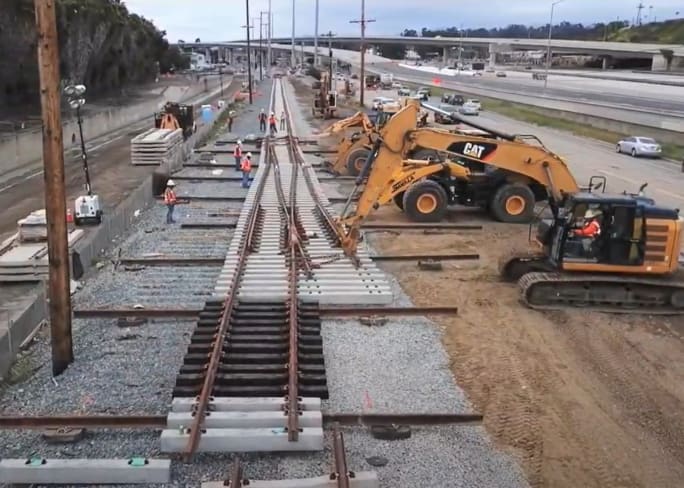
Work crews construct part of the Laguna Niguel to San Juan Capistrano Passing Siding Improvement Project, expected to be complete in mid-2021. Photo courtesy of Reyes Construction.
Even as millions of California residents follow state orders to stay home to help stop the spread of COVID-19, work continues at a rapid pace on transportation improvement projects across Orange County — work the state has deemed as essential.
That includes accelerated construction on several major projects led by the Orange County Transportation Authority (OCTA), including the $1.9 billion I-405 Improvement Project on 16 miles between Costa Mesa and the border with Los Angeles County, the 4.1-mile OC Streetcar in Santa Ana and Garden Grove, and improvements along Interstate 5 in south and central Orange County.
Construction crews are working under direction from OCTA and Caltrans to take advantage of decreased freeway traffic volumes when possible to close lanes during the day so more work can be completed. On the I-405 project, estimates are that extended closures will provide more than 4,800 additional work hours from mid-March to mid-May.
Construction is also in full swing on a new passing siding railroad track in Laguna Niguel and San Juan Capistrano. The project, led by OCTA and being built by Reyes Construction, began in spring 2019 and is expected to be complete by early 2021.
Crews used a recent weekend work window with no train traffic through the area to relocate and move new rail into place.
Measure M is Orange County’s half-cent sales tax for transportation improvements. Also known as OC Go, it was renewed by nearly 70% of voters in 2006 and is expected to help Orange County make more than $13 billion worth of transportation improvements by 2041, including to freeways, streets, bus, and rail transit.
With the passing siding rail project, OCTA is working in coordination with Metrolink and the cities of Laguna Niguel and San Juan Capistrano to add 1.8 miles of new railroad track between the Laguna Niguel/Mission Viejo Metrolink Station and Trabuco Creek in San Juan Capistrano. The project runs next to the I-5 freeway.
The passing siding track is being constructed adjacent to the existing track, connecting to it at each end, allowing trains traveling in opposite directions to pass each other without stopping. The improvements will reduce delays, increase safety and provide more reliable rail service for the region.
The health and safety of the public and its employees is the top priority for OCTA, which continues to take guidance from local, state and federal officials and health experts as it moves forward with all its projects and programs.
More Management

METRO Opens Submissions for 2026 Motorcoach Awards
Nominations are now being accepted for METRO Magazine’s Operator of the Year and Innovative Operator of the Year awards.
Read More →
New York MTA Advances Final Contract for Second Avenue Subway Expansion
Contract Four is the largest in the Second Avenue Subway Phase 2 project and includes construction of station infrastructure, tracks, and signals for the subway expansion, MTA officials said. Work on Contract Four will begin in 2027.
Read More →
Transit Agencies Highlight Safety Gains at National Summit
Leaders from 15 major transit systems shared crime-reduction results and safety initiatives while discussing the role of continued federal support.
Read More →

NITA Names New Leadership, Expands Reduced-Fare Program at First Board Meeting
The new regional transit authority appointed its first board chair and interim executive director while extending reduced fares across CTA, Metra, and Pace for eligible riders.
Read More →
Beyond the Checklist: A Structured Approach to Transit Maintenance
Reliability-Centered Maintenance helps transit agencies move beyond routine checklists to focus limited resources on the assets and failures that have the greatest impact on safety, reliability, and service.
Read More →
APTA 2026 Nominating Committee Selects Leadership Slate, Names Chair and Vice Chair Nominees
Leadership changes will help shape the association’s priorities and its representation of the transportation industry during the 2026–2027 term.
Read More →
DART Launches Major Security, Fare Enforcement Initiative
The 90-day demonstration will deploy coordinated security teams at five light rail stations while testing controlled access and gathering data to guide future investments.
Read More →
Advancing Fare Collection Through Technology and Innovation
Learn about delivering 1300 gates at 91 stations while managing fare evasion. Explore the large scale deployment, solution customization and real-world results that affect the region. Prepare for deployment in your region now.
Read More →
Game Day in Motion: Moving Millions During the 2026 World Cup
Between packed transit stations and team motorcoaches, see how agencies and operators across North America tackled the transportation demands of the 2026 FIFA World Cup.
Read More →
Surface Transportation Extension Averts Shutdown, Leaves Transit Funding Gap
The stopgap keeps federal transportation programs moving, but missing advance funding could complicate the transit and rail projects agencies are planning next.
Read More →