



Chicago Transit Authority Honored for Leadership, Innovation
METRO caught up with the winner of its 2020 Innovative Solutions Award to discover a bit more about what truly sets them apart.
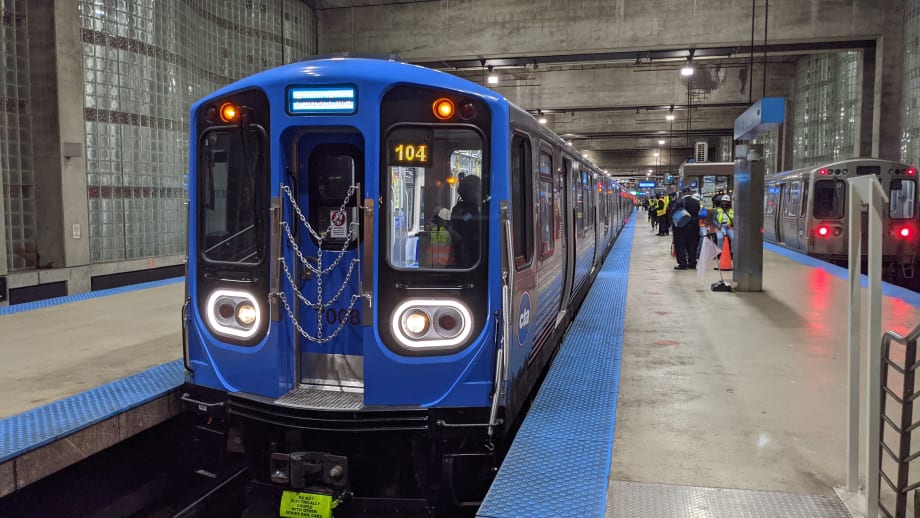
The 7000-series, manufactured by CRRC Sifang America, are the first new CTA railcars in a decade, following the introduction of the 5000-series cars in 2011.
CTA
When The Chicago Transit Authority (CTA) received the Outstanding Public Transportation System Award and the Outstanding Public Transportation Manager Award from the American Public Transportation Association (APTA) in July of 2021. According to a press release, the award recognizes the CTA’s modernization and efforts in 2020 to provide service during the COVID-19 pandemic.
The manager award recognizes the leadership and career accomplishments of CTA President Dorval R. Carter, Jr., a 30 -year transit veteran who guided the CTA through unprecedented circumstances, and ensured the CTA was the only major U.S. transit agency to keep its full-service schedule throughout the pandemic.
METRO caught up with the winner of its 2020 Innovative Solutions Award to discover a bit more about what truly sets them apart.
Productivity During a Pandemic
When asked how the authority was able to continue with projects during the pandemic, its communications team stated it took an aggressive, proactive approach to improve its travel experience for its customers.
With plans for station modernizations, an ambitious Red Purple Modernization Project (see more below), Your New Blue track upgrades, and an ongoing All Stations Accessibility Plan (ASAP) to make all rail stations accessible within the next 20 years, it’s clear the CTA did not let the pandemic slow its mission or progress. Many of these plans and strategies were in place before the pandemic occurred, so the CTA’s ability to diligently manage opportunities with reduced ridership allowed it to further advance certain aspects of these programs.
“Perhaps Chicago Mayor Lori Lightfoot said it best when talking about the CTA during the pandemic: ‘Even while under immense pressure, President Carter and the CTA have showed up for our residents time and time again — all while leading an unprecedented mission to modernize our stations, vehicles, and technologies. I am beyond excited to see what they accomplish next,” the CTA Communications shared in an email response.
Rehabbing Rail Stations
There are 145 rail stations across the CTA rail system. Since 2015, plans have been announced, begun, or completed to modernize, reconstruct, or build more than 20 rail stations under Carter.
The CTA is currently rebuilding 100-year-old track structures and four stations on the Red Line, its busiest rail line, as part of the $2.1 billion Red and Purple Modernization (RPM) Phase One project. RPM is the CTA’s largest transit investment in agency history and will bring customers modern, fully accessible stations and new tracks that provide a smoother, more reliable ride. The project also includes the construction of a new rail bypass that will provide more frequent service with fewer delays. The project is currently under construction and will be fully completed in 2025.
In addition to comprehensive capital improvement projects such as RPM, this year, the CTA has also expanded and accelerated its Refresh & Renew program to improve rail stations, as part of its “When You’re Ready, We’re Ready” campaign to help welcome back new and returning transit riders. In all, more than 125 rail stations will receive improvements in 2021.
“The scope of work being performed will vary by location, but can include lighting upgrades, improved platform amenities, renewal of station finishes and fixtures, utility and plumbing line repairs, removal of outdated fixtures and equipment, updating of old/damaged signage, and more. All stations included in the program will receive a deep cleaning power wash and a fresh coat of paint,” according to CTA Communications.
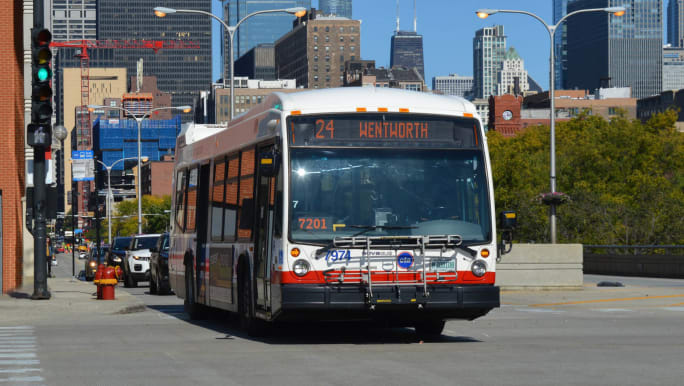
Even during a pandemic, the CTA never stopped moving forward with their plans to improve the transportation experience for its riders.
Nova Bus
Going Green
In early 2021, the CTA began in-service testing of six prototype all-electric buses. Upon completion of successful in-service testing of the new buses, the CTA will authorize the production of an additional 17 electric buses from Proterra – marking an important step in the CTA’s commitment to transition to an all-electric bus fleet by 2040.
As part of this purchase, five new quick-charging stations were installed at multiple locations along the test route. These overhead, cantilever-type chargers allow buses to “reload” while on route, allowing the vehicles to return to service quickly. These electric buses can run between 75 and 120 miles on a single charge.
The new electric buses will offer significant savings in fuel and maintenance costs for the CTA, as well as lower emissions that improve air quality. For customers, the buses will provide a smoother, quieter ride – producing noise levels equivalent to a human conversation – as well as new overhead passenger information screens to show real-time travel information and other service information.
Improvements in Railcar Tech
In April 2021, the CTA began in-service testing of its next-generation railcars called the 7000-series. These railcars provide customers with a smoother ride and several new amenities, making them one of the most modern railcars in the U.S. The 7000-series, manufactured by CRRC Sifang America, are the first new CTA railcars in a decade, following the introduction of the 5000-series cars in 2011.
There are several features that distinguish the 7000-series from the rest of the CTA rail fleet including bold blue end caps; a new layout of headlights and taillights; a redesigned interior featuring a new seating configuration that includes a mix of forward-facing and aisle-facing seats; LED lighting; plentiful grab bars and straps; and improved suspension for a smoother ride.
Award-Winning Leadership
In the nearly 40 years APTA has been giving out awards, this was the first time one agency won both of its top honors, Outstanding Public Transportation System and Outstanding Public Transportation Manager, in the same year. It also marks the first time CTA has earned either top award.
“It’s gratifying to know that among a field of many excellent, large transit agencies, an APTA jury of our peers determined CTA to be the best of the best. This award is highly reflective of the hard work and professionalism of CTA’s nearly 11,000 employees. It's also quite humbling that APTA also recognized President Carter with his award. During his 30+-year career, especially at CTA, his focus has never been about individual accolades, but rather building a team to implement a strong vision for the future and confront challenges head-on — and staying focused on our customers — first and foremost,” CTA Communications wrote.
More Management

LIT Marks 10-Year Milestone at Annual Summit
Hosted by the COTA from September 10 to 13, the Summit carried the theme “Celebrating 10 Years of Excellence, Leadership, and Impact,” with every part of the program honoring the people, agencies, and partners who built LIT over its first decade.
Read More →
People Movement: Dan Dipert Coaches Adds Third-Generation Leader, Keolis Names New Valley Metro VP/GM, and More
In this edition, we also cover recent appointments and announcements at the Wabtec, SilverRide, HNTB, and more, showcasing the individuals helping to shape the future of transportation.
Read More →
METRO Opens Submissions for 2026 Motorcoach Awards
Nominations are now being accepted for METRO Magazine’s Operator of the Year and Innovative Operator of the Year awards.
Read More →

New York MTA Advances Final Contract for Second Avenue Subway Expansion
Contract Four is the largest in the Second Avenue Subway Phase 2 project and includes construction of station infrastructure, tracks, and signals for the subway expansion, MTA officials said. Work on Contract Four will begin in 2027.
Read More →
Transit Agencies Highlight Safety Gains at National Summit
Leaders from 15 major transit systems shared crime-reduction results and safety initiatives while discussing the role of continued federal support.
Read More →
NITA Names New Leadership, Expands Reduced-Fare Program at First Board Meeting
The new regional transit authority appointed its first board chair and interim executive director while extending reduced fares across CTA, Metra, and Pace for eligible riders.
Read More →
Beyond the Checklist: A Structured Approach to Transit Maintenance
Reliability-Centered Maintenance helps transit agencies move beyond routine checklists to focus limited resources on the assets and failures that have the greatest impact on safety, reliability, and service.
Read More →
APTA 2026 Nominating Committee Selects Leadership Slate, Names Chair and Vice Chair Nominees
Leadership changes will help shape the association’s priorities and its representation of the transportation industry during the 2026–2027 term.
Read More →
DART Launches Major Security, Fare Enforcement Initiative
The 90-day demonstration will deploy coordinated security teams at five light rail stations while testing controlled access and gathering data to guide future investments.
Read More →
Advancing Fare Collection Through Technology and Innovation
Learn about delivering 1300 gates at 91 stations while managing fare evasion. Explore the large scale deployment, solution customization and real-world results that affect the region. Prepare for deployment in your region now.
Read More →