



Marcia Ferranto: Moving WTS Forward by Focusing on Membership
As President/CEO of the Women's Transportation Seminar, Ferranto is bringing her passion for working with nonprofits and skillful fundraising abilities to grow the organization for the future.
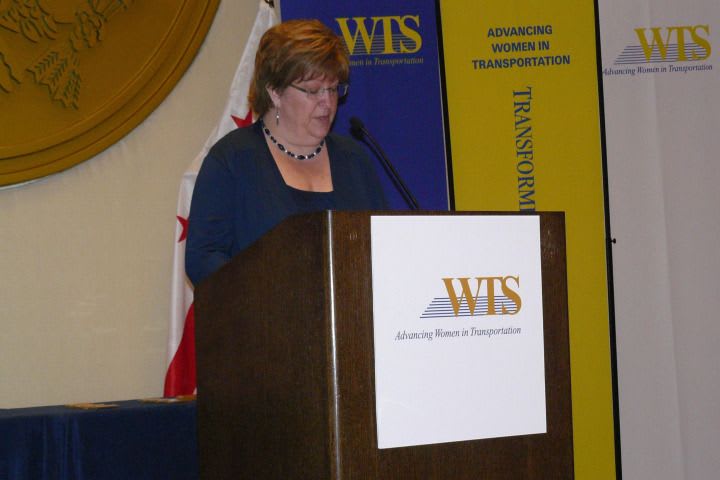
[IMAGE]MET9dialogue-mferranto-square-2.jpg[/IMAGE]Marcia Ferranto wants to make one thing clear: the "transportation" in Women's Transportation Seminar (WTS) goes beyond rail. "It's about all types of transportation," she says, adding that it includes aviation, aerospace, maritime and transit. Ferranto, president/CEO of WTS International, who took over the post in February, was born in Kansas City, Mo., and grew up in Wyomissing, Pa. After receiving her bachelor's degree in accounting, she started her own payroll business, which ultimately served customers in 26 states.
After she sold the business, Ferranto realized she wanted to "wake up for more than the bottom line" and get involved with an organization that is making a difference in the world. This led her to work for nonprofits including the Delaware Art Museum, which went from having a $2.5 million operating budget to a $4.5 million operating budget under her tenure as CFO. Ferranto most recently served as the executive director of the Kalmar Nyckel Foundation in Delaware, where she built and balanced its annual operating budget by developing a successful program of pursuing new funding, grants and donations.
Despite still being new to the industry and her position, the WTS has already achieved a major milestone with the signing of an agreement with U.S. Transportation Secretary Ray LaHood to help bolster the role of women in the transportation industry. To help counter an anticipated shortage of skilled transportation workers, the agreement was signed to encourage women to complete undergraduate and graduate degrees in science, technology, engineering and math (STEM) — while pursuing careers in transportation. The signing took place in May at WTS' Annual Conference in Washington, D.C.
Secretary LaHood said the need for environmental engineers and technicians is expected to rise by 30 percent over the next decade. The Department of Labor reported, in 2008, that less than 6 percent of employed women worked in transportation and only 10 percent of all civil engineers in the U.S. are women.
Utilizing its network of 45 chapters and more than 4,000 transportation professionals, WTS will work with the U.S. Department of Transportation (U.S. DOT) to organize a series of outreach sessions in 2010 and 2011 throughout the U.S. Sessions will focus on workforce development as it relates to STEM, with specific attention given to attracting and retaining a highly qualified, diverse and technically advanced workforce for the future.
[IMAGE]MET9dialogue-ferranto-2.jpg[/IMAGE]
METRO Magazine Executive Editor Janna Starcic spoke with Ferranto about that momentous occasion back in May as well as what her vision is for the women's organization going forward.
METRO: Tell me how you came to head up the WTS?
Ferranto: When I took the interview, I still had to be sold on 'Is there really a need to advance women in transportation?' Remember, I'm coming from the museum industry, which has a lot of women — I'm thinking how many women do they really need? When I walked out of the interview, I had a vision in my soul that said 'I want to work for this organization. They are doing some incredible things.' The rest is history.
Did you feel you needed to have a transportation background?
I think I was the only person being interviewed that did not have a transportation background. Luckily I surround myself with 4,000 members who do. But what they were focused on, and I have to say I think it was the right thing, was that they don't need a transportation professional — they need someone who knows how to grow an organization; knows how to work a nonprofit; knows how to make a strategic plan; knows how to work with a board and knows how to move an organization forward. They didn't need someone who understood policy, they needed someone who understood associations of nonprofits and how to build a membership, and most transportation people don't know how to build membership.
I think it was an 'a ha!' moment for them. They came back and said, 'it's our duty as a board of directors to build an association, and we need a professional to come in and do that.'
Where does the name come from?
It's called Women's Transportation Seminar because it was formed in 1977 when women were not allowed to leave work unless they were going to a seminar. Here, they were forming this networking group, to advance women and support women, but if their companies had heard about that, it would have been 'No, we won't support it, we won't pay for it, nothing.' But if they were going to a seminar, that was a different thing — hence the word seminar in the name. It's a great story and it should never be lost, it's important. It's where women were in 1977, and we should be mindful of that, but that's not the name that is going to take us forward beyond 2010.
I understand that the story is important and we do not want to lose the history, but I do think that WTS is in great need of a re-branding. As soon as you have to explain [the name] to somebody, you've lost the meaning. How do you join a group when you don't even know what it means? That's part of my vision for the future.
How will the WTS vision impact the transportation industry?
For us as an association, to impact the transportation industry, which we hope we will, we will do that through numbers. Our membership needs to grow from 4,000 to 10 times that. Should we have an impact on transportation? Absolutely! How does an association have an impact on their industry? By growing their membership.
From what I understand, there has not been a lot of effort in membership in the past. We've hired someone — her title is membership and chapter relations manager — her job specifically will be to increase membership. We are, for the first time, holding an additional membership drive in November. And we are reaching out to current members, past members, and potential members throughout the entire country through our chapters.
what was one of the first tasks you took on?
When I first started in February, I went on a 90-day listening tour and I went to visit 10 chapters and a half a dozen corporate sponsors, and all I did was listen for 90 days. That experience was very valuable. If I was ever to stand in front of a group of upcoming CEOs, I would strongly recommend that they do the same tour.
[PAGEBREAK]What are your key responsibilities?
I'm focusing right now on increasing membership and to give you two examples of that, we are looking to expand our membership segment that represents executives. To do that, I am looking to add value for the executives of our industry. I have to have value in the association for those executives to want to be part of it. In addition to that, I'm going to go to the other end of the spectrum. I'd like to focus on each chapter becoming affiliated with a university. We will be focusing on young women getting exposed to the transportation industry, as well as executive leaders benefiting from being a member of the association. So, those would be my main concern, as a membership association, we would be focused on growing membership.
My second focus is on our annual conference. Again, this falls under membership. Our annual conference is definitely a membership benefit, and I need to deliver a high level package or product in May. We're focusing on improving our conference for next year, which happens to be in San Francisco.
What do you hope to accomplish in your role?
I think that to expand on my role as president/CEO, I need to add value, and every day I think about that. How are we going to add value to the association that will have direct impact on our membership? It can't be just because we say so. It can't be that your career will benefit from being a member of WTS. We can't just say it — it has to truly benefit. My focus is going to be on helping concentrate value for the association that members can draw on and it will be obvious that being part of WTS has helped them advance in their career.
What would you say is most challenging about your job?
With every association — this is not news — it's going to be funding, especially in today's market.
What do you find rewarding about your job?
I'll tell you, in my career I have never worked with more educated, outspoken, smart women. The women that are attracted to the transportation industry are just awesome. I walk out of meeting after meeting being absolutely blown away by the caliber of individuals that I come in contact with.
I come in after some meeting saying, 'if I enjoyed my job any more than I do, I'd have to pay you to be here,' because some of my experiences have been incredible and it's been the women that I've been meeting through the association.
Why is there a need for an association like this?
When I first started here, I went to an APTA conference. I went to meet people and to start listening to transportation lingo. When I walked into the conference room that held about 500 people, I gasped.
If there is a place that you should start to change the world, it would be the transportation industry. The women were so underrepresented. It was shocking. I mean, it's known, that today, women are an essential part of the labor force, and yet, they are so underrepresented in the transportation industry. Why? I don't know. I don't think it's intentional. I don't think anyone has said 'let's purposely not advance women.' But, they are just not [being represented].
Secretary LaHood came to visit us at our conference in Washington, D.C., in May. He said that environmental engineers and technicians are expected to grow over 30 percent in the next decade and, that in 2008, less than six of the employed women worked in transportation and less than 10 percent of all civil engineers were women. There's this big gap coming, and when you look forward and you look back there is a mismatch. That's where we're going to help. We're going to help advance women. We're going to help bring women to close this gap and start preparing them for the 21st century workforce.
Discuss the significance of the partnership with the U.S. DOT.
This is huge for the WTS. To have a partnership with the U.S. DOT, to have an MOC (Memorandum of Cooperation) that is actually signed by a cabinet secretary? That's huge. Our goal is to not only meet Secretary LaHood's MOC directives but to surpass his expectations. We are on a committee to start working out these outreach sessions. This gives us credibility as we approach all other DOTs across the country. When WTS International has an MOC with Secretary LaHood, that means something to our chapters, and it means something to our chapters when we approach their local DOTs.
What is the importance of being a leader for an organization that focuses on women's issues?
I think every issue is a woman's issue. All I have to say is, I didn't take this job because it was a women's organization, I took the job because there was a need, and actually advancing women would make an impact. And as with the Delaware Art Museum, the Kalmar-Nyckel Foundation, you know, it was waking up every morning, doing a job that was making a significant impact and a change matter. That's really what it is in it for me.
What skills do you bring from your past positions to help you with your current one?
My ability to raise money and my ability to think outside the box — I try to look at things differently. I think that is what has helped me get this reputation of being a change agent, because I do ask questions and I'm not afraid to make suggestions or think big.
How does the WTS cultivate leadership in the transportation industry?
By allowing its members to take on leadership roles. We have many high-functioning committees. If these members don't have accountability or responsibility in their jobs, they get it by being part of these committees. They are dedicated, they put in a ton of hours, and these women get exposure.
More Paratransit

Biz Briefs: RIPTA Unveils New Frontrunners, Clevland RTA Adds New Siemens, and More
In METRO's latest installment, we take a look at recent news from Siemens, Prevost, Dodge, and more partnerships making headlines across the transportation sector.
Read More →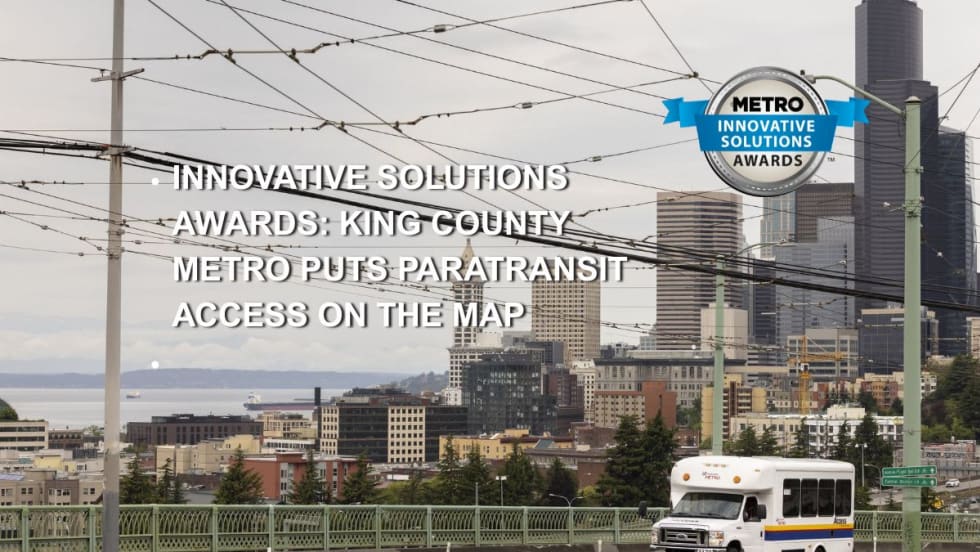
King County Metro Makes ADA Paratransit Easier to Navigate
METRO's Innovative Solutions Award winner replaces complex service-area descriptions with an accessible, interactive map that puts paratransit information directly in customers’ hands.
Read More →
Jacksonville’s NAVI Project Charts a New Course for Autonomous Public Transportation
Through its NAVI program, JTA is showing how autonomous vehicles, intelligent infrastructure, and coordinated operations can work together to deliver everyday public transportation.
Read More →
Driving Smarter Paratransit
John Hanlon shares how AlphaRoute is leveraging AI-powered technology to help paratransit providers optimize operations, support frontline staff, and enhance the rider experience.
Read More →
METRO Magazine Announces 2026 Innovative Solutions Awards Winners
Projects Recognized for Advancing Mobility Through Technology, Accessibility, Workforce Innovation, and Operational Excellence
Read More →
Biz Briefs: STV teams with Amtrak, Motorcoach Operators Boost Fleet and Land Contracts, and More
From manufacturers and suppliers to transit agencies and motorcoach operators, these updates offer a snapshot of the projects, partnerships and business moves driving the industry forward.
Read More →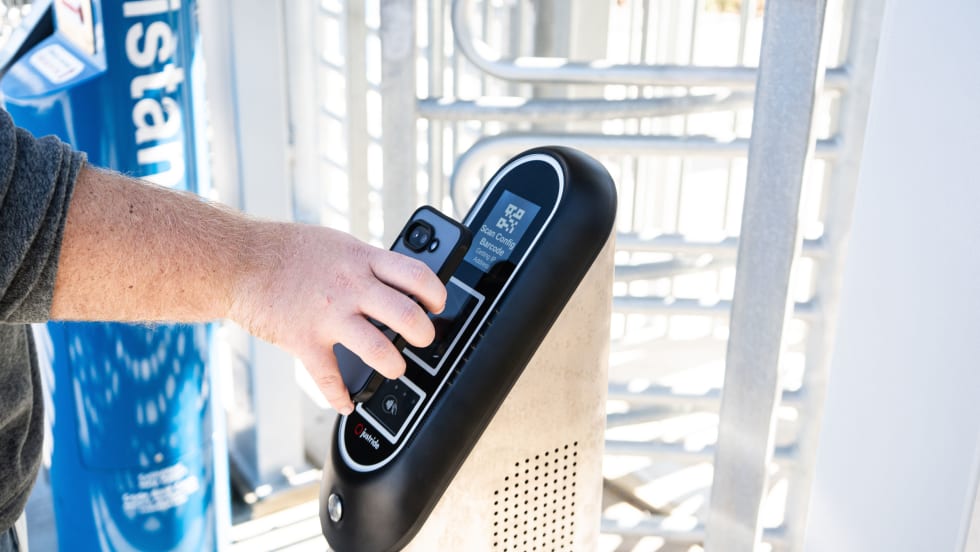
Biz Briefs: Masabi Teams with St. Louis Metro and More
In METRO's latest installment, we take a look at recent news from Transdev, Hitachi, and more partnerships making headlines across the transportation sector.
Read More →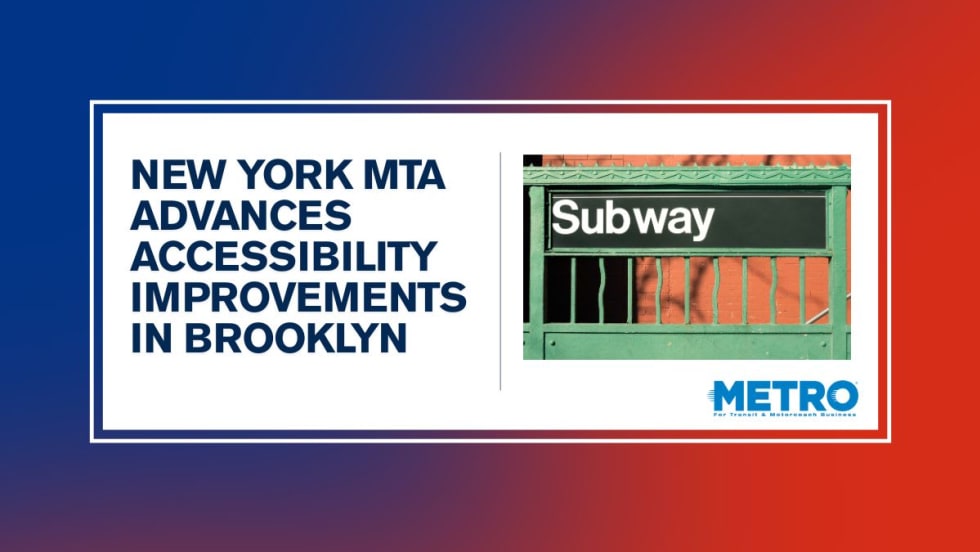
New York MTA Leverages Zoning Program to Advance Station Accessibility
Accessibility enhancements at Nevins St Station will be financed through a development agreement tied to the MTA's Zoning for Accessibility initiative.
Read More →
Reinventing Fleet Maintenance with Real-time Visibility and AI
Transit leaders need to know what needs fixing, where to look, who is responsible, when work is completed, and what it costs without having to chase information across disconnected systems.
Read More →
SamTrans Sets Priorities for Potential Connect Bay Area Revenue
The board-approved framework allocates future funding to maintaining service, rider improvements, equity initiatives, and infrastructure repairs.
Read More →