



2014 Women In Transportation: Veronique Hakim
Executive Director New Jersey Transit Newark, N.J.
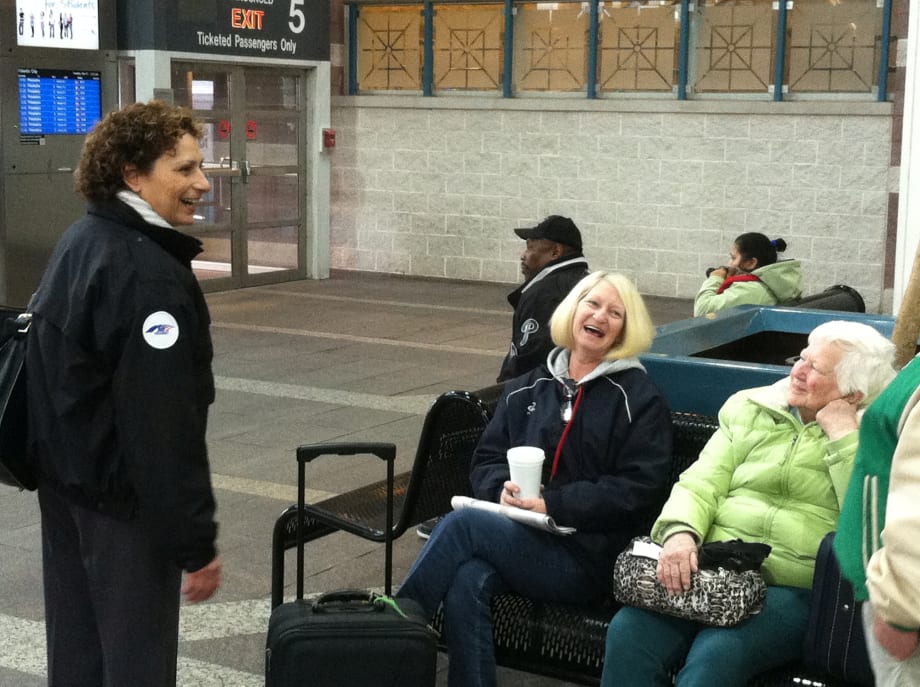
A key initiative at NJ TRANSIT for Hakim has been a focus on customer service at all levels as well as creating a sense of ownership for every employee at the agency.

A key initiative at NJ TRANSIT for Hakim has been a focus on customer service at all levels as well as creating a sense of ownership for every employee at the agency.
Like many in the public transportation industry, Veronique “Ronnie” Hakim didn’t have much of an inkling she would end up where she is now. In fact, the opportunity to work for the New York Metropolitan Transportation Authority’s (MTA) New York City Transit (NYCT) came about after working in Paris, graduating law school and embarking on a career as a lawyer in New York City.
“What ends up happening for, some of us, I think, is we fall into a position. In my case, I fell into a transit position and then realized how exciting it was,” she says. “[If you] think about it from a young lawyer’s perspective, you’re working on something that absolutely has meaning. Providing transit service is truly the one resource millions of people rely on.”
Hakim began her career as an attorney at NYCT, where she was progressively promoted, with an emphasis on construction and technology contracts, eventually landing the position of general counsel and executive VP of the MTA’s Capital Construction Division.
During her time at NYCT, she worked on the agency’s MetroCard fare payment pilot program, a $100 million underground storage tank replacement program and how to regulate First Amendment activity on the subway system, as well the extension of the MTA’s subway and railroad systems.
In 2010, Hakim was recruited by the New Jersey Turnpike Authority to serve as its executive director, where she focused on introducing cost efficiencies.
“That was a different kind of challenge, because it required bringing together senior leadership at the New Jersey Turnpike Authority and introducing to them zero-based budgeting and how to go through their departments and really look for opportunities for efficiency,” she explains. “Over the almost four years that I was there, we were able to identify over $100 million of operational savings.”
Since March, Hakim has served as the executive director of New Jersey Transit (NJ TRANSIT), which boasts 11,000 employees; capital and operating budgets totaling more than $3 billion annually; 260 bus routes; 12 commuter rail lines; three light rail lines; and Access Link paratransit services linking major points in New Jersey, New York and Philadelphia.
Upon taking the job, Hakim says she gave herself 90 days — 30 to quietly observe and 30 to start asking questions before taking the last 30 days to develop a charter of how she wanted to advance.
One of the first things she did at NJ TRANSIT was identify the need for a consolidated Office of System Safety.
“We are in the process of consolidating all of our safety-related resources that deal with both our external customer safety and internal employee safety, and introducing a series of rail safety programs really intended to promote a culture of safety, as well as safety across all [of our] operating lines,” she explains.
Hakim adds another key initiative has been to stress the importance of customer service, especially ensuring that customers can not only depend on their bus or train arriving on time, but providing them with technologies, such as its “My Bus Now” program, that inform them when that vehicle will arrive.
Most importantly, Hakim says she and her executive management team are focusing on how to create a sense of ownership for all of NJ TRANSIT’s employees.
“It requires leadership to go into their home department and challenge the entire structure in the department to take a sense of ownership and pride in the work that they do,” says Hakim of the initiative. “As I’ve been traveling through the system, the one constant observation I have is that everybody truly does take a sense of pride in being a part of NJ TRANSIT.”
Hakim’s objectives for the agency may go back to two things she learned through very good, smart mentoring relationships — to communicate clearly so there is no confusion and to build consensus.
“This is a very large organization,” she says. “One person can have the senior leadership role, but the entire organization is the way to success. So, we all succeed or fail together here.”
More Bus

People Movement: Dan Dipert Coaches Adds Third-Generation Leader, Keolis Names New Valley Metro VP/GM, and More
In this edition, we also cover recent appointments and announcements at the Wabtec, SilverRide, HNTB, and more, showcasing the individuals helping to shape the future of transportation.
Read More →
New York MTA Plans Largest Bus Fleet Upgrade in More Than a Decade
The agency is seeking manufacturers for 650 new CNG buses to replace aging vehicles, improve reliability, and advance its broader fleet modernization strategy.
Read More →
Building a Flexible Path to Transit Electrification
John Hroncich discusses BAE Systems’ modular and scalable approach, lessons learned from decades of real-world operations, and how agencies can identify electrification strategies that fit their fleets.
Read More →
Bus Tech Talk: Keeping Transit Technicians Ahead of the Technology Curve
LA Metro’s Obed Mejia discusses technician training, evolving maintenance technology, fleet replacement, and strategies for getting the most out of today’s transit fleets.
Read More →
Biz Briefs: RIPTA Unveils New Frontrunners, Clevland RTA Adds New Siemens, and More
In METRO's latest installment, we take a look at recent news from Siemens, Prevost, Dodge, and more partnerships making headlines across the transportation sector.
Read More →
People Movement: Holly Arnold Joins Transdev and More
In this edition, we also cover recent appointments and announcements at Pace, CamTran, MCI, and more, showcasing the individuals helping to shape the future of transportation.
Read More →
The High Cost of Transit Buses: Industry Leaders Look to Procurement Reform
Transit leaders and policymakers examine how standardized bus designs, streamlined procurement, and predictable funding could help agencies stretch budgets and deliver better service.
Read More →
The Business Voice Behind Public Transportation
As chair of APTA’s Business Members Board of Governors, Ray Melleady explains how more than 850 business members are partnering with transit agencies to advance funding, innovation, and industry-wide collaboration.
Read More →
From Surviving to Thriving: Building Stronger Transportation Organizations
Bus Business Consultants founder Brian Dickson shares lessons on leadership, organizational health, and creating options for long-term success in a changing transportation industry.
Read More →
Finding the ‘Happy Medium’: Optimizing Maintenance Without Sacrificing Reliability
The key to maintenance optimization isn’t doing less work—it’s doing the right work at the right time on the right assets.
Read More →