
Metro Magazine

 MENU
MENU SEARCHMENUSEARCH
One company received federal stimulus grants for the purchase of new vehicles. Another operator, providing trips along the same route, says this represents unfair competition.
Read More →Transplus plans to design transit buses in Canada, buy brand-name components from across North America, assemble those components in China and sell the vehicles at a discount.
Read More →An $85,000 federal grant covered 80 percent of the purchase cost, with the remainder covered by donations and employee matching. In service for about a week, the bus is being monitored for mileage and performance.
Read More →The initial term of the supply agreement is one year. Deliveries totaling $627,500 are scheduled to begin in October. Additional deliveries permitted in the agreement during its one-year term could raise the total value of the contract to over $1 million.
Read More →As part of a four-year, $15 million contract with ACS, public transportation users will receive smart cards free of cost from the city, load them with a pre-paid amount. The new system consolidates the different fare options now used by the RTD.
Read More →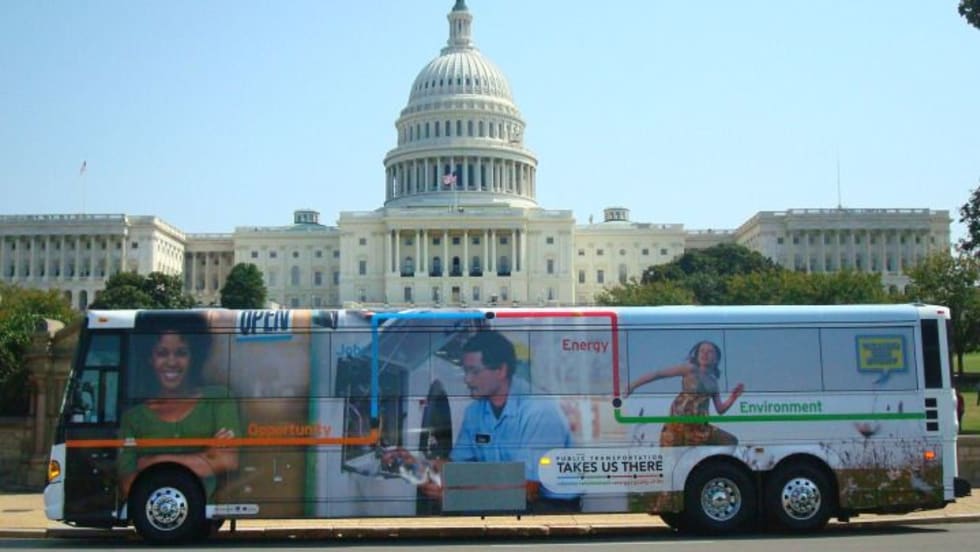
Manufacturer put its Commuter Coach, featuring APTA’s signature campaign graphics, front and center in a caravan at the rally that converged on Capitol Hill last week, urging Congress to increase funding for public transportation by passing a multi-year surface transportation authorization bill.
Read More →Under the $1.6M contract, NextBus will use its patented technology to process data obtained from all buses in LA Metro’s fleet equipped with GPS devices, then provide real-time, predictive bus arrival information to users by interfacing with the Southern California 511 phone- and website-based traveller information service, LA Metro’s own public website, the nextbus.com website, as well as cell and smartphone text messaging.
Read More →The awards to seven University Transportation Centers were made by the DOT’s Research and Innovative Technology Administration. Recipients are using new technologies and developing innovative approaches to improve transportation systems throughout the U.S.
Read More →Two new reports estimate that seat belts saved more than 72,000 lives during the five years between 2005 and 2009, while child restraint systems and minimum drinking age laws saved hundreds more during 2009.
Read More →GPS system will allow real-time bus tracking via the Web and smartphones, while cameras will record audio and video as a security measure.
Read More →