



U.S. DOT grants $9.2M to improve transportation safety, sustainability
The awards to seven University Transportation Centers were made by the DOT’s Research and Innovative Technology Administration. Recipients are using new technologies and developing innovative approaches to improve transportation systems throughout the U.S.

Last week, U.S. Transportation Secretary Ray LaHood announced more than $9.2 million in grants to seven University Transportation Centers (UTCs) that are using new technologies and developing innovative approaches to improve transportation systems throughout the country.
“You don’t have to look far to see the impact of research conducted by the University Transportation Centers,” said Secretary LaHood. “From reducing congestion along vital transportation corridors to exploring transportation applications for newly developed advance composites, these universities are advancing research aligned with our national priorities.”
The awards were made by the U.S. Department of Transportation’s (DOT) Research and Innovative Technology Administration (RITA). UTCs conduct research that directly supports Department’s priorities and are a critical part of the national transportation strategy.
The Sustainable Transportation Center (STC), based at the UC Davis Institute of Transportation Studies, will use a $462,900 grant to fund research on creating renewable energy distribution systems that are resistant to accidents, the potential for using greenhouse gas pricing to affect consumer behavior, and long-term travel behavior changes resulting from temporary highway shut-downs. The STC will also use the grant to provide educational assistance to students pursuing sustainable transportation studies.
The University of Delaware Transportation Center will use a $462,900 grant to continue to seek solutions that can be applied to similar challenges in other parts of the country. The center’s research will focus on using data to better understand and improve the interaction between organizations when transportation corridors are compromised during an emergency, and on developing tools to assist various individual transportation agencies manage the transportation corridor as a system, rather than managing individual assets.
The National Center for Transportation Management, Research and Development, based at Morgan State University in Baltimore, will receive a $1 million grant. The money will help the center continue its research into urban transportation challenges, such as ways to reduce waiting and travel time for passengers using transit rail service and analyzing the transportation needs of the increasing number of elderly individuals caring for young children.
The Western Transportation Institute at Montana State University, the nation’s largest UTC, will receive a $3,239,900 grant. The center will use the funds to continue research activities on safety and operations, winter maintenance and effects, infrastructure maintenance and materials, systems engineering, mobility and public transportation, logistics and freight management as well as transportation planning and economics. The funds will also be used to involve undergraduate and graduate students in research projects and conduct outreach events to share research results.
The Center for Transportation and Materials Engineering at Youngstown State University, Ohio, will use a $463,400 grant to continue investigating the relationship of materials engineering and advanced manufacturing to the sustainability of the transportation infrastructure. Specific efforts focus on the development or adaption of lighter-weight or stronger materials for use in transportation, including the development of lighter, more fuel efficient vehicles. Research will also look at increasing the longevity of transportation infrastructure, improving bridge safety and improving sustainability in the transportation system.
The Southwest Region University Transportation Center (SWUTC) at Texas A&M University will use a $2,082,800 grant to continue research, education and technology transfer activities at its consortium universities which include Texas A&M University, Texas Southern University and the University of Texas at Austin. Research efforts focus on supporting economic growth and trade, enhancing mobility and infrastructure efficiency, and promoting safety, environmental stewardship and transportation workforce development.
Also located at Texas A&M University, the University Transportation Center for Mobility will use a $1.5 million grant to continue conducting an integrated, interdisciplinary, competitive program of research, education, and technology transfer in mobility, rural public transportation, congestion management and mitigation, and innovative financing.
UTCs maintain vital partnerships with regional, state and local transportation agencies to help find solutions to challenges facing local communities. In addition, RITA’s UTC Program is now leading the efforts to develop a National Transportation Workforce Development Strategy to ensure our nation has access to a diverse, multi-disciplinary and highly skilled workforce capable of meeting the needs of the 21st-century transportation system.
RITA provides $81 million in annual funding to 136 colleges and universities conducting transportation research and providing the training needed to manage today's transportation infrastructure through the UTC Program. UTC colleges and universities trained 32,000 practicing transportation professionals in 2009. More information about the UTC Program can be found at www.rita.dot.gov.
More Paratransit
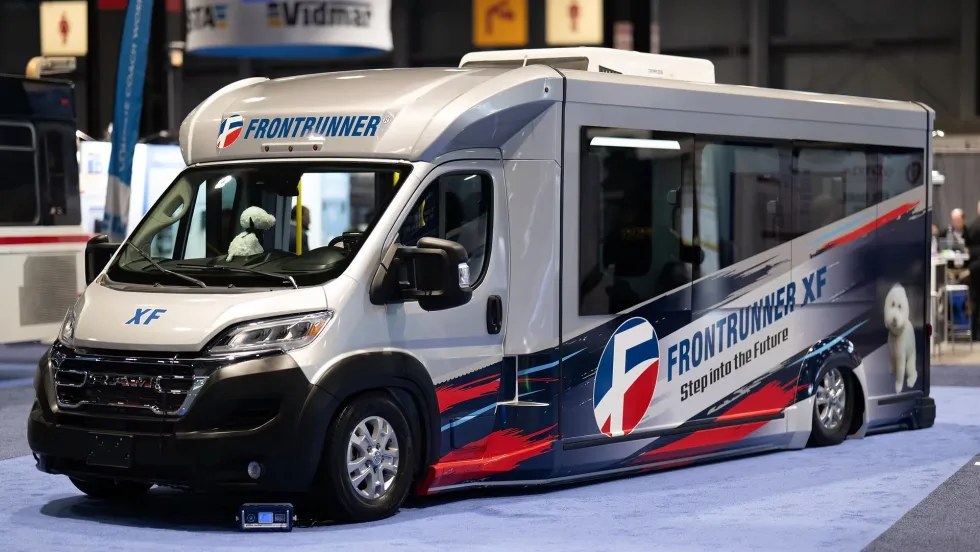
Frontrunner Bus Group Introduces XF Low-Floor Bus with Enhanced Accessibility
The new mid-sized bus features a full flat-floor design, eight-inch curbside step-in height, and zero-entry rear ramp to improve passenger access and operational flexibility.
Read More →
Scenes from APTA TRANSform & EXPO 2026
Transit leaders, manufacturers, and industry professionals gathered in Chicago to explore new technologies, share ideas, and discuss the future of public transportation.
Read More →
Indian River Transit’s Community-Focused Approach Earns National Recognition
Named APTA’s 2026 Outstanding Public Transportation System in its size category, Florida’s Indian River County transit system continues to grow ridership through fare-free service and a focus on evolving community needs.
Read More →
Everett Transit, Community Transit Outline Consolidation Agreement
The proposed agreement calls for a 50% increase in bus service in Everett, a new microtransit zone, continued paratransit service, and the transfer of Everett Transit operations to Community Transit.
Read More →
Driving Smarter Paratransit
John Hanlon shares how AlphaRoute is leveraging AI-powered technology to help paratransit providers optimize operations, support frontline staff, and enhance the rider experience.
Read More →
People Movement: Dan Dipert Coaches Adds Third-Generation Leader, Keolis Names New Valley Metro VP/GM, and More
In this edition, we also cover recent appointments and announcements at the Wabtec, SilverRide, HNTB, and more, showcasing the individuals helping to shape the future of transportation.
Read More →
Biz Briefs: RIPTA Unveils New Frontrunners, Clevland RTA Adds New Siemens, and More
In METRO's latest installment, we take a look at recent news from Siemens, Prevost, Dodge, and more partnerships making headlines across the transportation sector.
Read More →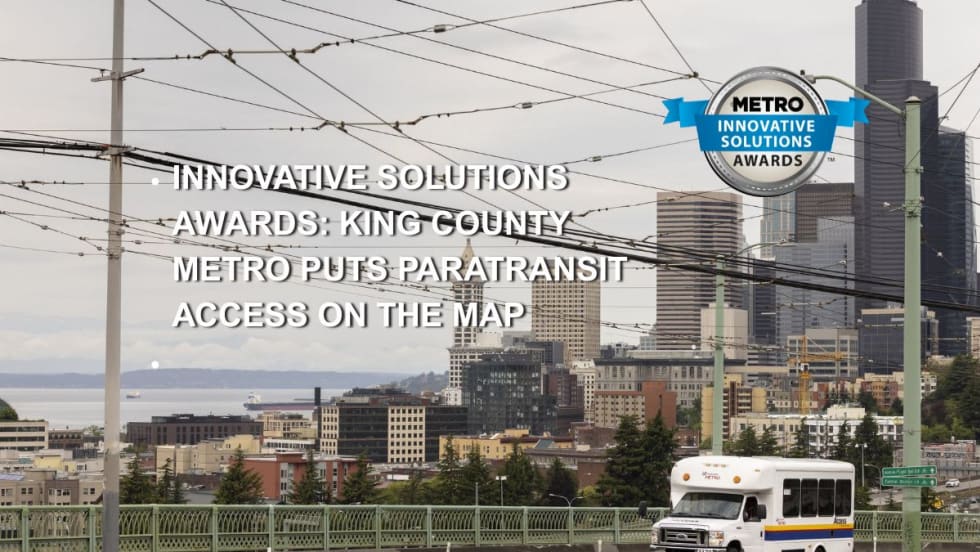
King County Metro Makes ADA Paratransit Easier to Navigate
METRO's Innovative Solutions Award winner replaces complex service-area descriptions with an accessible, interactive map that puts paratransit information directly in customers’ hands.
Read More →
Jacksonville’s NAVI Project Charts a New Course for Autonomous Public Transportation
Through its NAVI program, JTA is showing how autonomous vehicles, intelligent infrastructure, and coordinated operations can work together to deliver everyday public transportation.
Read More →
Driving Smarter Paratransit
John Hanlon shares how AlphaRoute is leveraging AI-powered technology to help paratransit providers optimize operations, support frontline staff, and enhance the rider experience.
Read More →