
Metro Magazine

 MENU
 SEARCHMENUSEARCH
Loading data...

In a letter, a state lawyer said the costs of testing the trains are rising and that they do not meet federal accessibility standards for the disabled. A spokesperson for Talgo Inc. denied both points and warned the cancellation could lead to legal action.
Read More →


The main priority of the AAMC, which is being led by Clarence Cox of Georgia Coach Lines in Fayetteville, Ga., will be to help ABA in lobbying for more federal government funding for the motorcoach industry, especially on behalf of small, family-owned minority businesses.
Read More →The plan gives the agency a green light to immediately move forward with a conceptual engineering study, environmental review process and record of decision on a route not only to S. 272nd Street, which voters approved in the Sound Transit 2 ballot measure in 2008, but all the way to the Federal Way Transit Center.
Read More →Supporters of a rail system that would connect Chicago to Iowa City, Des Moines and Omaha, Neb., pushed for plans to make the infrastructure improvements needed to start the service. While Illinois DOT offered funds to support the system, Iowa Gov. Terry Branstad opposes the project and the state match needed to obtain federal funding.
Read More →Projects were selected through the Bipartisan Infrastructure Law’s Federal-State Partnership for Intercity Passenger Rail Program (Fed-State NEC).
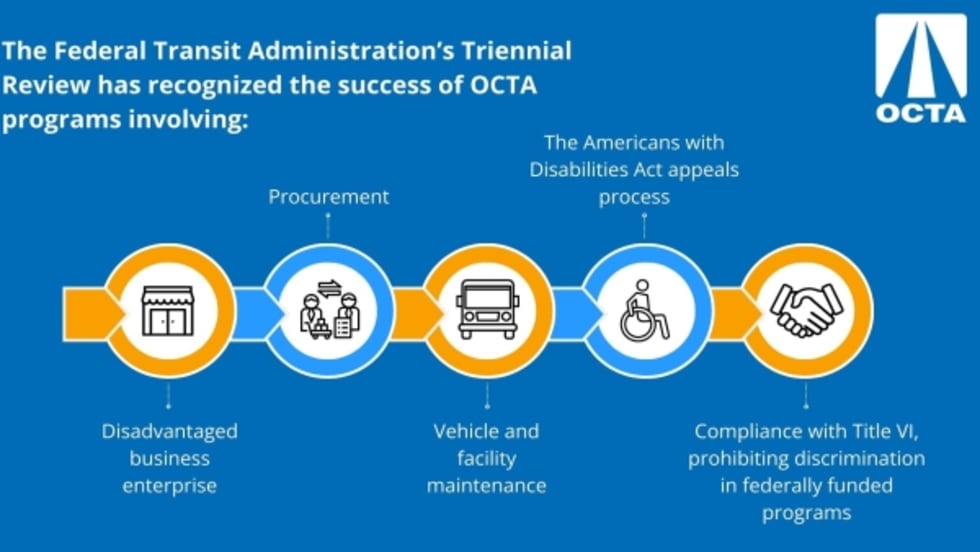
Read More →Every three years, the FTA completes a thorough review of transit operations and business practices for compliance with federal requirements and the industry’s best practices.
Read More →Suit alleges Metropolitan Transportation Commission under-funds transit services used by minorities.
Read More →In light of recent motorcoach collisions caused by unsafe operators, federal agencies and one state in particular are concentrating their efforts to get the bad guys off the road.
Read More →The bills would raise the annual funding cap of the Federal Highway Administration’s (FHWA) Disadvantaged Business Enterprise Supportive Services Program.
Read More →Protective measures include using bomb-sniffing dogs and removing or replacing trash cans.
Read More →