



RELATED: Micro Bird's James Mansell discusses new electric bus
Micro Bird Looks Toward the Future with its Commercial Line
The company’s commercial manager James Mansell explains how the company stays ahead of the curve by creating purposeful and innovative vehicles.
by Kendra Rodriguez, Assistant Editor
August 15, 2019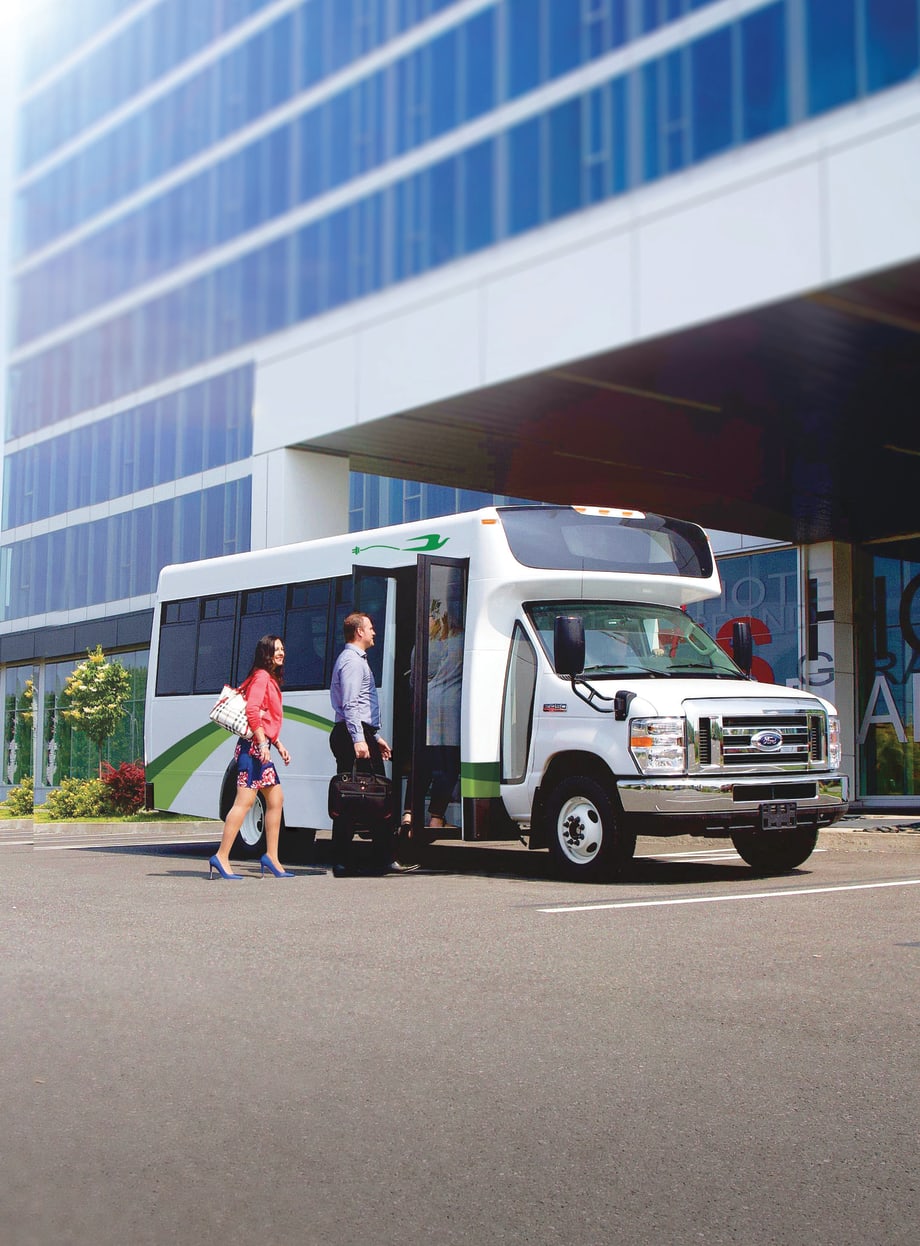
Micro Bird’s electric commercial buses can travel up to 100 miles on a single charge.
Photos courtesy Micro Bird
4 min to read
Micro Bird’s electric commercial buses can travel up to 100 miles on a single charge.
Photos courtesy Micro Bird
Consistent, powerful, safe, and better for the environment are just a few words that can be used to describe Micro Bird’s new D-Series buses. Touting its adherence to excellence in transportation, Micro Bird’s commercial manager James Mansell explains how the company stays ahead of the curve by creating purposeful and innovative vehicles.
Micro Bird has had a breakthrough year for its commercial line and believes that this momentum will continue into 2020. The company is ready to put in some serious numbers this year with plans to grow exponentially in their commercial sales.
“We currently have 25 dealers that are committed to commercial sales in North America,” Mansell said. “We expect those numbers will continue to grow, with an objective of up to 50 next year.”
Bus innovations have been proven successful for the company. Last year, they took home the “Best New Product” award at BusCon in 2018 for their electric commercial D-Series bus. They took home a similar award in 2016 with their Mid Door (MD-Series) commercial products.
Additionally, Micro Bird is a prevalent manufacturer in the school bus industry, boasting a solid foundation of sales and customer support.
As a longstanding pillar of transportation, the company will continue to adhere to excellence with their commercial line, Mansell says.
Since 1966, Micro Bird has had a reputation of unceasing innovations in the business and continues to shift as more eco-friendly and sustainable means of transportation become the industry standard.
Sustainable Transportation
Electric buses are the new wave of clean transportation, as evidenced by the continued growth of clean fleets globally. Canada and many states in the U.S. such as California, Arizona and New York are more aggressive in pushing forward with electric buses and technologies in transportation, Mansell explains, adding that there are many incentives in the form of grants and vouchers available for operators looking to go electric moving forward.
As an industry leader, Micro Bird continues to develop efficient and hard-working powertrain solutions. As of now, their electric commercial buses can travel up to 100 miles on a single charge.
The electric buses come standard with different driving modes to maximize the autonomy of the vehicle and tackle all sorts of driving habits. In a recent demonstration, Micro Bird pitted their D-Series bus against a traditional gas-powered bus with favorable results, Mansell says.
During the demonstration, the D-Series bus was tasked with driving up and down steep terrain. The bus had great power going uphill and was able to switch into regeneration mode going downhill, which can charge the battery and minimize brake usage, Mansell explains.
The drivers’ console features a seven-inch LCD touch screen, included on all Micro Bird electric buses, that displays remaining autonomy, battery charge and diagnostic alerts, providing real-time information and statistics. The D-Series electric has the capacity up to 21 passengers or 18 passengers plus one wheelchair on a lift-equipped vehicle, making this configuration ideal for many markets, says Erik Boisvert, Micro Bird sales and marketing coordinator.
To educate drivers and technicians on its vehicle technology, Micro Bird offers on-site and off-site training sessions, and certifications along with video training.
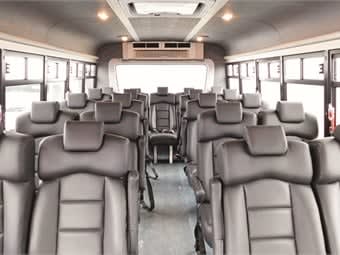
The D-Series electric bus has the capacity up to 21 passengers or 18 passengers plus one wheelchair on a lift-equipped vehicle.
‘Building the Best’
These D-Series commercial buses work for a variety of applications. Best used in urban settings, the buses are ideal for universities, parking facilities, airports, resorts and all special-needs services, Mansell explains.
“It’s a bus built to last. It’s built to handle harsher weather conditions and tougher driving terrains,” Mansell says. “That’s because our vehicles are built with steel flooring, steel cage, and aluminum side panels.”
The company knows that safety is the number-one priority for operators when they add any bus to their fleet, Mansell explains. The company prides itself on getting millions of children to their destinations safely with their school buses.
“Safety is in our DNA,” he says. “We think operators not only want a bus that performs and lasts longer, but they want a bus that keeps their customers safe and comfortable.”
Apart from their electric D-Series bus, Micro Bird also boasts a plethora of other power-trains with configurations to meet the diverse needs of their customers — everything from gas-powered and diesel to propane and electric. All buses are ISO- and Altoona-certified.
Continued Focus
The company continues to innovate and adapt to new forms of mobility as the paradigm continues to shift. Micro Bird wants customers to know that they are moving with technology and transitioning as market needs are advancing.
“We will continue our focus on innovation while providing the lowest cost of ownership for fleet operators,” Boisvert says.
Subscribe to Our Newsletter
More Bus

New York MTA Plans Largest Bus Fleet Upgrade in More Than a Decade
The agency is seeking manufacturers for 650 new CNG buses to replace aging vehicles, improve reliability, and advance its broader fleet modernization strategy.
Read More →
Building a Flexible Path to Transit Electrification
John Hroncich discusses BAE Systems’ modular and scalable approach, lessons learned from decades of real-world operations, and how agencies can identify electrification strategies that fit their fleets.
Read More →
Bus Tech Talk: Keeping Transit Technicians Ahead of the Technology Curve
LA Metro’s Obed Mejia discusses technician training, evolving maintenance technology, fleet replacement, and strategies for getting the most out of today’s transit fleets.
Read More →
Biz Briefs: RIPTA Unveils New Frontrunners, Clevland RTA Adds New Siemens, and More
In METRO's latest installment, we take a look at recent news from Siemens, Prevost, Dodge, and more partnerships making headlines across the transportation sector.
Read More →
People Movement: Holly Arnold Joins Transdev and More
In this edition, we also cover recent appointments and announcements at Pace, CamTran, MCI, and more, showcasing the individuals helping to shape the future of transportation.
Read More →
The High Cost of Transit Buses: Industry Leaders Look to Procurement Reform
Transit leaders and policymakers examine how standardized bus designs, streamlined procurement, and predictable funding could help agencies stretch budgets and deliver better service.
Read More →
The Business Voice Behind Public Transportation
As chair of APTA’s Business Members Board of Governors, Ray Melleady explains how more than 850 business members are partnering with transit agencies to advance funding, innovation, and industry-wide collaboration.
Read More →
From Surviving to Thriving: Building Stronger Transportation Organizations
Bus Business Consultants founder Brian Dickson shares lessons on leadership, organizational health, and creating options for long-term success in a changing transportation industry.
Read More →
Finding the ‘Happy Medium’: Optimizing Maintenance Without Sacrificing Reliability
The key to maintenance optimization isn’t doing less work—it’s doing the right work at the right time on the right assets.
Read More →
LA Metro, City of West Hollywood, and Partners Advance Smarter Bus Lane Enforcement
The award-winning partnership combines AI-powered detection with human oversight to improve bus reliability, accessibility, and enforcement efficiency.
Read More →