



Chicago Region Transit Ridership Grows in 2025
The region’s fixed-route system finished out the year with a total of 373.5 million rides. Adding 12.3 million rides over 2024 represents an increase that is equal to the annual transit ridership of Kansas City.

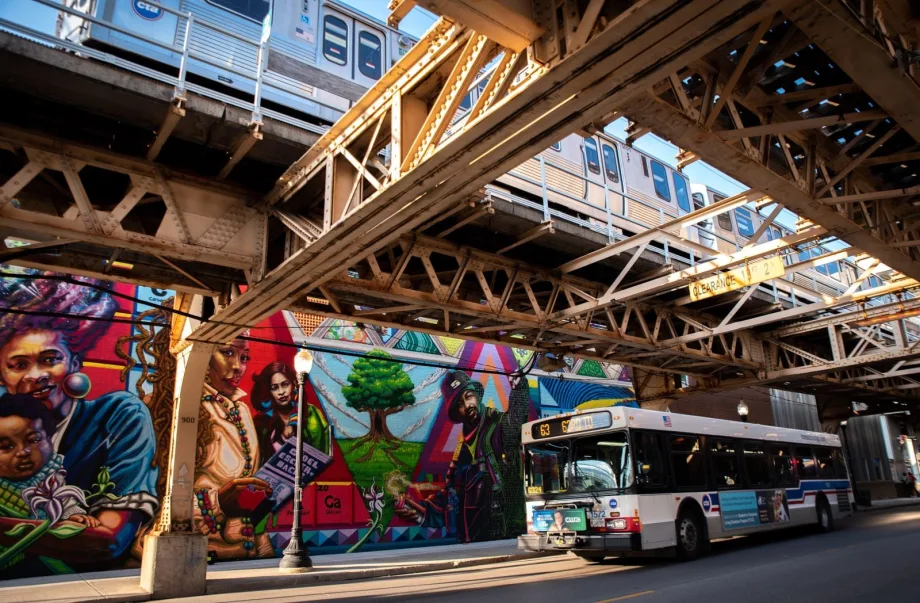
Momentum is expected to continue with the signing of the Northern Illinois Transit Authority Act in December, which would provide an estimated $1.2 billion in new annual operating funding for transit service and an additional $180 million annually for capital projects, said RTA officials.
Credit: Chicago RTA
Ridership across the Chicago region’s transit system continued to increase throughout 2025, according to the latest data from CTA, Metra, and Pace.
The region’s fixed-route system finished out the year with a total of 373.5 million rides. Adding 12.3 million rides over 2024 represents an increase that is equal to the annual transit ridership of Kansas City.
Momentum is expected to continue with the signing of the Northern Illinois Transit Authority (NITA) Act in December, which would provide an estimated $1.2 billion in new annual operating funding for transit service and an additional $180 million annually for capital projects.
Ridership Growth at CTA
Transit riders took more rides on all days of the week in 2025 than in 2024, with Thursdays seeing the largest percentage increase and Tuesdays and Wednesdays seeing the most overall rides.
Daily ridership exceeded one million on 236 days last year, and RTA’s recently approved 2026 regional transit budget, including new funding from the NITA Act, ensures service can meet the growing demand this year.
In 2025, CTA rail provided 135.2 million rides, an increase of 6% over 2024. CTA buses provided 184 million rides, a 1% year-over-year increase, and the highest post-pandemic recovery rate of all modes at 78% of pre-pandemic levels.
Overall CTA ridership for 2025 reached 319.2 million, a CTA systemwide increase of 3%. After achieving pre-pandemic service levels in 2024, CTA consistently added service throughout 2025, expanding the Frequent Network with buses coming every 10 minutes or better on 20 routes across CTA’s network.
Accessible rail stations, including those opened as part of the Red and Purple Modernization (RPM) Project, had 368,000 more rides or a 22% increase from the previous year for August through December.
Throughout 2025, CTA continued working closely with the Chicago Department of Transportation (CDOT) to implement the Better Streets for Buses Plan. This plan was released at the end of 2023. It was Chicago’s first citywide framework for bus priority infrastructure, including bus-only lanes and traffic signal adjustments to enhance bus stop areas.
Five corridors have been selected for developing concepts for robust, corridor-scale bus priority. Outreach to communities and stakeholders along these corridors began in 2025.
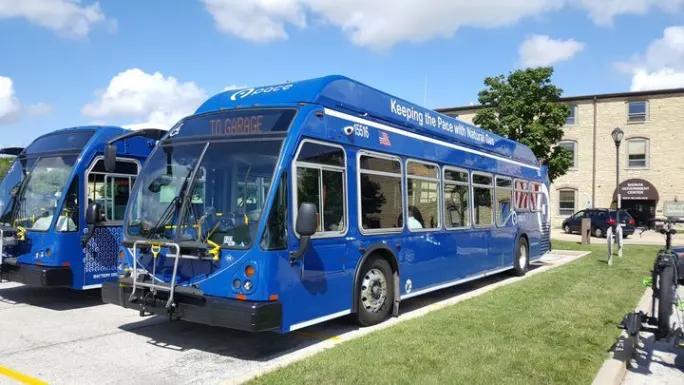
In 2025, Pace bus ridership decreased by 3%, providing 16.4 million rides, though overall recovery from the pandemic remains strong at 67%.
Credit: Pace Suburban Bus
Metra, Pace Ridership Too
Metra saw a year-over-year ridership increase of 8%, providing nearly 38 million rides as it settled into a simplified fare structure launched in 2024 and continued to work toward a regional rail vision. This vision calls for providing more consistent, predictable service outside of peak work commute times.
In 2025, Metra completed multiple station renovations and added service to lines including UP-North, UP-West, and BNSF. Metra also extended the Access Pilot Program, in partnership with the RTA and Cook County, offering reduced fares to low-income riders.
In 2025, Pace bus ridership decreased by 3%, providing 16.4 million rides, though overall recovery from the pandemic remains strong at 67%.
The agency continues to see strong demand for its bus rapid transit Pulse lines. Pace is also implementing a network revitalization plan, ReVision, to increase service where it is needed most.
RTA, CTA, Metra, and Pace launched a Regional Day Pass in 2025 that provides unlimited rides across all four agencies in a single day, streamlining travel across the Chicago region. The agencies also extended free rides on fixed-route transit to all ADA Paratransit-certified riders, who previously rode free only on Pace buses.
With more funding available in 2026, expansion and streamlining of RTA’s Reduced Fare and Ride Free programs are likely to continue encouraging more ridership, according to RTA officials.
“For the fourth year in a row, we have seen ridership increases in the millions across the regional transit system as CTA, Metra, and Pace continue to improve service and adapt to rider demand,” said RTA Executive Director Leanne Redden. “These improvements can continue and accelerate in 2026 and beyond thanks to additional funding and governance reform from the NITA Act, with the RTA beginning its transition to NITA this June.”
More Management

METRO Opens Submissions for 2026 Motorcoach Awards
Nominations are now being accepted for METRO Magazine’s Operator of the Year and Innovative Operator of the Year awards.
Read More →
New York MTA Advances Final Contract for Second Avenue Subway Expansion
Contract Four is the largest in the Second Avenue Subway Phase 2 project and includes construction of station infrastructure, tracks, and signals for the subway expansion, MTA officials said. Work on Contract Four will begin in 2027.
Read More →
Transit Agencies Highlight Safety Gains at National Summit
Leaders from 15 major transit systems shared crime-reduction results and safety initiatives while discussing the role of continued federal support.
Read More →

NITA Names New Leadership, Expands Reduced-Fare Program at First Board Meeting
The new regional transit authority appointed its first board chair and interim executive director while extending reduced fares across CTA, Metra, and Pace for eligible riders.
Read More →
Beyond the Checklist: A Structured Approach to Transit Maintenance
Reliability-Centered Maintenance helps transit agencies move beyond routine checklists to focus limited resources on the assets and failures that have the greatest impact on safety, reliability, and service.
Read More →
APTA 2026 Nominating Committee Selects Leadership Slate, Names Chair and Vice Chair Nominees
Leadership changes will help shape the association’s priorities and its representation of the transportation industry during the 2026–2027 term.
Read More →
DART Launches Major Security, Fare Enforcement Initiative
The 90-day demonstration will deploy coordinated security teams at five light rail stations while testing controlled access and gathering data to guide future investments.
Read More →
Advancing Fare Collection Through Technology and Innovation
Learn about delivering 1300 gates at 91 stations while managing fare evasion. Explore the large scale deployment, solution customization and real-world results that affect the region. Prepare for deployment in your region now.
Read More →
Game Day in Motion: Moving Millions During the 2026 World Cup
Between packed transit stations and team motorcoaches, see how agencies and operators across North America tackled the transportation demands of the 2026 FIFA World Cup.
Read More →
Surface Transportation Extension Averts Shutdown, Leaves Transit Funding Gap
The stopgap keeps federal transportation programs moving, but missing advance funding could complicate the transit and rail projects agencies are planning next.
Read More →