




RELATED: Metra to buy used locomotives to supplement aging fleet
Metra to buy 15 remanufactured locomotives
Supplier, Progress Rail will take existing EMD SD70MAC freight locomotives and upgrade and configure them for passenger use.
February 20, 2019
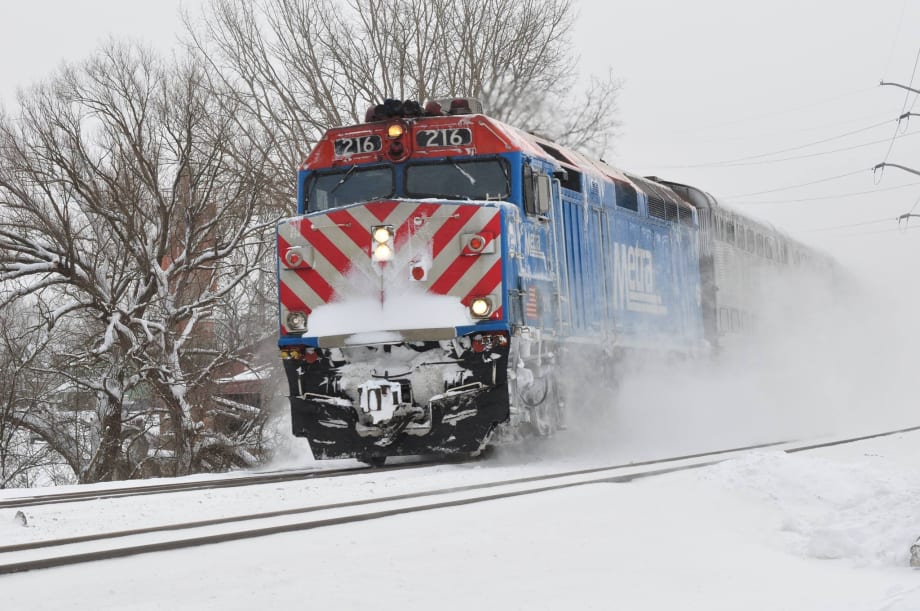
About 70% of Metra’s current fleet of 147 locomotives are rated in marginal or poor condition. Photo: Metra
2 min to read
About 70% of Metra’s current fleet of 147 locomotives are rated in marginal or poor condition. Photo: Metra
The Metra Board of Directors approved a $70.9 million contract to purchase 15 remanufactured locomotives to begin to replace Metra’s aging fleet. The contract with Progress Rail Locomotives of La Grange includes options to buy up to 27 additional locomotives, if funding is available.
Progress Rail will take existing EMD SD70MAC freight locomotives and upgrade and configure them for passenger use. All components will either be refurbished, upgraded or new. The newly remanufactured locomotives will be designated as SD70MACH locomotives.
About 70% of Metra’s current fleet of 147 locomotives are rated in marginal or poor condition.
The introduction this year of 24 used but new-to-Metra locomotives that were purchased from Amtrak will reduce that percentage to about 45%, and the addition of the remanufactured freight locomotives will reduce that percentage to 14% by 2023.
Newer locomotives not only will increase reliability, but they will reduce operating costs, since the older locomotives are increasingly expensive to maintain and operate.
Metra’s RFP allowed companies to provide proposals for either new or remanufactured locomotives. Metra chose remanufactured locomotives primarily because it can buy more of them than new locomotives. A greater number of newer locomotives means Metra can replace a greater number of older locomotives and operate a greater number of trains with more reliable locomotives.
One big improvement will be in the traction motors, which deliver the power generated by the diesel engine to the wheels. The remanufactured locomotives will have AC traction motors, which are far more durable and reliable than the DC traction motors in Metra’s older locomotives. For example, Metra currently needs to replace about 160 DC traction motors annually. On Metra Electric cars, the oldest of which have had AC traction motors for 12 years, Metra has not had to change a single traction motor.
The remanufactured locomotives have a similar design to Metra’s F59 locomotives so Metra will be able to use the same parts inventory and won’t need different training and maintenance programs. There will be a 34% increase in horsepower.
Another major upgrade is a microprocessor-controlled brake system.
The remanufactured locomotives will meet the Environmental Protection Agency’s Tier 3 emissions standards. Replacing 42 of Metra’s current locomotives that are rated Tier 0+ with 42 Tier 3 locomotives will eliminate 61 tons of nitrous oxide emissions annually — the equivalent to taking 6,600 cars off the road.
More Rail

FTA Ends Direct Oversight of MBTA Safety Actions
The federal agency closed its remaining special directive to the Massachusetts Department of Public Utilities following a safety review that began in 2022.
Read More →
Amtrak, CN Reach Agreements to Strengthen Passenger Rail Service, Safety
The agreement resolves a more than decade-long proceeding before the Surface Transportation Board concerning the terms and conditions for Amtrak services, such as the City of New Orleans, Illini/Saluki, and Wolverine.
Read More →
New York MTA Advances Final Contract for Second Avenue Subway Expansion
Contract Four is the largest in the Second Avenue Subway Phase 2 project and includes construction of station infrastructure, tracks, and signals for the subway expansion, MTA officials said. Work on Contract Four will begin in 2027.
Read More →
San Diego MTS Breaks Monthly Trolley Ridership Record
Agency officials said July’s ridership indicates MTS’s continued recovery from the pandemic.
Read More →
Report Examines NJ TRANSIT Reliability, Funding Challenges
The Garden State Initiative analysis examines the roles of Amtrak infrastructure, fleet management, and agency operations while recommending a more performance-based approach to improving reliability.
Read More →
Stadler, CapMetro Sign Long-Term Rail Fleet Support Agreement
Beginning in 2027, Stadler will provide on-site technical expertise, spare parts support, training, and obsolescence management to help extend the reliability and longevity of CapMetro’s GTW fleet.
Read More →
Biz Briefs: Alstom Lands Canadian Contract, LYT to Supply California TSP, and More
In METRO's latest installment, we take a look at recent news from Complete Coach Works, Beep, FlixBus, and more partnerships making headlines across the transportation sector.
Read More →
CATS Gold Line Marks 5 Years of Service, 2.8M Passenger Trips
With a six-mile expansion planned, the Charlotte streetcar is positioned to connect more neighborhoods and major transit hubs across the region.
Read More →
Why Simulating Pedestrian Movement Has Become Essential for Modern Rail Stations
Pedestrian microsimulation is helping rail planners identify bottlenecks, test station designs, and prepare complex transit hubs for growing passenger volumes.
Read More →
Amtrak Begins Major Construction at New York’s Sunnyside Yard
The new maintenance facility will support Amtrak’s Airo trainsets while improving maintenance efficiency and turnaround times in New York.
Read More →