



Florida's Tri-Rail Taps Siemens Mobility for Modern Locomotive Procurement
Expected to enter service in 2029, these locomotives support the agency’s commitment to offer reliable and efficient rail transportation across South Florida.
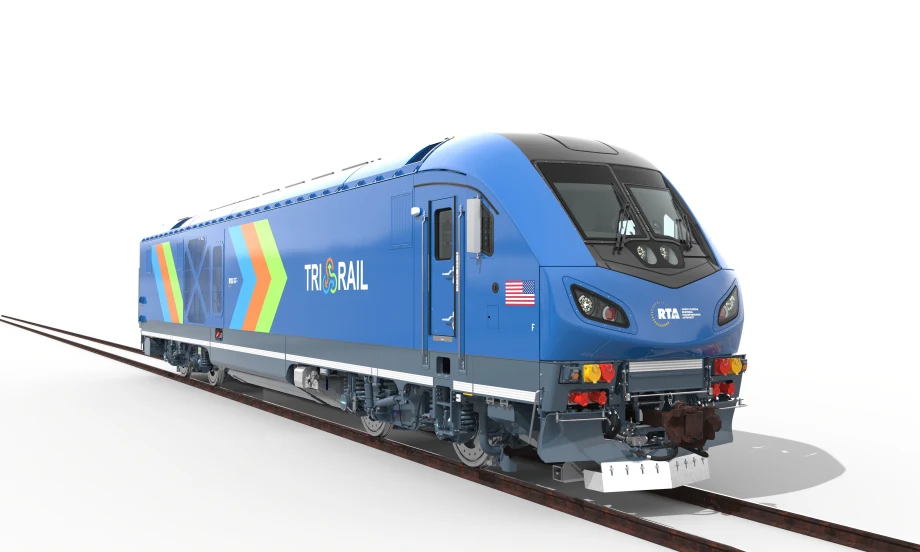
The procurement, funded by the FTA, recognizes Siemens Mobility as the only manufacturer capable of providing locomotives that meet SFRTA’s operational needs and regulatory requirements.
Credit: Siemens/SFRTA
The South Florida Regional Transportation Authority (SFRTA), operator of Tri-Rail commuter rail service in Broward, Miami-Dade, and Palm Beach counties, ordered seven advanced Charger diesel-electric locomotives from Siemens Mobility to add to its fleet.
Expected to enter service in 2029, these locomotives support Tri-Rail’s commitment to offer reliable and efficient rail transportation across South Florida.
Tri-Rail’s New Locomotives
With the addition of seven new locomotives, Tri-Rail will enhance its aging fleet, introducing equipment designed to improve the passenger experience with modern features while increasing the reliability of daily service.
The new locomotives are also equipped to provide service into MiamiCentral, which requires rail equipment that meets specific operational and compliance requirements to access the station.
“These new locomotives represent a major step forward in modernizing Tri-Rail’s fleet and strengthening the reliability of our service for the riders who depend on us every day,” said Dave Dech, SFRTA Executive Director. “This investment supports our long-term vision for a safer, more efficient commuter rail system, and positions Tri-Rail for continued growth.”
The new Siemens Charger locomotives will replace SFRTA’s aging fleet of six EMD GP49 units, enabling Tri-Rail to retire older equipment and enhance service quality for riders.
Operating along the 73.5-mile corridor linking Miami, Fort Lauderdale, and West Palm Beach, as well as the additional eight-mile stretch on the Florida East Coast (FEC) Corridor to MiamiCentral, the Charger locomotives will provide modern, high-performance service to keep South Floridians moving and connected.
The Siemens Partnership
The procurement, funded by the Federal Transit Administration (FTA), recognizes Siemens Mobility as the only manufacturer capable of providing locomotives that meet SFRTA’s operational needs and regulatory requirements. The Charger is EPA Tier 4 compliant and recognized as the diesel-electric locomotive with the lowest emissions in North America.
Production of the locomotives will begin well ahead of delivery, with all units scheduled to enter service in 2029. By modernizing its fleet, SFRTA is reinforcing its role as a vital complement to South Florida’s intercity rail network, offering commuters an affordable, dependable, and modern transit alternative, said agency officials.
The Charger locomotives for Tri-Rail are Buy America-compliant and will be built at Siemens Mobility's rail manufacturing hub in Sacramento, California. With more than 2,500 employees on-site, the facility has been in operation for 30 years.
More Rail

New York MTA Advances Final Contract for Second Avenue Subway Expansion
Contract Four is the largest in the Second Avenue Subway Phase 2 project and includes construction of station infrastructure, tracks, and signals for the subway expansion, MTA officials said. Work on Contract Four will begin in 2027.
Read More →
San Diego MTS Breaks Monthly Trolley Ridership Record
Agency officials said July’s ridership indicates MTS’s continued recovery from the pandemic.
Read More →
Report Examines NJ TRANSIT Reliability, Funding Challenges
The Garden State Initiative analysis examines the roles of Amtrak infrastructure, fleet management, and agency operations while recommending a more performance-based approach to improving reliability.
Read More →
Stadler, CapMetro Sign Long-Term Rail Fleet Support Agreement
Beginning in 2027, Stadler will provide on-site technical expertise, spare parts support, training, and obsolescence management to help extend the reliability and longevity of CapMetro’s GTW fleet.
Read More →
Biz Briefs: Alstom Lands Canadian Contract, LYT to Supply California TSP, and More
In METRO's latest installment, we take a look at recent news from Complete Coach Works, Beep, FlixBus, and more partnerships making headlines across the transportation sector.
Read More →
CATS Gold Line Marks 5 Years of Service, 2.8M Passenger Trips
With a six-mile expansion planned, the Charlotte streetcar is positioned to connect more neighborhoods and major transit hubs across the region.
Read More →
Why Simulating Pedestrian Movement Has Become Essential for Modern Rail Stations
Pedestrian microsimulation is helping rail planners identify bottlenecks, test station designs, and prepare complex transit hubs for growing passenger volumes.
Read More →
Amtrak Begins Major Construction at New York’s Sunnyside Yard
The new maintenance facility will support Amtrak’s Airo trainsets while improving maintenance efficiency and turnaround times in New York.
Read More →
Chicago Leaders Unveil Plans for O’Hare Airport Express Train
The privately developed project would offer a 15-minute trip between downtown and O’Hare’s Terminal 2, with trains operating every 15 minutes on a dedicated track. The service would use battery-electric trains and three existing freight rail rights-of-way.
Read More →
OCTA Maps Out 30-Year Strategy to Protect Coastal Rail Corridor
The draft feasibility report identifies strategies to protect the coastal rail line for decades as the agency continues near-term stabilization and sand placement efforts.
Read More →