




Keep Reading: LA Metro Launches Care-Based Public Safety Division
LA Metro Approves Underground Rail for Sepulveda Transit Corridor
The agency’s selection aims to slash travel times from the San Fernando Valley to the Westside to under 20 minutes.
January 23, 2026
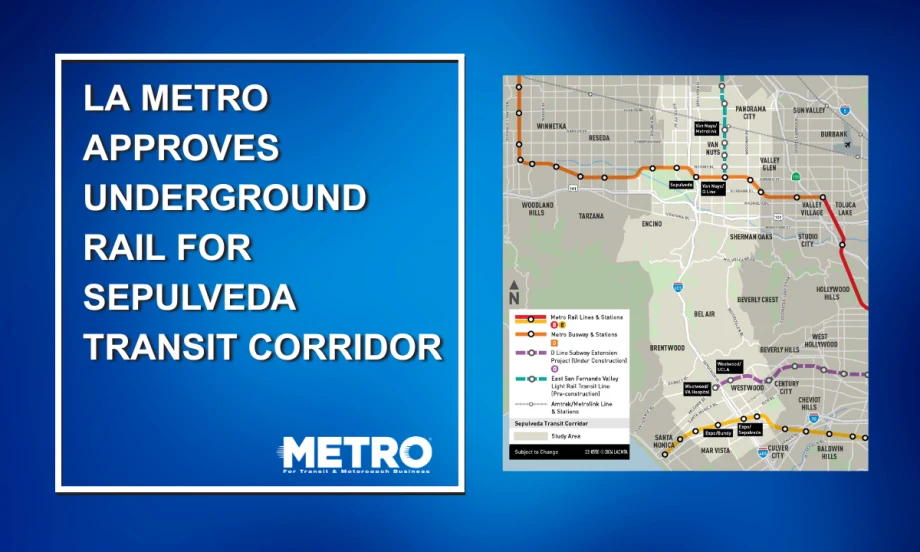
The LA Metro Board selected Modified Alternative 5 as the LPA for the Sepulveda Transit Corridor Project based on technical evaluation and community and stakeholder input.
Photo: METRO
3 min to read
Los Angeles is one step closer to a direct rail connection that will make travel faster and easier through the Sepulveda Pass, one of the most notoriously congested corridors in the country, after the LA Metro Board selected an underground heavy rail option as the Locally Preferred Alternative (LPA) for the Sepulveda Transit Corridor Project.
This move marks a key milestone for the region’s most critical infrastructure investment, which, according to an agency release, is expected to transport riders between the San Fernando Valley and the Westside in less than 20 minutes.
Once implemented, the project would connect the Metrolink Van Nuys Station to the Metro E Line, reducing commute times that can take 40 to 80 minutes by car. Additionally, a trip from Van Nuys (on the G Line) to Westwood (on the D Line) on the Sepulveda Transit Corridor would take about 10 minutes, reducing similar, unpredictable commute times.
The project would provide regional access and connect the agency’s growing rail transit network to the D, E, G, and East San Fernando Valley Lines, Van Nuys Metrolink Station, and UCLA. This connection is anticipated to drive high ridership, translating to economic, environmental, health, and mobility benefits for the entire region.
“A direct rail connection through the Sepulveda Pass will connect people to jobs, schools, airports, and entertainment faster than ever,” said LA Metro Board Chair and Whittier City Councilmember Fernando Dutra. “This project will cut travel time, reduce air pollution, and is the kind of bold, forward-looking investment that moves Los Angeles County into the future.”
Next Phase Begins for Sepulveda Transit Corridor Project
The Sepulveda Corridor is a vital link for the communities of greater Los Angeles, connecting residents in the San Fernando Valley to the Westside’s employment, educational, and cultural hubs. According to LA Metro, the natural barrier of the Santa Monica Mountains makes travel between the San Fernando Valley and the Westside “difficult, unpredictable, and slow.”
The agency released a Draft Environmental Impact Report (DEIR) last summer, evaluating five different build alternatives for a rail transit option through the Sepulveda Pass.
The LA Metro Board selected Modified Alternative 5 as the LPA for the Sepulveda Transit Corridor Project based on technical evaluation and community and stakeholder input. During the public comment period for the project’s DEIR, LA Metro collected more than 8,000 public comment submissions.
With the LPA selected, the agency will focus on additional design refinement and community engagement to move into the next phase of the environmental review process.
Building a More Connected Los Angeles County
The Sepulveda Transit Corridor Project is the most recent project LA Metro has advanced as part of the “most ambitious transit capital program in the nation.”
Over the past four decades, LA Metro has built 118 miles of rail, with more than 50 additional miles currently in planning or construction. In 2025, the agency opened the LAX/Metro Transit Center, creating a direct connection between the Metro C and K Lines and, for the first time, a transit connection to Los Angeles International Airport.
LA Metro also opened the Metro A Line Extension to Pomona last year, reconnecting light rail service to the San Gabriel Valley for the first time since 1951.
When all three phases are complete, the D Line extension is expected to increase ridership across the entire LA Metro System, bringing tens of thousands of new riders and improving access between downtown, cultural districts, universities, business centers, and residential neighborhoods.
The Sepulveda Transit Corridor represents the next generation of investments to expand access, reduce congestion, and improve the quality of life for millions of Angelenos.
“This is a historic moment for transportation in Los Angeles,” said LA Metro CEO Stephanie Wiggins. “The Sepulveda Corridor Project is one of the most ambitious transportation investments in our region’s history and will redefine how millions of people travel across Los Angeles. With today’s action, we are entering the next chapter of our transit revolution.”
More Rail

New York MTA Advances Final Contract for Second Avenue Subway Expansion
Contract Four is the largest in the Second Avenue Subway Phase 2 project and includes construction of station infrastructure, tracks, and signals for the subway expansion, MTA officials said. Work on Contract Four will begin in 2027.
Read More →
San Diego MTS Breaks Monthly Trolley Ridership Record
Agency officials said July’s ridership indicates MTS’s continued recovery from the pandemic.
Read More →
Report Examines NJ TRANSIT Reliability, Funding Challenges
The Garden State Initiative analysis examines the roles of Amtrak infrastructure, fleet management, and agency operations while recommending a more performance-based approach to improving reliability.
Read More →
Stadler, CapMetro Sign Long-Term Rail Fleet Support Agreement
Beginning in 2027, Stadler will provide on-site technical expertise, spare parts support, training, and obsolescence management to help extend the reliability and longevity of CapMetro’s GTW fleet.
Read More →
Biz Briefs: Alstom Lands Canadian Contract, LYT to Supply California TSP, and More
In METRO's latest installment, we take a look at recent news from Complete Coach Works, Beep, FlixBus, and more partnerships making headlines across the transportation sector.
Read More →
CATS Gold Line Marks 5 Years of Service, 2.8M Passenger Trips
With a six-mile expansion planned, the Charlotte streetcar is positioned to connect more neighborhoods and major transit hubs across the region.
Read More →
Why Simulating Pedestrian Movement Has Become Essential for Modern Rail Stations
Pedestrian microsimulation is helping rail planners identify bottlenecks, test station designs, and prepare complex transit hubs for growing passenger volumes.
Read More →
Amtrak Begins Major Construction at New York’s Sunnyside Yard
The new maintenance facility will support Amtrak’s Airo trainsets while improving maintenance efficiency and turnaround times in New York.
Read More →
Chicago Leaders Unveil Plans for O’Hare Airport Express Train
The privately developed project would offer a 15-minute trip between downtown and O’Hare’s Terminal 2, with trains operating every 15 minutes on a dedicated track. The service would use battery-electric trains and three existing freight rail rights-of-way.
Read More →
OCTA Maps Out 30-Year Strategy to Protect Coastal Rail Corridor
The draft feasibility report identifies strategies to protect the coastal rail line for decades as the agency continues near-term stabilization and sand placement efforts.
Read More →