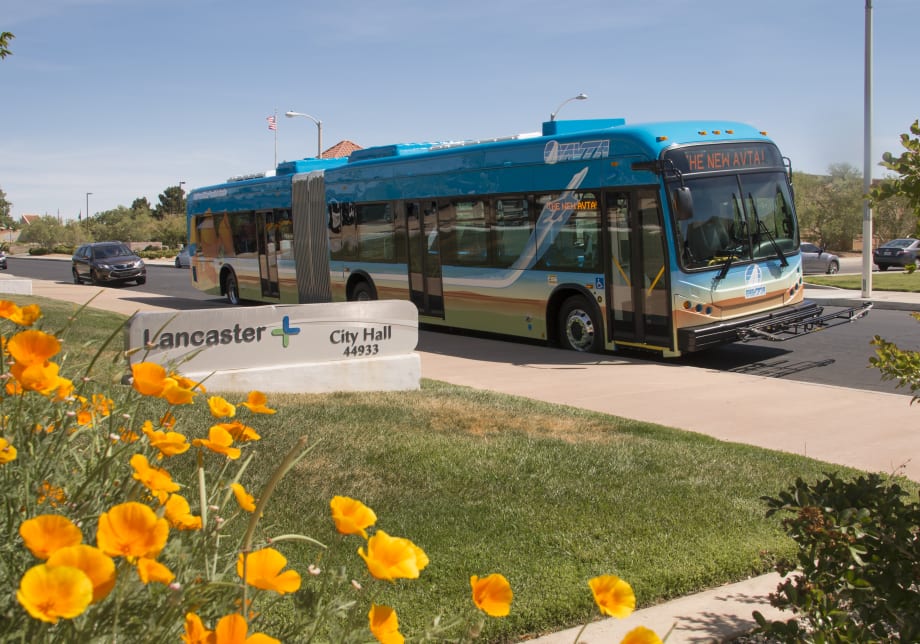
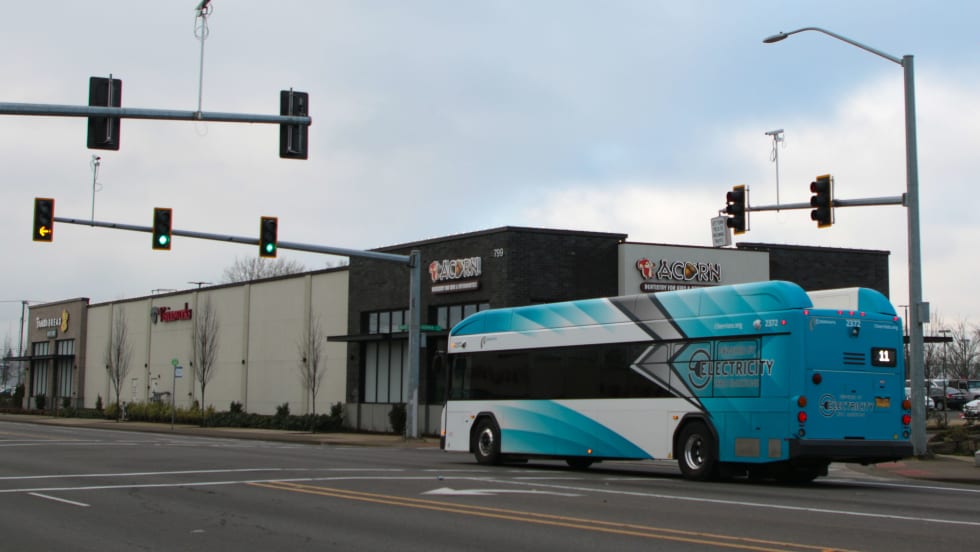
AVTA's new 60-foot articulated bus is one of 13 buses of this size that will enter circulation as the transit authority strives to meet its goal of being "100% green by 2918." Photo: AVTA
2 min to read
AVTA's new 60-foot articulated bus is one of 13 buses of this size that will enter circulation as the transit authority strives to meet its goal of being "100% green by 2918." Photo: AVTA
As part of the Antelope Valley Transit Authority’s (AVTA) conversion of its fleet to electric buses, the transit authority’s 60-foot articulated bus will be the first fully operational electric bus of its kind in the world, carrying passengers on AVTA’s Local Route 1.
Passengers are invited to help celebrate this major milestone with complimentary service offered during the bus’s maiden voyage on Sept.1. The bus will depart from Steve Owen Memorial Park in Lancaster, Calif., at approximately 10:00 a.m., and will run all day long on the normal Route 1 path.
Ad Loading...
The 60-foot articulated bus, which was delivered to AVTA from BYD Motors in May, is one of 13 buses of this size and type that will enter circulation as AVTA strives to meet its goal of becoming “100% green by 2018.” The zero-emission bus can carry up to 70 passengers and will use AVTA’s WAVE wireless charging system.
Since taking delivery, AVTA has worked to prepare the bus for its first day in service, which has included rigorous road testing. Future plans for the articulated buses include development of a Bus Rapid Transit line to alleviate overcrowding and streamline service along the busy Route 1 corridor.
Kick-started by grant funding from Los Angeles County Board Supervisor Michael Antonovich, the conversion project has gained the attention as a model leader in innovative, sustainable, and clean public transportation.
In addition to achieving project benchmarks, AVTA has recently won prestigious state and national awards for air quality and financial excellence.
AVTA provides local, commuter and dial-a-ride service to a population of more than 450,000 residents in the cities of Lancaster and Palmdale as well as the unincorporated portions of northern L.A. County, covering over 1,000 square miles.
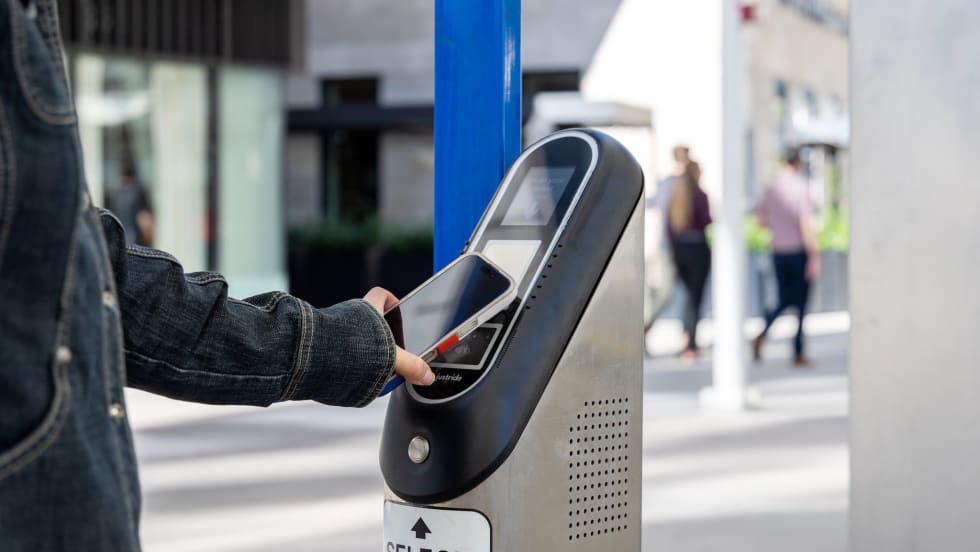
RTD aims to have 15% of all fare payments by individual customers made via Tap-n-Ride by the end of 2026, as awareness of this contactless payment option grows.
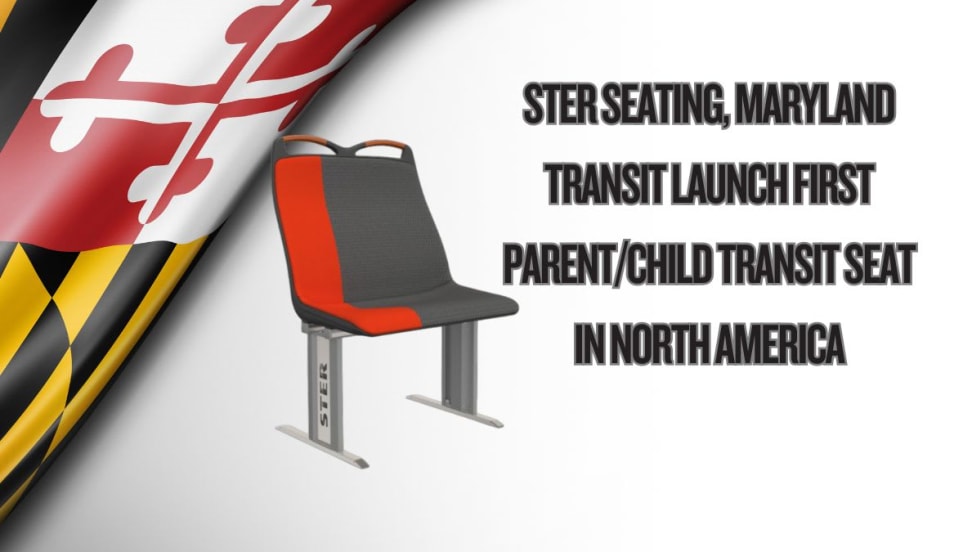
The configuration uses Ster Seating's Gemini seat platform to create a family-friendly floor layout specifically engineered to accommodate parents traveling with young children.
In this edition of Biz Briefs, we highlight the latest developments shaping the future of mobility — from manufacturers and technology providers to transit agencies and motorcoach service operators.
Masabi and Passenger share a vision for the future of public transport — connected, customer-centric, and cloud-native — where every step of the journey works together seamlessly to elevate the transit experience.
The addition now allows customers to tap their contactless debit or credit card, or a mobile wallet, such as Apple Pay or Google Pay, directly on the onboard fare validators.
The upgraded system, which went live earlier this month, supports METRO’s METRONow vision to enhance the customer experience, improve service reliability, and strengthen long-term regional mobility.
CEO Nat Ford’s address offered a look at highlights from 2025, with a focus on the future and the innovative ways the JTA is shaping mobility in Northeast Florida.