



Responding to COVID-19: How to optimize transportation resources during emergencies
The COVID-19 outbreak has cities and transit agencies scrambling to provide new forms of transportation for essential staff and emergency services.
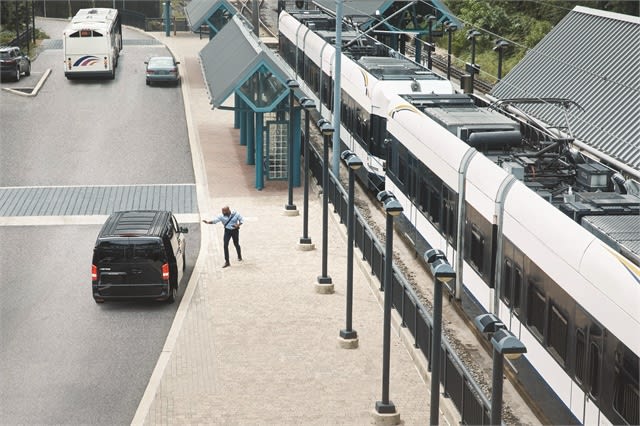
In these rapidly changing times, transit agencies face myriad challenges as they work to meet the critical mobility needs of essential workers and the general public.
Via
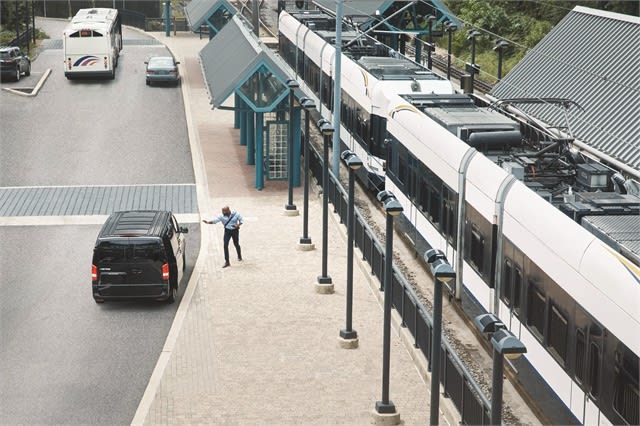
In these rapidly changing times, transit agencies face myriad challenges as they work to meet the critical mobility needs of essential workers and the general public. Via
In the face of COVID-19, cities are experiencing unprecedented challenges and the need to rethink how best to support their communities. With small businesses shuttered, restaurants closed, and traditional forms of public transit facing record low ridership, the variety of challenges that city leaders need to address is seemingly endless.
And yet, there’s one critical consideration that must be addressed immediately: how to meet the transportation needs of essential workers and ensure that communities, especially the most vulnerable, have access to food, medicine, and critical services.
In these rapidly changing times, transit agencies face myriad challenges as they work to meet the critical mobility needs of essential workers and the general public. Some are attempting to provide typical levels of service while coping with a shortage of drivers and other workers. Others are making the difficult decision to reduce or eliminate service on certain routes altogether.
Some agencies, having decided to temporarily eliminate routes where demand has plummeted, may now have surplus vehicles and operators that can be redeployed for a limited period in other areas, including to power dynamic, on-demand services.
Cities making a change
One example of a transit agency working to resourcefully adapt to meet the transportation challenges of the COVID-19 epidemic is the Central Ohio Transit Authority (COTA), headquartered in Columbus, which is currently working to analyze how best to temporarily adjust its network, focus its resources, and apply innovative tools and approaches to help support essential workers and the general public during this time.
COTA is evaluating:
Where fixed-route service should be reduced in response to very low demand.
If there are opportunities to re-align fixed routes to serve critical locations like hospitals, grocery stores, and food banks.
Whether reductions in fixed-route and paratransit services will free up drivers and vehicles for other critical transportation, like targeted on-demand services to fill coverage gaps and serve essential trips.
Limiting the number of passengers on fixed-route and on-demand transit services to support physical distancing and dispatching other COTA-branded vehicles to pick up customers who might be passed after that limit is reached.
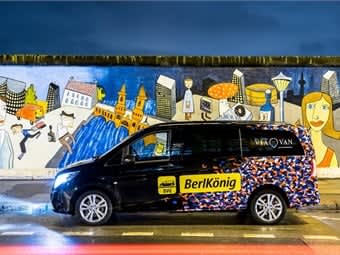
The BVG expanded the BerlKönig’s regular service zones to cover over 10 additional hospitals and limited ridership to pre-approved healthcare workers.
Via
Berlin and Malta have quickly adapted existing on-demand transit services to meet the needs of their communities in the midst of the COVID-19 epidemic.
In Berlin, the local transportation authority, the BVG — which has partnered with ViaVan for more than a year — transformed its existing on-demand BerlKönig service to meet the mobility needs of essential workers. The BVG expanded the BerlKönig’s regular service zones to cover over 10 additional hospitals and limited ridership to pre-approved healthcare workers. Using existing resources and technology, they’ve reduced vehicle capacities to support physical distancing, adapting quickly within one week to get the service up and running.
Similarly, in Malta, “Cool” extended its on-demand service zone to the entire island in just two days, and adapted in two critical ways: first, rides, typically shared, are now private-only to support physical distancing; and second, grocery stores and other small businesses can now use the Cool app to dispatch food and other essential goods for delivery. Cool drivers can see whether their dispatched trip is for a delivery or a private ride within their app. While all passenger trips are now private, the service’s technology allows all deliveries to be shared to increase efficiency.
New solutions to new problems
Cities and transit agencies across the globe are rapidly adapting to support their communities during the COVID-19 epidemic. Providing safe and efficient mobility is critical to assuring that essential workers can reach their jobs, and everyone can access food, medicine, and other critical goods and services. As we continue to work through these challenges, it’s imperative that we be flexible, develop new solutions to new problems, and adapt existing resources to meet the current needs of our communities.
Dan Berkovits is the Director of Strategy at Via
More Management

METRO Opens Submissions for 2026 Motorcoach Awards
Nominations are now being accepted for METRO Magazine’s Operator of the Year and Innovative Operator of the Year awards.
Read More →
New York MTA Advances Final Contract for Second Avenue Subway Expansion
Contract Four is the largest in the Second Avenue Subway Phase 2 project and includes construction of station infrastructure, tracks, and signals for the subway expansion, MTA officials said. Work on Contract Four will begin in 2027.
Read More →
Transit Agencies Highlight Safety Gains at National Summit
Leaders from 15 major transit systems shared crime-reduction results and safety initiatives while discussing the role of continued federal support.
Read More →

NITA Names New Leadership, Expands Reduced-Fare Program at First Board Meeting
The new regional transit authority appointed its first board chair and interim executive director while extending reduced fares across CTA, Metra, and Pace for eligible riders.
Read More →
Beyond the Checklist: A Structured Approach to Transit Maintenance
Reliability-Centered Maintenance helps transit agencies move beyond routine checklists to focus limited resources on the assets and failures that have the greatest impact on safety, reliability, and service.
Read More →
APTA 2026 Nominating Committee Selects Leadership Slate, Names Chair and Vice Chair Nominees
Leadership changes will help shape the association’s priorities and its representation of the transportation industry during the 2026–2027 term.
Read More →
DART Launches Major Security, Fare Enforcement Initiative
The 90-day demonstration will deploy coordinated security teams at five light rail stations while testing controlled access and gathering data to guide future investments.
Read More →
Advancing Fare Collection Through Technology and Innovation
Learn about delivering 1300 gates at 91 stations while managing fare evasion. Explore the large scale deployment, solution customization and real-world results that affect the region. Prepare for deployment in your region now.
Read More →
Game Day in Motion: Moving Millions During the 2026 World Cup
Between packed transit stations and team motorcoaches, see how agencies and operators across North America tackled the transportation demands of the 2026 FIFA World Cup.
Read More →
Surface Transportation Extension Averts Shutdown, Leaves Transit Funding Gap
The stopgap keeps federal transportation programs moving, but missing advance funding could complicate the transit and rail projects agencies are planning next.
Read More →