



N.Y. MTA seeks design-build teams to bring accessibility to stations
The teams will make full vertical accessibility at the stations by installing elevators and making other ADA improvements.

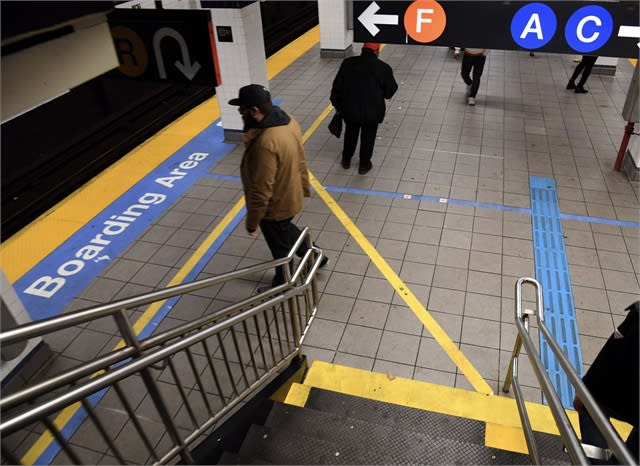
The Accessible Station Lab pilot is a milestone toward delivering on the Fast Forward goal to accelerate the rollout of accessibility features across the subway system.
2019 Metropolitan Transportation Authority / Marc A. Hermann
The Accessible Station Lab pilot is a milestone toward delivering on the Fast Forward goal to accelerate the rollout of accessibility features across the subway system.
2019 Metropolitan Transportation Authority / Marc A. Hermann
New York’s Metropolitan Transportation Authority (MTA) is seeking qualified design-build teams to bring accessibility to 23 stations across the five boroughs as called for in the MTA’s 2020-2024 Capital Plan.
The teams will make full vertical accessibility at the stations by installing elevators and making other improvements in accordance with the Americans with Disabilities Act.
The expedited design-build contracts will be awarded to the companies whose proposals offer the best value to the MTA based on an evaluation of qualitative factors, as well as cost and schedule.
“Accessibility is a top priority for the MTA, and we are committed to completing these accessibility projects as quickly as possible,” said MTA Chairman and CEO Patrick J. Foye. “The Capital Plan’s historic $5.2 billion investment in accessibility brings us one step closer to creating the equitable transit system New Yorkers deserve.”
Work at each station will generally include the design and construction of:
Two to three new elevators per station.
Structural and excavation work to accommodate new elevator installations.
Electrical power upgrades, when necessary.
Station communications systems upgrades, when necessary.
Relocation of existing public and transit utilities.
Replacement, relocation, and/or addition of staircases from street to mezzanines and mezzanines to platforms.
Reconstruction of entire platform edges and/or reconstruction of ADA boarding areas.
Additional work may be necessary based on existing conditions at the stations.
The historic 2020-2024 Capital Plan will invest $51.5 billion across the region’s subways, buses, commuter rail systems, and bridges and tunnels over the next five years. The plan is the largest in MTA history and includes $40 billion devoted to NYC Transit’s subway system and bus network, with priority given to accelerating accessibility. NYC Transit’s Fast Forward plan to modernize the subway system established the goal of making at least 50 more subway stations accessible in five years so that customers would not have to travel farther than two stops to reach an accessible station. The 2020-2024 Capital Plan not only meets that goal, but goes beyond it with a total of 70 stations.
The first 48 stations identified in September met the “never more than two-stations away” coverage goal, and went even further by including several important transfer points and complexes, and other community priority stations. The 20 additional stations identified in December further increase citywide geographic coverage and were chosen based on factors including demographics, transfers and intermodal connections, constructability, ridership, and synergy with other work planned for the 2020-2024 Capital Plan in order to maximize resources and minimize adverse impact on customers and communities from the construction process.
More Paratransit

Biz Briefs: RIPTA Unveils New Frontrunners, Clevland RTA Adds New Siemens, and More
In METRO's latest installment, we take a look at recent news from Siemens, Prevost, Dodge, and more partnerships making headlines across the transportation sector.
Read More →
King County Metro Makes ADA Paratransit Easier to Navigate
METRO's Innovative Solutions Award winner replaces complex service-area descriptions with an accessible, interactive map that puts paratransit information directly in customers’ hands.
Read More →
Jacksonville’s NAVI Project Charts a New Course for Autonomous Public Transportation
Through its NAVI program, JTA is showing how autonomous vehicles, intelligent infrastructure, and coordinated operations can work together to deliver everyday public transportation.
Read More →
Driving Smarter Paratransit
John Hanlon shares how AlphaRoute is leveraging AI-powered technology to help paratransit providers optimize operations, support frontline staff, and enhance the rider experience.
Read More →
METRO Magazine Announces 2026 Innovative Solutions Awards Winners
Projects Recognized for Advancing Mobility Through Technology, Accessibility, Workforce Innovation, and Operational Excellence
Read More →
Biz Briefs: STV teams with Amtrak, Motorcoach Operators Boost Fleet and Land Contracts, and More
From manufacturers and suppliers to transit agencies and motorcoach operators, these updates offer a snapshot of the projects, partnerships and business moves driving the industry forward.
Read More →
Biz Briefs: Masabi Teams with St. Louis Metro and More
In METRO's latest installment, we take a look at recent news from Transdev, Hitachi, and more partnerships making headlines across the transportation sector.
Read More →
New York MTA Leverages Zoning Program to Advance Station Accessibility
Accessibility enhancements at Nevins St Station will be financed through a development agreement tied to the MTA's Zoning for Accessibility initiative.
Read More →
Reinventing Fleet Maintenance with Real-time Visibility and AI
Transit leaders need to know what needs fixing, where to look, who is responsible, when work is completed, and what it costs without having to chase information across disconnected systems.
Read More →
SamTrans Sets Priorities for Potential Connect Bay Area Revenue
The board-approved framework allocates future funding to maintaining service, rider improvements, equity initiatives, and infrastructure repairs.
Read More →