



Metra outlines plans as Chicago area begins to reopen
The agecny is asking for all passengers to cooperate and take responsibility for their own actions.
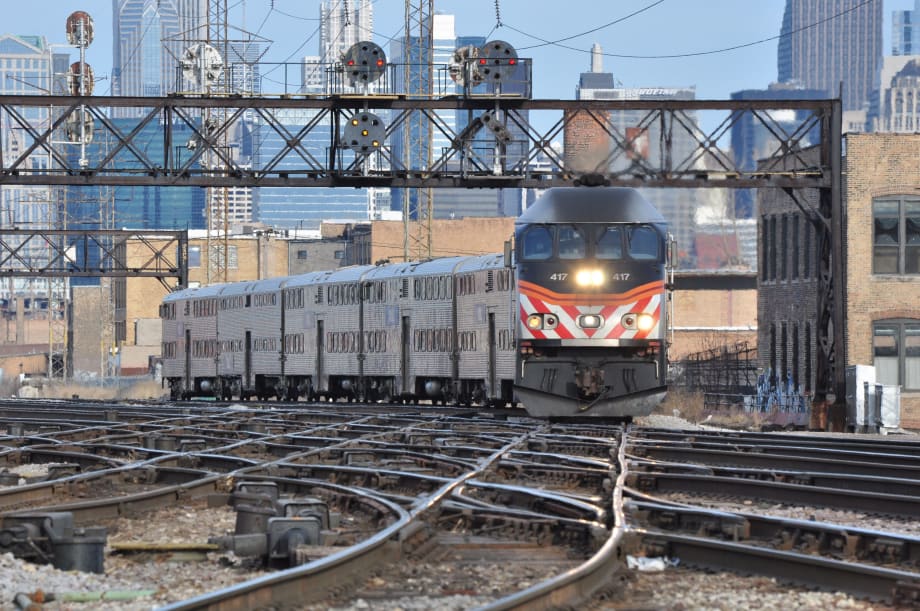
Metra will provide an opportunity for responsible physical distancing on its trains as much as and if possible. Metra
As Illinois and the Chicago region move toward establishing a “new normal” in the time of COVID-19, Metra provided more details about the steps it is taking to ensure passengers will feel safe using its system.
“We know more than ever that passengers need to feel safe and confident using our service,” said Metra CEO/Executive Director Jim Derwinski. “We know more than ever the importance of providing a clean, hygienic experience on the platforms and on the trains. And we know more than ever the need to promote safe and healthy practices, such as social distancing and wearing face coverings.”
Social distancing/train schedules
Metra will provide an opportunity for responsible physical distancing on its trains as much as and if possible. In general, Metra will aim for trains that are no more than about half full: one passenger per two-seater on the lower level and one passenger per every other seat on the upper level. (There will be exceptions for families or others travelling together.)
The agency will continue to use the current alternate weekday schedules at the start of June but is adding cars to trains to make sure there is plenty of room for passengers to spread out. It will add more cars as needed. If Metra suspects there is potential for a train to become more crowded, it will try to operate an unscheduled train behind that one to aid with serving awaiting passengers, or it will start to add more scheduled trains to the line. Metra will continue to add cars and trains as ridership and travel patterns dictate.
On weekends, it will continue to operate Sunday schedules on Saturdays and Sundays.
Metra is asking for all passengers to cooperate and take responsibility for their own actions, which includes practicing responsible physical distancing, wearing a face covering while riding the train and staying in their seat and not crowding the aisles or vestibules when the train is approaching their destination. Metra will provide plenty of time to safely exit the train.
Accepting cash fares/$10 All-Day Pass
While Metra will resume accepting cash as payment for fares at ticket windows and on trains on June 1, it strongly is encouraging passengers to buy their tickets with the Ventra app to limit interactions between crews and passengers. Buying the agency’s new $10 All-Day Pass starting June 1 in the app will give passengers a “Touch Less, Pay Less” option to ride trains safely and affordably. The pass can be purchased with cash, but if you boarded at a station where an agent was available, the conductor will charge an additional $5 fee for buying it on the train. Also, starting immediately, Metra will no longer accept checks on its trains.
Metra will also continue to support doctors, nurses, EMTs, paramedics, and other medical personnel by allowing them to ride free on trains at least through June.
Daily cleaning, sanitizing and disinfecting of cars
Metra has spent the last few months deep cleaning its more than 1,000 railcars. It also has been studying best practices and experimenting with new cleaning methods, new cleaning solutions, and new cleaning machines in a still-evolving effort to identify the most efficient and effective way to ensure cars are as safe as possible.
Current guidelines recommend that transit agencies establish and implement policies and procedures for routine cleaning and disinfection of surfaces frequently touched by employees and passengers to reduce the risk of COVID-19 among employees and passengers. To that end, Metra is cleaning and disinfecting all high-touch areas as frequently as possible, at least once a day. It also will continue to thoroughly clean and disinfect toilets and toilet areas at least once a day.
Crews will be required to fill out cleaning and sanitation log sheets to document that they have performed all daily tasks. They are also required to report any damage to the car interior that requires repairs, such as vandalism or torn upholstery. Metra’s intention is to vigorously inspect cars and maintain the cleanliness it has achieved by deep cleaning, and it wants to exceed industry standards for sanitation.
As the supply becomes available, Metra will be installing additional hand sanitizer dispensers on all cars.
Cleaning and disinfecting stations
Metra continues to clean and disinfect Metra-maintained stations multiple times a week. It will maintain this schedule and will pay special attention to disinfecting high-touch surfaces. Metra is also using extra crews to increase the cleaning and disinfecting of downtown stations. It has asked the municipalities or other entities that maintain the stations in their communities to do the same.
More Rail

New York MTA Advances Final Contract for Second Avenue Subway Expansion
Contract Four is the largest in the Second Avenue Subway Phase 2 project and includes construction of station infrastructure, tracks, and signals for the subway expansion, MTA officials said. Work on Contract Four will begin in 2027.
Read More →
San Diego MTS Breaks Monthly Trolley Ridership Record
Agency officials said July’s ridership indicates MTS’s continued recovery from the pandemic.
Read More →
Report Examines NJ TRANSIT Reliability, Funding Challenges
The Garden State Initiative analysis examines the roles of Amtrak infrastructure, fleet management, and agency operations while recommending a more performance-based approach to improving reliability.
Read More →
Stadler, CapMetro Sign Long-Term Rail Fleet Support Agreement
Beginning in 2027, Stadler will provide on-site technical expertise, spare parts support, training, and obsolescence management to help extend the reliability and longevity of CapMetro’s GTW fleet.
Read More →
Biz Briefs: Alstom Lands Canadian Contract, LYT to Supply California TSP, and More
In METRO's latest installment, we take a look at recent news from Complete Coach Works, Beep, FlixBus, and more partnerships making headlines across the transportation sector.
Read More →
CATS Gold Line Marks 5 Years of Service, 2.8M Passenger Trips
With a six-mile expansion planned, the Charlotte streetcar is positioned to connect more neighborhoods and major transit hubs across the region.
Read More →
Why Simulating Pedestrian Movement Has Become Essential for Modern Rail Stations
Pedestrian microsimulation is helping rail planners identify bottlenecks, test station designs, and prepare complex transit hubs for growing passenger volumes.
Read More →
Amtrak Begins Major Construction at New York’s Sunnyside Yard
The new maintenance facility will support Amtrak’s Airo trainsets while improving maintenance efficiency and turnaround times in New York.
Read More →
Chicago Leaders Unveil Plans for O’Hare Airport Express Train
The privately developed project would offer a 15-minute trip between downtown and O’Hare’s Terminal 2, with trains operating every 15 minutes on a dedicated track. The service would use battery-electric trains and three existing freight rail rights-of-way.
Read More →
OCTA Maps Out 30-Year Strategy to Protect Coastal Rail Corridor
The draft feasibility report identifies strategies to protect the coastal rail line for decades as the agency continues near-term stabilization and sand placement efforts.
Read More →