



Denver RTD Names New GM/CEO
Long Beach Transit Deputy CEO Debra Johnson becomes the first female to lead the agency in its half-century history.

The Denver Regional Transportation District (RTD)‘s board selected Debra Johnson as its next GM/CEO, capping off an extensive nationwide search for RTD’s new permanent top leader and naming a woman to the role for the first time in the agency’s half-century history.
The board announced Johnson’s selection at a meeting at which they deliberated among three finalists in a closed executive session and returned to open session to share the decision. The recruitment, supported by the executive search firm Krauthamer & Associates, drew 58 applicants, six of whom were interviewed by the board’s Executive Search Committee.
Johnson, a transit executive with over 25 years of diversified, progressively responsible experience leading and managing business processes for public transit agencies, currently serves as deputy CEO at Calif.’s Long Beach Transit. She has held executive positions at the Washington Metropolitan Area Transit Authority, the San Francisco Municipal Transportation Agency, and the Los Angeles County Metropolitan Transportation Authority.
“I am extremely humbled and equally excited about this opportunity,” Johnson said. “I look forward to working with the dynamic men and women who have made RTD such a progressive transportation agency. Moreover, I am elated to become an integral part of the community as I work with all stakeholders to improve service quality and enhance RTD’s image.”
The board and Johnson will begin negotiating the terms of her employment agreement, a process expected to be complete no later than the end of October. RTD will announce the date Johnson begins her new role when it has been determined.
Johnson succeeds Paul J. Ballard, who assumed the role for an interim period in February. RTD’s former permanent GM/CEO, Dave Genova, retired in January.
More Management

Indian River Transit’s Community-Focused Approach Earns National Recognition
Named APTA’s 2026 Outstanding Public Transportation System in its size category, Florida’s Indian River County transit system continues to grow ridership through fare-free service and a focus on evolving community needs.
Read More →
ENC Lands MATA Contract and More in Biz Briefs
In this edition of Biz Briefs, we spotlight the latest developments shaping the future of mobility.
Read More →
From Surviving to Thriving: Building Stronger Transportation Organizations
Bus Business Consultants founder Brian Dickson shares lessons on leadership, organizational health, and creating options for long-term success in a changing transportation industry.
Read More →

Everett Transit, Community Transit Outline Consolidation Agreement
The proposed agreement calls for a 50% increase in bus service in Everett, a new microtransit zone, continued paratransit service, and the transfer of Everett Transit operations to Community Transit.
Read More →
Strada360’s Steve Lassey on Turning Transit Data Into Better Decisions
From breaking down data silos to preparing for AI, Strada360 CEO Steve Lassey discusses how transit agencies can use technology to improve operations, customer information, and long-term decision-making.
Read More →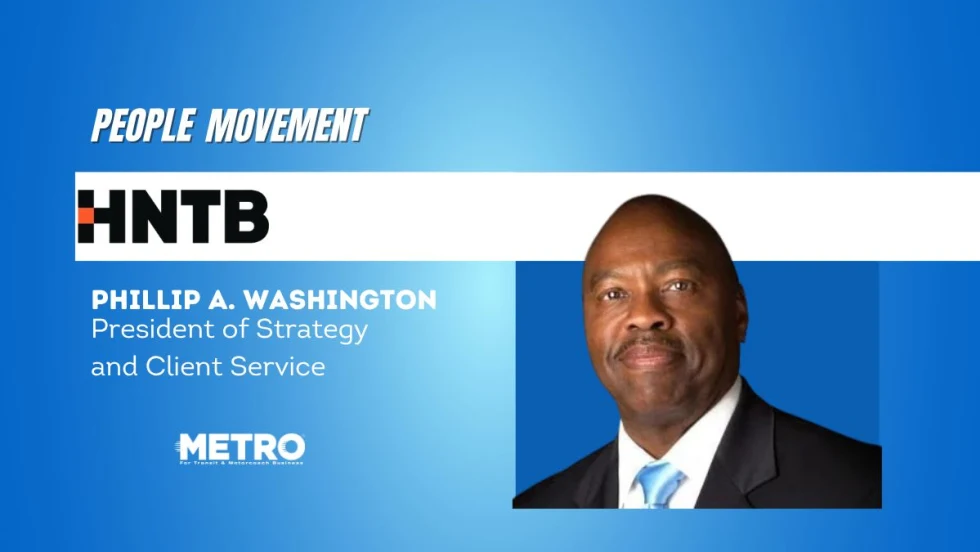
People Movement: Phil Washington Joins HNTB, Denver RTD Launches CEO Search, and More
In this edition, we also spotlight recent personnel moves at STV, the Eno Center for Transportation, and more, highlighting the people taking on new roles across the transportation industry.
Read More →
SEPTA Details Accelerate Vision for Transit System
The plan outlines investments in trolley modernization, new Metro and Regional Rail vehicles, accessible stations, and more frequent bus and rail service.
Read More →
FTA Ends Direct Oversight of MBTA Safety Actions
The federal agency closed its remaining special directive to the Massachusetts Department of Public Utilities following a safety review that began in 2022.
Read More →
Report: Transit Bus Manufacturing Supports 34,100 Jobs, $5.1B in GDP
The “Buses Mean Business” report examines the transit bus manufacturing industry’s economic footprint, supply chain, and rising demand for vehicle replacements.
Read More →
LIT Marks 10-Year Milestone at Annual Summit
Hosted by the COTA from September 10 to 13, the Summit carried the theme “Celebrating 10 Years of Excellence, Leadership, and Impact,” with every part of the program honoring the people, agencies, and partners who built LIT over its first decade.
Read More →