New Orleans Marks 100th Anniversary of Historic Streetcars
Debuting in 1835, the St. Charles Streetcar line is the oldest continuously operating streetcar line in the world and is registered as a National Historic Landmark by the National Historic Register in Washington, D.C.
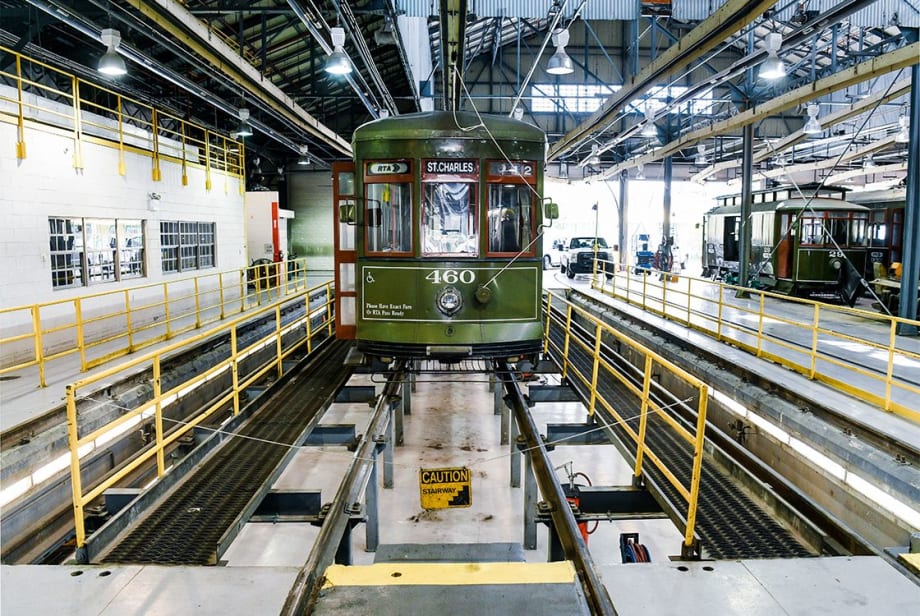
The iconic, green Thomas A. Perley cars were introduced in the New Orleans Streetcar system between 1923 and 1924. These streetcars are revered for their artistry and meticulous construction.
Photo: New Orleans RTA
3 min to read
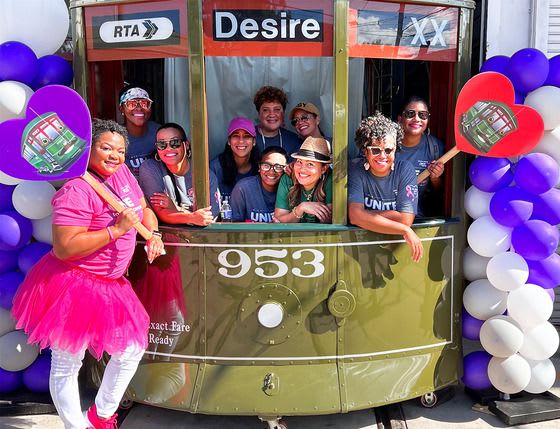
The New Orleans Regional Transit Authority (RTA) hosted a block party to celebrate the 100th Anniversary of the use of the Perley A. Thomas streetcar, which were introduced on the Historic St. Charles Streetcar line throughout 1923 and 1924.
The celebration took place at the Carrollton Streetcar Barn in the Carrollton neighborhood, welcoming the community, streetcar enthusiasts, and public officials for a family-friendly event with music, refreshments, activities, and guided tours of the equally historic facility.
Ad Loading...
The RTA’s CEO, Lona Edwards Hankins, hosted facility tours, featuring the skilled craftsmen who build and maintain the streetcar system.
“It was an honor to join our community to celebrate the legacy of the Thomas A. Perley Streetcar, St. Charles Streetcar Line and the RTA workforce that has maintained the system for generations,” said Lona Edwards Hankins, RTA CEO. “We hope that by celebrating our skilled craftsman and their work to maintain our iconic streetcars, we are planting seeds in our young people who may one day want to pursue careers in transit, engineering and skilled trades.”
Streetcars Rich History in New Orleans
Debuting in 1835, the St. Charles Streetcar line is the oldest continuously operating streetcar line in the world and is registered as a National Historic Landmark by the National Historic Register in Washington, D.C. The first streetcars were pulled by steam locomotives and were later replaced by horse-drawn carriages. In 1893 the streetcar line was electrified.
The iconic, green Thomas A. Perley cars were introduced in the New Orleans Streetcar system between 1923 and 1924. These streetcars are revered for their artistry and meticulous construction. Of the 173 Perley A. Thomas streetcars originally ordered, 38 remain with 10 to 13 in service on the St. Charles Streetcar line daily.
The entire streetcar fleet is completely maintained by skilled RTA electricians, welders, carpenters, machinists, and painters, often using antique tools and machines dating back to the 1900s. Originally purchased for $15,000 each, the Thomas A. Perley replicas would cost nearly $4 million per car to build today.
Ad Loading...
The celebration took place at the Carrollton Streetcar Barn in the Carrollton neighborhood, welcoming the community, streetcar enthusiasts, and public officials for a family-friendly event with music, refreshments, activities, and guided tours of the equally historic facility.
Photo: New Orleans RTA
Developing Tomorrow’s Workforce
Like many industries that rely on skilled labor, the RTA is working to attract the next generation of its workforce to preserve the rich, nearly 200-year legacy of the New Orleans streetcar system. Most of the principal craftsmen who maintain the legacy streetcar system are at or beyond retirement eligibility, creating a potential skilled labor crisis.
Simultaneously, the RTA is re-training and developing a workforce to expand the use of low- and no-emission vehicles beyond its current streetcar system to its fixed route bus service, ferry vessels, and eventually modern rail. The RTA has partnered with Delgado Community College and nonprofit partners like the 1881 Institute to identify and train a workforce that can carry the baton to the next phase of the RTA’s history.
Contract Four is the largest in the Second Avenue Subway Phase 2 project and includes construction of station infrastructure, tracks, and signals for the subway expansion, MTA officials said. Work on Contract Four will begin in 2027.
The Garden State Initiative analysis examines the roles of Amtrak infrastructure, fleet management, and agency operations while recommending a more performance-based approach to improving reliability.
Beginning in 2027, Stadler will provide on-site technical expertise, spare parts support, training, and obsolescence management to help extend the reliability and longevity of CapMetro’s GTW fleet.
In METRO's latest installment, we take a look at recent news from Complete Coach Works, Beep, FlixBus, and more partnerships making headlines across the transportation sector.
Pedestrian microsimulation is helping rail planners identify bottlenecks, test station designs, and prepare complex transit hubs for growing passenger volumes.
The privately developed project would offer a 15-minute trip between downtown and O’Hare’s Terminal 2, with trains operating every 15 minutes on a dedicated track. The service would use battery-electric trains and three existing freight rail rights-of-way.
The draft feasibility report identifies strategies to protect the coastal rail line for decades as the agency continues near-term stabilization and sand placement efforts.