



New Orleans RTA, Union Reach 4-Year Agreement
The agreement between ATU and RTA covers 518 represented employees, including bus, streetcar, and paratransit operators, dispatchers, reservationists, clerks, transit tellers, transit information operators, router editors, and training instructors.

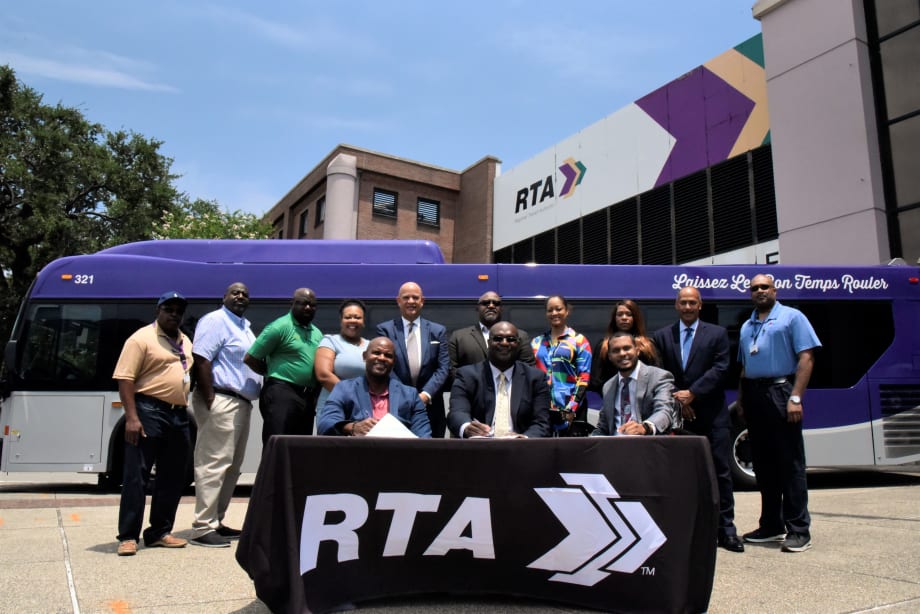
During the board’s meeting, the commissioners unanimously voted to ratify the resolution that granted the RTA’s CEO, Alex Z. Wiggins, the authority to sign the new labor agreement, which includes a pay and benefits package that keeps RTA operators among the highest paid in the southwest and southeast regions.
NORTA
The New Orleans Regional Transit Authority (RTA) announced the ratification of the four-year labor agreement with the Amalgamated Transit Union (ATU) Local 1560. During the board’s meeting, the commissioners unanimously voted to ratify the resolution that granted the RTA’s CEO, Alex Z. Wiggins, the authority to sign the new labor agreement, which includes a pay and benefits package that keeps RTA operators among the highest paid in the southwest and southeast regions.
The agreement between ATU and RTA covers 518 represented employees, including bus, streetcar, and paratransit operators, dispatchers, reservationists, clerks, transit tellers, transit information operators, router editors, and training instructors. The four-year agreement is effective through June 30, 2025.
The RTA and ATU began negotiations in Spring 2021, reaching a tentative agreement on May 5. The agreement was ratified by ATU membership on June 23, with the RTA board adopting the resolution on June 28, which gave the CEO the authority to ratify the contract. Per the agreement, ATU represented employees will now receive:
With the top 2022 salary at $29.41 per hour plus ample opportunities for overtime, RTA transit operators are among the highest paid in the nation.
Increased yearly safe driving bonus from $250 to $400 for operators who maintain safe driving record for the calendar year.
Reduced out of pocket health care expenses by capping employee insurance premiums at 20%.
A 3% increase in employer match in retirement benefits resulting in an increase from 3% to 6%.
Juneteenth and Memorial Day were added as paid holidays, totaling 13 days per year. This includes one personal holiday.
Additional $1,100 in COVID-19 pay, capping at $3,100.
“The RTA workforce has demonstrated time and time again their commitment to maintaining mobility through the most challenging circumstances including the pandemic and our recent overactive hurricane seasons,” said Alex Z. Wiggins, RTA CEO. “I am proud of the agreement made between the RTA and the ATU as it honors this commitment of our essential employees by investing in competitive wages and benefits that make the RTA one of the most desirable employers in the region.”
More Management

METRO Opens Submissions for 2026 Motorcoach Awards
Nominations are now being accepted for METRO Magazine’s Operator of the Year and Innovative Operator of the Year awards.
Read More →
New York MTA Advances Final Contract for Second Avenue Subway Expansion
Contract Four is the largest in the Second Avenue Subway Phase 2 project and includes construction of station infrastructure, tracks, and signals for the subway expansion, MTA officials said. Work on Contract Four will begin in 2027.
Read More →
Transit Agencies Highlight Safety Gains at National Summit
Leaders from 15 major transit systems shared crime-reduction results and safety initiatives while discussing the role of continued federal support.
Read More →

NITA Names New Leadership, Expands Reduced-Fare Program at First Board Meeting
The new regional transit authority appointed its first board chair and interim executive director while extending reduced fares across CTA, Metra, and Pace for eligible riders.
Read More →
Beyond the Checklist: A Structured Approach to Transit Maintenance
Reliability-Centered Maintenance helps transit agencies move beyond routine checklists to focus limited resources on the assets and failures that have the greatest impact on safety, reliability, and service.
Read More →
APTA 2026 Nominating Committee Selects Leadership Slate, Names Chair and Vice Chair Nominees
Leadership changes will help shape the association’s priorities and its representation of the transportation industry during the 2026–2027 term.
Read More →
DART Launches Major Security, Fare Enforcement Initiative
The 90-day demonstration will deploy coordinated security teams at five light rail stations while testing controlled access and gathering data to guide future investments.
Read More →
Advancing Fare Collection Through Technology and Innovation
Learn about delivering 1300 gates at 91 stations while managing fare evasion. Explore the large scale deployment, solution customization and real-world results that affect the region. Prepare for deployment in your region now.
Read More →
Game Day in Motion: Moving Millions During the 2026 World Cup
Between packed transit stations and team motorcoaches, see how agencies and operators across North America tackled the transportation demands of the 2026 FIFA World Cup.
Read More →
Surface Transportation Extension Averts Shutdown, Leaves Transit Funding Gap
The stopgap keeps federal transportation programs moving, but missing advance funding could complicate the transit and rail projects agencies are planning next.
Read More →