



Valley Metro Celebrates Launch of Northwest Phase II Extension
The project includes a series of “firsts” for Valley Metro and the community, including the first elevated station, rail-only bridge over I-17, and a multimodal transit center named after regional transit champion, former Phoenix Mayor, and Councilmember Thelda Williams.

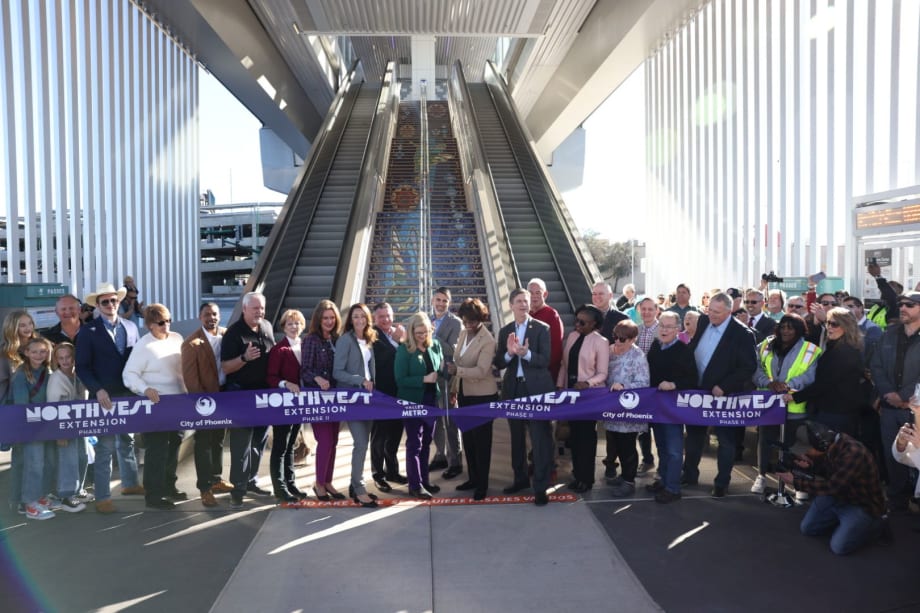
The ribbon cutting ceremony prior to the first ride of Valley Metro’s Northwest Phase II extension, included (L to R) Family of former Mayor & Councilmember Thelda Williams; Phoenix Light Rail Administrator Markus Coleman; Phoenix Vice Mayor Jon Edwards; Fountain Hills Vice Mayor Peggy McMahon; Phoenix Councilmember Ann O’Brien; Valley Metro CEO Jessica Mefford-Miller; Maricopa County Supervisor Bill Gates; Phoenix Mayor Kate Gallego; Phoenix Deputy City Manager Mario Paniagua; FTA Administrator Nuria Fernandez; U.S. Congressman Greg Stanton; Former Glendale Councilmember Gary Sherwood; Phoenix Councilmember Kesha Hodge Washington; Maricopa Association of Governments Managing Executive Director Ed Zuercher; Phoenix Vice Mayor Debra Stark; Arizona Poet Laureate Alberto Rios; and former Mesa Mayor and former Valley Metro CEO Scott Smith.
Photo: Valley Metro
More than 2,000 people, including federal, state, and local leaders, gathered to celebrate the opening of Valley Metro’s Northwest Phase II extension of light rail in Phoenix.
The project includes a series of “firsts” for Valley Metro and the community, including the first elevated station, rail-only bridge over I-17, and a multimodal transit center named after regional transit champion, former Phoenix Mayor, and Councilmember Thelda Williams.
“I am proud to be back in Phoenix, less than three years after signing the grant that funded this important extension that will make such a difference in the lives of people in this region,” said FTA Administrator Nuria Fernandez. “This was the first project funded by FTA under President Biden’s Bipartisan Infrastructure Law and the city and Valley Metro have done incredible work building it on budget and delivering the project earlier than expected. Congratulations to all.”
The Northwest Phase II Extension
The project received $158 million from the nationally competitive Capital Investment Grant program through the FTA. The City of Phoenix T2050 funds provided $213 million and regional transportation funds from Proposition 400 provided the final $30 million.
Construction began in 2020, creating 3,000 direct jobs in the Phoenix community and more than 6,000 indirect jobs across the country.
The new extension includes three stations and is anticipated to initially attract 1,400 new, daily riders to the system each day. Crossing the I-17, the project gives greater transit access to the West Valley, connecting current and future riders with opportunities in central Phoenix, Tempe, and Mesa.
Features of the New Extension
Featured along the new extension, there are nine different art elements created by seven artists reflecting the character and history of the local community. Art is incorporated into the new stations, parking garage and the Thelda Williams Transit Center.
The four-story parking garage has solar panels to support the facility's infrastructure and the transit center is served by five bus routes and, in the future, potentially bus rapid transit.
“We have made the leap over one of our busiest and most vital freeways with a bridge that opens the door to the West Valley,” said Valley Metro CEO Jessica Mefford-Miller. “Congratulations to the Valley Metro team, our contractors, and our neighbors, working in lockstep with the city of Phoenix, to deliver a project ahead of schedule and on budget that beautifies and enriches our community, as depicted by Alberto Rios’ Light Rail Hummingbird.”
More Rail

The Invisible Infrastructure of Passenger Flow
What a seat reservation system on Austria’s Railjet trains reveals about the future of rider experience, and why U.S. agencies should pay attention.
Read More →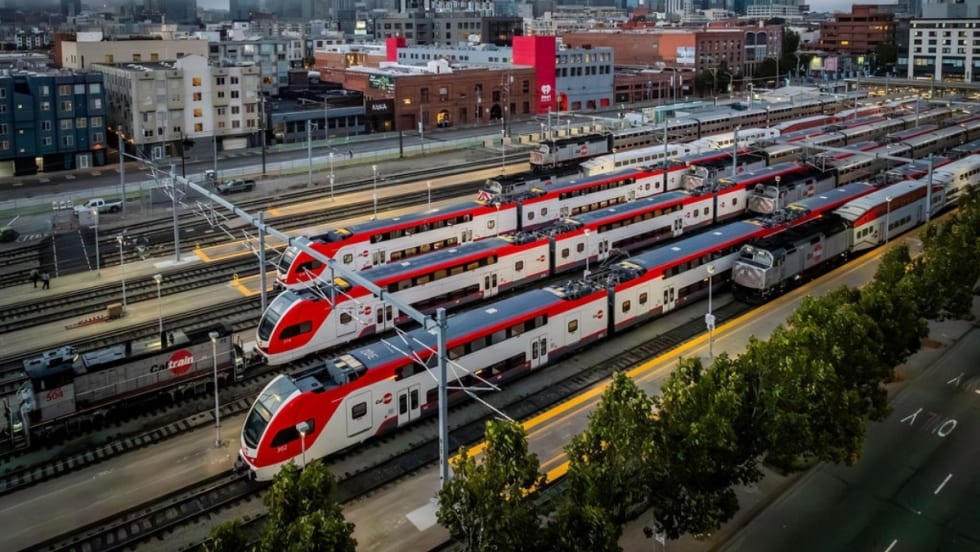
Caltrain Board Approves FY27 Budget, Endorses Efficiency Measures
The move ensures Caltrain service will continue operating as usual in the near term, but long-term financial challenges remain for the rail agency absent a new revenue source.
Read More →
Alstom Acquires Delaware Site to Support Amtrak NextGen Acela Fleet
The company is investing more than $55 million to acquire and improve the property and will employ approximately 100 people at this site once it is operational.
Read More →
When Routine Fails: How Public Transit Must Adapt for the World Cup
The 2026 FIFA World Cup will test transit agencies’ ability to manage unpredictable travel patterns, making real-time data and operational flexibility critical to moving millions of visitors efficiently.
Read More →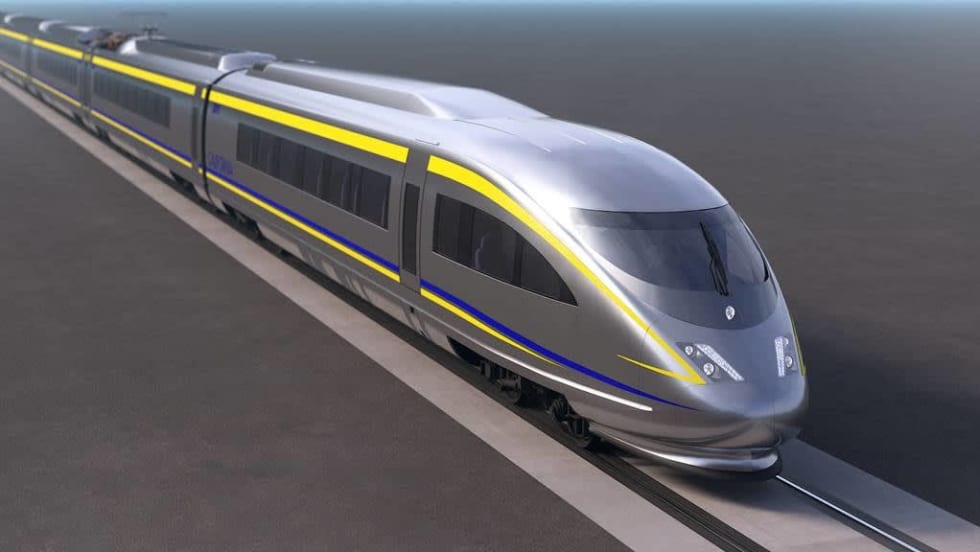
California Selects Team for Nation’s First True High-Speed Rail Track and Systems Contract
The board action follows completion of track installation at the 150-acre southern railhead in Kern County, which will serve as the staging and distribution hub for high-speed track and systems installation.
Read More →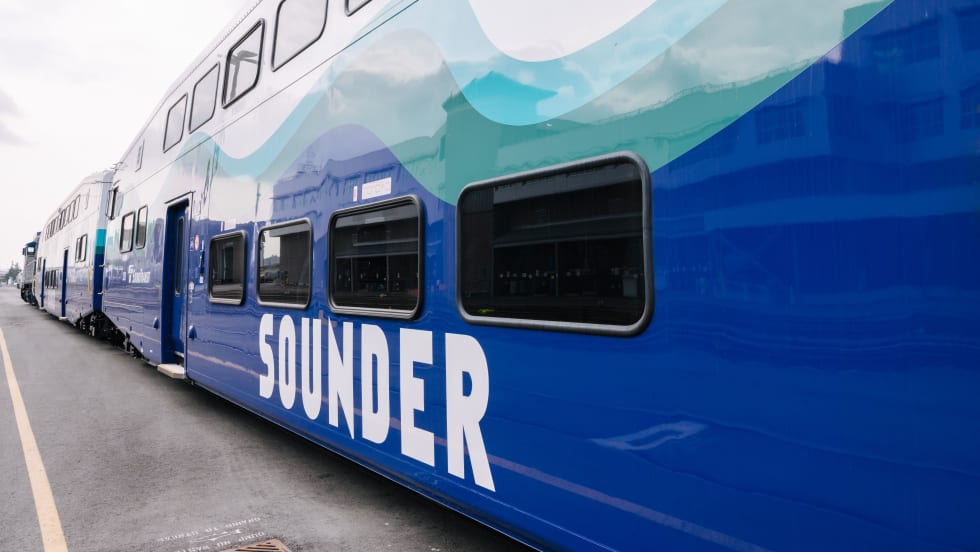
Seattle's Sound Transit Launches New Sounder Railcars into Service
Alstom manufactured all the cars under a $46.5 million contract and came into service in anticipation of summer crowds for soccer and baseball.
Read More →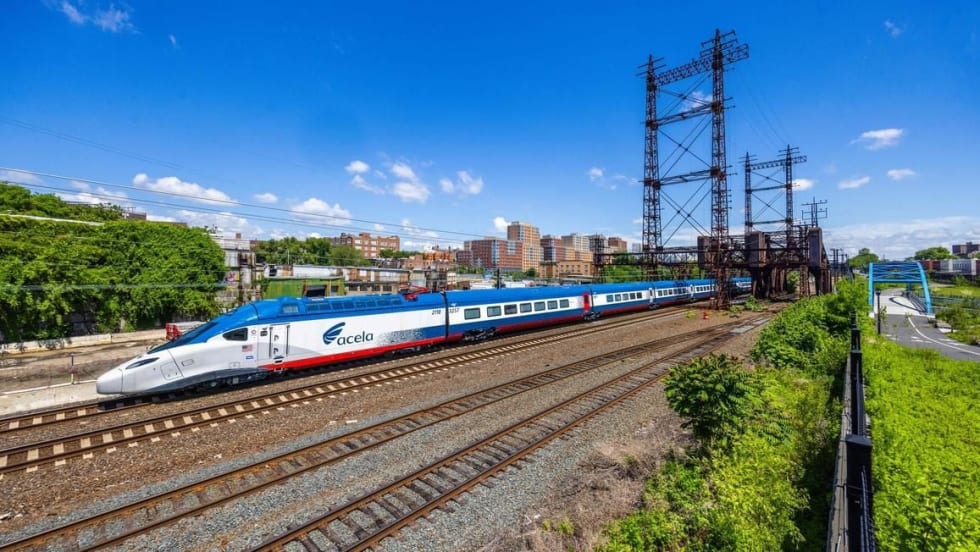
Alstom Partners With Universities to Build Rail Talent Pipeline
The partnerships include a new engineering scholarship fund at Alfred State College in Western New York and collaborations with transportation centers at the University of Pennsylvania and New York University.
Read More →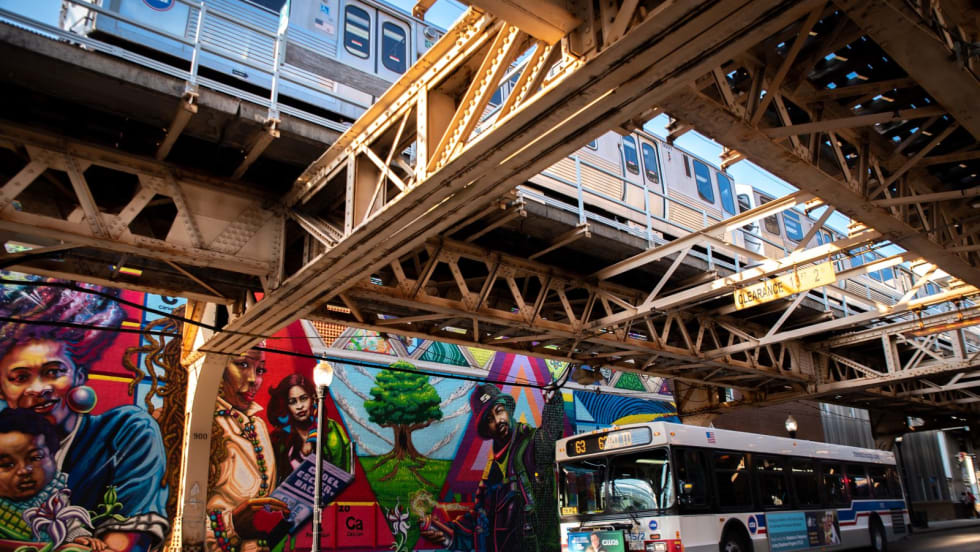
Chicago's NITA Act Moves Into Next Phase as Service Improvements Begin
Rider-focused improvements will begin rolling out across the system immediately as CTA, Metra, and Pace increase service this summer in the six-county region.
Read More →
Seattle’s Sound Transit Adopts Updated ST3 System Plan
The updated system plan incorporates cost savings across the agency, including new revenue sources and financial policies, to set the agency on a sustainable path for the future.
Read More →
Inside Look: EMBARK Expands Fare-Free Transit Program Through New Public-Private Partnership
The OKC transit agency says sponsorship helps subsidize the Third Friday Free initiative while reducing barriers for first-time riders and boosting ridership across buses, streetcars, and river cruises.
Read More →