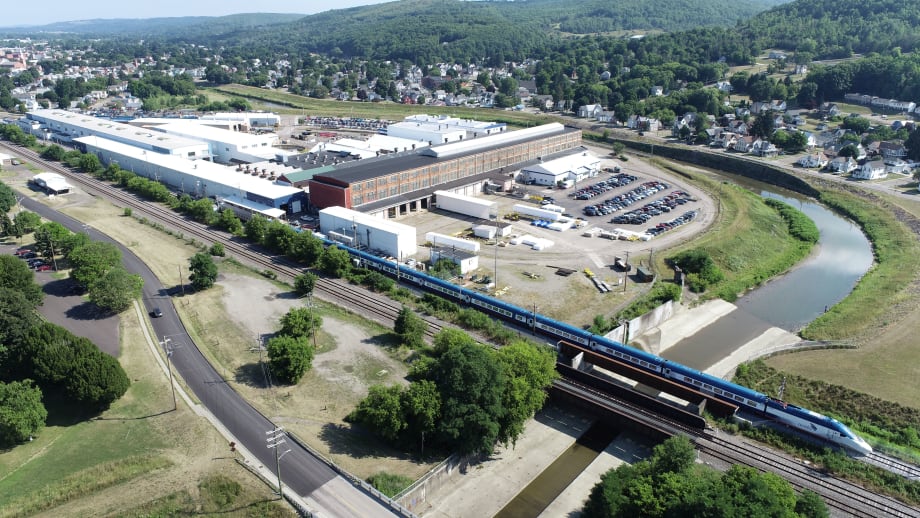
Alstom has spent more than $590 million with 170 suppliers in 27 states to help fulfill Buy America requirements for the Amtrak Avelia Liberty project.
Photo: Alstom
4 min to read
Alstom recently released its first economic impact report in the U.S., which highlights the company’s impact on the nation’s economy.
An analysis of its activities in fiscal years 2022/23 found the company contributed more than $700 million to the U.S. GDP, and nearly 10,000 direct and indirect jobs.
Ad Loading...
“The U.S. Impact Report, which we created in partnership with EY, helps us tell the story of what we are doing in the U.S. and how that work is helping decarbonize transportation and creating positive impact on the communities where we are creating jobs and bringing our products and solutions,” Alstom representatives tell METRO Magazine. “We also wanted to showcase our role as a sustainable mobility tech leader in the U.S., and our work and investment America’s great cities, as well as America’s largest and busiest airports.”
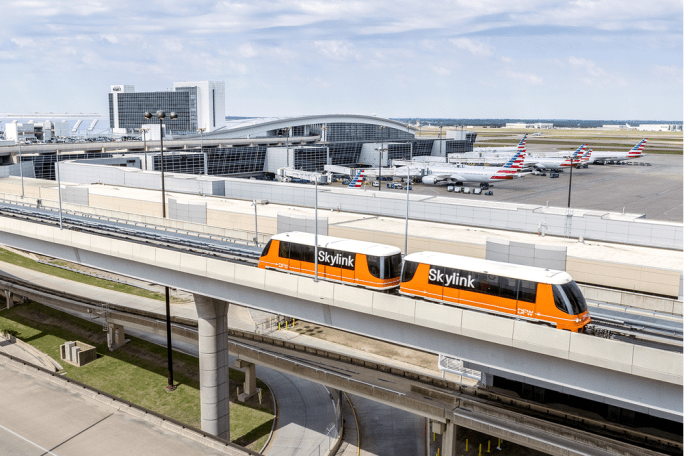
Automated People Movers designed, manufactured, and in most cases maintained and operated by Alstom have transported over 525 million passengers safely and efficiently at 16 airports across the nation.
Photo: Alstom
Report Findings
The report outlines Alstom’s key role in developing and modernizing the United States’ transportation network by offering fully integrated rail and transit system projects. Report highlights include:
Alstom is a leader in railway manufacturing, signaling, operations, and maintenance, operating in 45 U.S. locations and managing 17 engineering and manufacturing sites in the U.S. alone.
Avelia Liberty, the first-ever high-speed train built in the U.S., is being manufactured with 95% Buy America compliance and 95% of components sourced locally.
Automated People Movers designed, manufactured, and in most cases maintained and operated by Alstom have transported over 525 million passengers safely and efficiently at 16 airports across the nation.
“Public transit is vital for the U.S. economy. It’s also an essential tool for increasing social equity and fighting climate change, but for far too long, the country has underinvested in this mode,” say Alstom’s representatives. “With the passage of the IIJA there is a historic level of funding for transit agencies, which will allow them to undertake long overdue steps to modernize their signaling, fleets, and infrastructure. This is great news for riders, but it’s also excellent for American workers, who thanks in part to strong Buy America provisions will have good-paying jobs in planning, engineering, and manufacturing to carry out this work.”
Buy America, High-Speed Rail
Alstom has spent more than $590 million with 170 suppliers in 27 states to help fulfill Buy America requirements for the Amtrak Avelia Liberty project. Alstom and Amtrak have also worked in close partnership to meet ambitious small and disadvantaged business enterprise goals.
Ad Loading...
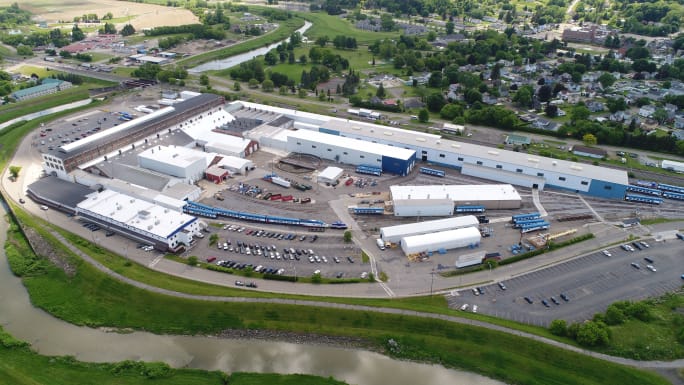
With investments of more than $87 million made at the company’s Hornell, N.Y., manufacturing site, Alstom is set to bring America’s first high-speed rail trains and support many future rail and transit programs in meeting Buy America requirements, according to Alstom’s report.
To date, Alstom has produced 11 trainsets and is currently in the safety certification process. The company will be the first, and only, manufacturer in the U.S. to have certified a train capable of operating at 220 mph, or what is considered true high speed.
“We are building these trains in the U.S. for the U.S. market because we’re deeply committed to fulfilling the requirements of the Buy America policy. This policy is helping create good manufacturing jobs in the U.S. across many sectors, but it’s especially exciting for us to help be part of doing it for HSR, as well as for other rail and transit projects,” say Alstom’s representatives. “As our report lays out in more detail, it’s not just the jobs we create directly, it’s an entire ecosystem of suppliers, many of whom are based near our manufacturing sites that are creating good jobs across the country.”
With investments of more than $87 million made at the company’s Hornell, N.Y., manufacturing site, Alstom is set to bring America’s first high-speed rail trains and support many future rail and transit programs in meeting Buy America requirements, according to Alstom’s report.
Photo: Alstom
Investing in Manufacturing, Developing Tomorrow’s Workforce
Through the Buy America program, Alstom has strengthened their partnerships with the New York State Empire State Development, aiming to modernize and expand Hornell and Plattsburgh manufacturing facilities.
Alstom’s ongoing partnership with New York State Empire State Development for modernization and expansion of Hornell and Plattsburgh manufacturing facilities include a $30 million Upstate Revitalization Initiative grant to support the addition of 60,000 square feet of new production and engineering space in Hornell, 10,000 feet of new track, and a $7 million Excelsior Jobs Credit incentive for new stainless steel car body shell manufacturing facility.
Ad Loading...
Providing jobs and in-house training at the Hornell manufacturing sites has resulted in local public and private investments worth $200 million in the City of Hornell, which has led to new housing, hotels and restaurants, and infrastructure critical to the health of the community, according to Alstom’s report.
Alstom’s report also points out the company is committed to workforce development and advancement, as well as cultivating the next generation of talent.
“Jobs at Alstom span the gamut — we have blue collar manufacturing jobs, highly technical engineering jobs that require advanced degrees, and services jobs helping maintain and repair trains and rail infrastructure,” say Alstom officials.
To identify tomorrow’s workforce today, Alstom has a diverse set of partnerships with colleges and universities like Rochester Institute of Technology, the University of Pittsburgh, and Alfred State College, as well as programs like its LEAD program for recent grads and the second chance program at the company’s JFK airport site, which provides access to jobs for formerly incarcerated people.
“We also have a number of internal training programs to help staff advance in their careers,” say Alstom officials. “This is to ensure that Alstom invests in and promotes its talent to ‘grow the future generation of Alstomeers.’”
Contract Four is the largest in the Second Avenue Subway Phase 2 project and includes construction of station infrastructure, tracks, and signals for the subway expansion, MTA officials said. Work on Contract Four will begin in 2027.
The Garden State Initiative analysis examines the roles of Amtrak infrastructure, fleet management, and agency operations while recommending a more performance-based approach to improving reliability.
Beginning in 2027, Stadler will provide on-site technical expertise, spare parts support, training, and obsolescence management to help extend the reliability and longevity of CapMetro’s GTW fleet.
In METRO's latest installment, we take a look at recent news from Complete Coach Works, Beep, FlixBus, and more partnerships making headlines across the transportation sector.
Pedestrian microsimulation is helping rail planners identify bottlenecks, test station designs, and prepare complex transit hubs for growing passenger volumes.
The privately developed project would offer a 15-minute trip between downtown and O’Hare’s Terminal 2, with trains operating every 15 minutes on a dedicated track. The service would use battery-electric trains and three existing freight rail rights-of-way.
The draft feasibility report identifies strategies to protect the coastal rail line for decades as the agency continues near-term stabilization and sand placement efforts.