




Keep Reading: Amtrak Sets All-Time Ridership Record in FY24
Amtrak’s East River Tunnel Rehabilitation Project Officially Underway
The rail line begins critical tunnel repairs to restore storm-damaged infrastructure and ensure safe service, which requires one of the company's largest outages in recent history.
May 29, 2025
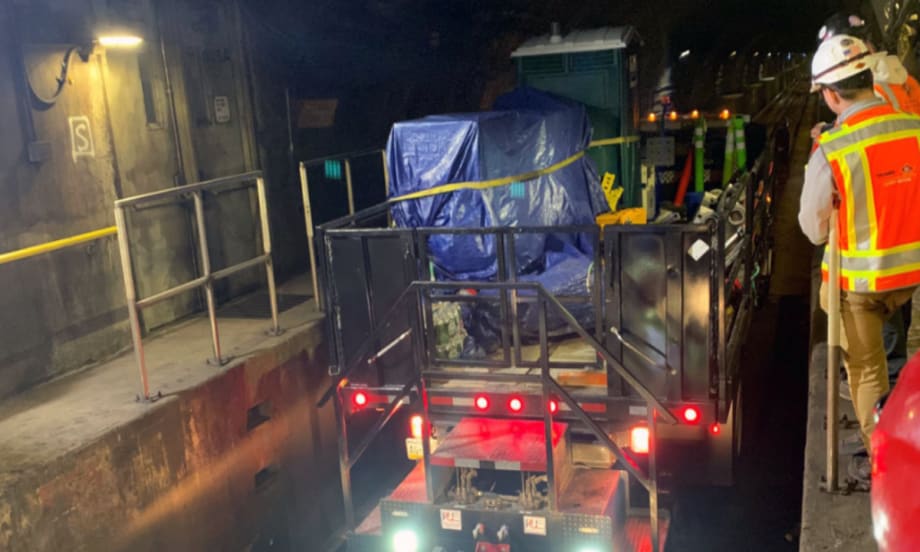
Over Memorial Day weekend, work vehicles entered Line 1 to ensure it could accommodate traffic flow due to outages scheduled for Line 2.
Photo: Amtrak
2 min to read
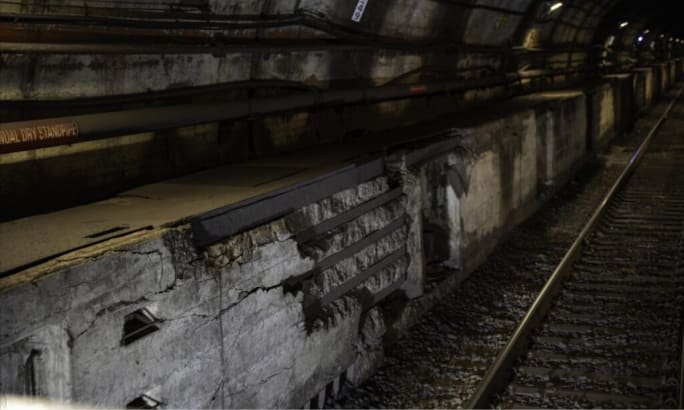
Current Line 1 and Line 2 bench wall conditions show damages over time after being inundated with saltwater during Superstorm Sandy.
Photo: Amtrak
Amtrak crews recently began the first long-term track outage supporting the East River Tunnel Rehabilitation Project (ERT Rehab). The project is a critical infrastructure investment in restoring two tunnel tubes damaged by Superstorm Sandy (Line 1 and Line 2).
According to a company statement, this is Amtrak's largest planned outage in recent history, an important undertaking planned in coordination with their partners over several years.
While still structurally sound and safe for passenger use, the reliability of the systems inside the tubes has continued to deteriorate since the 2012 storm. The century-old tunnels have reached the end of their useful lives and must be rehabilitated entirely to ensure another 100 years of service.
The ERT Rehab project will involve demolishing the existing tunnel systems down to concrete liners and then reconstructing the tunnels with modern, state-of-the-art tunnel systems.
The construction will occur in one tunnel tube at a time under a full closure for maximum efficiency, beginning with Line 2.
Throughout the project, three of the four East River Tunnels will remain available for service to ensure continued Amtrak, Long Island Rail Road, and NJ TRANSIT service.
Amtrak crews are on standby throughout the Penn Station complex to respond quickly to emergencies and minimize the impact of the track outage to the maximum extent possible.
Mitigation Work Ensures Smooth Service During Tunnel Rehab
In the months and years leading up to the long-term outage, which began over Memorial Day weekend, Amtrak proactively performed work in the tunnels that will remain open to prepare them for additional traffic and reduce the risk of infrastructure failures during the three-track operation.
This work has included repairing damaged sections of the bench wall, sealing the tunnel liner to prevent water infiltration, replacing the third rail, and making signal and power upgrades throughout Lines 1, 3, and 4.
Since mitigation work has been completed for Lines 3 and 4, work crews are using the first 10 days of the long-term outage to complete the remaining mitigations focused on the final "hardening" of the infrastructure in Line 1.
This work began over Memorial Day weekend and incurred no interruptions to planned service. Mitigation plans include power cable relocation and block tie replacements and are scheduled to conclude before the team moves to Line 2 on Monday, June 2.
More Rail

ENC Lands MATA Contract and More in Biz Briefs
In this edition of Biz Briefs, we spotlight the latest developments shaping the future of mobility.
Read More →
Strada360’s Steve Lassey on Turning Transit Data Into Better Decisions
From breaking down data silos to preparing for AI, Strada360 CEO Steve Lassey discusses how transit agencies can use technology to improve operations, customer information, and long-term decision-making.
Read More →
SEPTA Details Accelerate Vision for Transit System
The plan outlines investments in trolley modernization, new Metro and Regional Rail vehicles, accessible stations, and more frequent bus and rail service.
Read More →
FTA Ends Direct Oversight of MBTA Safety Actions
The federal agency closed its remaining special directive to the Massachusetts Department of Public Utilities following a safety review that began in 2022.
Read More →
Amtrak, CN Reach Agreements to Strengthen Passenger Rail Service, Safety
The agreement resolves a more than decade-long proceeding before the Surface Transportation Board concerning the terms and conditions for Amtrak services, such as the City of New Orleans, Illini/Saluki, and Wolverine.
Read More →
New York MTA Advances Final Contract for Second Avenue Subway Expansion
Contract Four is the largest in the Second Avenue Subway Phase 2 project and includes construction of station infrastructure, tracks, and signals for the subway expansion, MTA officials said. Work on Contract Four will begin in 2027.
Read More →
San Diego MTS Breaks Monthly Trolley Ridership Record
Agency officials said July’s ridership indicates MTS’s continued recovery from the pandemic.
Read More →
Report Examines NJ TRANSIT Reliability, Funding Challenges
The Garden State Initiative analysis examines the roles of Amtrak infrastructure, fleet management, and agency operations while recommending a more performance-based approach to improving reliability.
Read More →
Stadler, CapMetro Sign Long-Term Rail Fleet Support Agreement
Beginning in 2027, Stadler will provide on-site technical expertise, spare parts support, training, and obsolescence management to help extend the reliability and longevity of CapMetro’s GTW fleet.
Read More →
Biz Briefs: Alstom Lands Canadian Contract, LYT to Supply California TSP, and More
In METRO's latest installment, we take a look at recent news from Complete Coach Works, Beep, FlixBus, and more partnerships making headlines across the transportation sector.
Read More →