




Miss This? The Paratransit Evolution is Here, But Where is it Headed?
TriMet NEXT Brings Transit On-Demand in Oregon
Seniors and people with disabilities in south Gresham begin using on-demand transit to connect with neighborhood destinations and TriMet fixed-route services
June 17, 2025
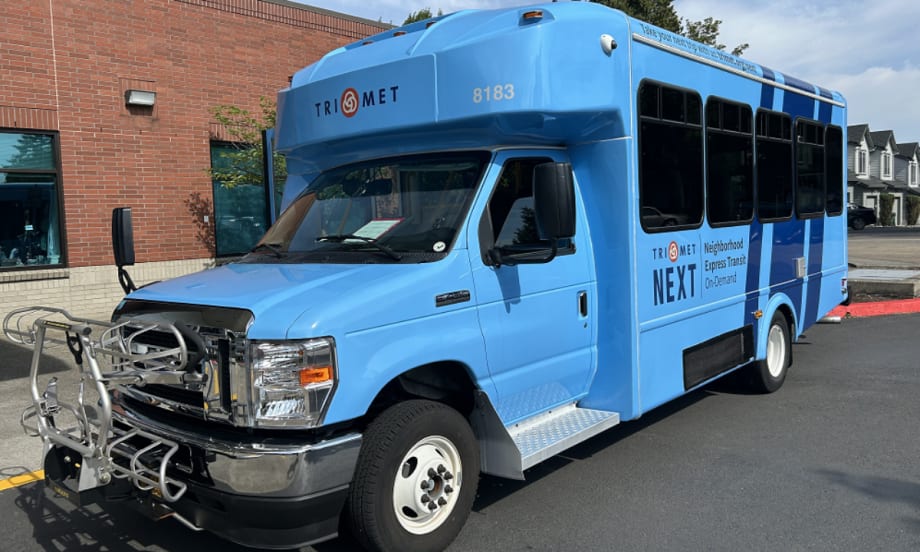
TriMet has two bus lines that serve south Gresham neighborhoods on weekdays, with buses running during the busiest morning and afternoon service hours.
Photo: TriMet
3 min to read
What if riding public transit was as easy as using ride-hailing apps like Uber and Lyft?
The reality of this is inching closer and closer with the introduction of TriMet NEXT, an on-demand transit service to help seniors and people with disabilities connect with their community. TriMet is launching a public pilot of its new service in the south Gresham and Power Valley neighborhoods of Gresham, Oregon.
According to a company statement, TriMet NEXT acts as micro transit, suitable for quick trips to destinations within the pilot project service area. It can also connect with fixed-route services at transit centers and hubs, providing additional access to 79 bus lines, five MAX lines, and WES commuter rail for travel across our 533-square-mile service area.
“TriMet NEXT is about convenience, connectivity, and independence,” said TriMet General Manager Sam Desue Jr. “It’s also about freedom — the freedom to connect with your community on your schedule with a trusted transportation provider that’s known for safe, affordable transit service!”
Accessing On-Demand Transit Through App Services
To access TriMet NEXT services, riders can start with the free TriMet NEXT app, available in Apple App or Google Play stores. The app will notify the next available vehicle for pickup by plugging in a starting location and destination.
The app will also let users know when the bus will arrive. According to a company statement, a vehicle typically arrives within 30 minutes. TriMet NEXT is available from 9 a.m. to 6 p.m. It provides service seven days a week, including on holidays.
Non-app users can reserve trips online at trimet.org/next or by calling 503-962-5959.
“I applaud TriMet’s courage for looking at ways that we can solve challenges folks face in our communities,” said Gresham Mayor Travis Stovall. “There’s something called the last mile, and it’s often a challenge for people, connecting that last mile of transportation with our homes and business, and this is a solution that helps in that access.”
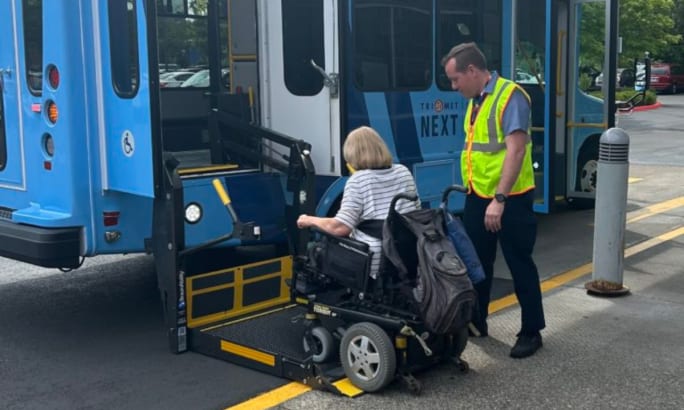
TriMet NEXT buses are accessible vehicles with space for multiple mobility devices and up to six additional riders. Operators help secure mobility devices, when needed.
Photo: TriMet
How TriMet NEXT Improves on Ride-Hailing
While there are many similarities between TriMet NEXT and popular ride-hailing apps, there are some beneficial differences, including:
The fare for TriMet NEXT is the same as that for fixed-route services. Riders will never be charged more than $2.80 to ride 2½ hours with Adult fare and $1.40 for Honored Citizen fare, available to adults over 65 and those with disabilities who have signed up for the reduced fare.
TriMet NEXT uses Hop Fastpass, an electronic fare system that makes it easy to pay fares with a physical Hop card, virtual Hop card, or a contactless debit or credit card.
TriMet NEXT drivers are professional transit operators who have undergone a background check. Rides occur on smaller, accessible paratransit buses with space for up to six people and multiple mobility devices. TriMet NEXT operators will help riders secure mobility devices on board if requested.
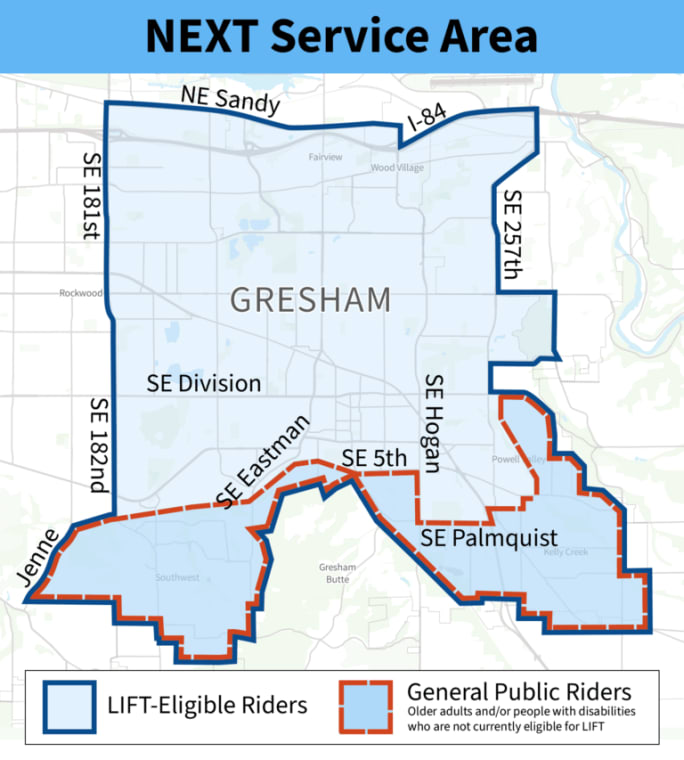
TriMet NEXT was first rolled out in April 2025 to the agency's paratransit riders with access to a larger service area.
Source: TriMet
TriMet NEXT was first rolled out in April 2025 to the agency's paratransit riders with access to a larger service area. In the first month, they gave the service a 100% satisfaction rating, according to a company statement.
In mid-May, the agency opened the service in south Gresham to riders aged 65 and older or have a disability and are not currently registered for LIFT.
TriMet has two bus lines that serve south Gresham neighborhoods on weekdays, with buses running during the busiest morning and afternoon service hours. Plus, TriMet NEXT makes same-day transit service available to vulnerable riders, whereas LIFT paratransit trips must be booked at least a day in advance.
“This is the end of my dream. We have same-day service now,” said TriMet Committee on Accessible Transportation (CAT) Chair Jan Campbell. “And it’s not just that the service is accessible, it’s also equitable.”
TriMet is always looking for ways to serve its riders better. Comments can be left in the app, or contact the TriMet Customer Service team at 503-238-7433 (RIDE) or trimet.org/hello.
More Bus

New York MTA Plans Largest Bus Fleet Upgrade in More Than a Decade
The agency is seeking manufacturers for 650 new CNG buses to replace aging vehicles, improve reliability, and advance its broader fleet modernization strategy.
Read More →
Building a Flexible Path to Transit Electrification
John Hroncich discusses BAE Systems’ modular and scalable approach, lessons learned from decades of real-world operations, and how agencies can identify electrification strategies that fit their fleets.
Read More →
Bus Tech Talk: Keeping Transit Technicians Ahead of the Technology Curve
LA Metro’s Obed Mejia discusses technician training, evolving maintenance technology, fleet replacement, and strategies for getting the most out of today’s transit fleets.
Read More →
Biz Briefs: RIPTA Unveils New Frontrunners, Clevland RTA Adds New Siemens, and More
In METRO's latest installment, we take a look at recent news from Siemens, Prevost, Dodge, and more partnerships making headlines across the transportation sector.
Read More →
People Movement: Holly Arnold Joins Transdev and More
In this edition, we also cover recent appointments and announcements at Pace, CamTran, MCI, and more, showcasing the individuals helping to shape the future of transportation.
Read More →
The High Cost of Transit Buses: Industry Leaders Look to Procurement Reform
Transit leaders and policymakers examine how standardized bus designs, streamlined procurement, and predictable funding could help agencies stretch budgets and deliver better service.
Read More →
The Business Voice Behind Public Transportation
As chair of APTA’s Business Members Board of Governors, Ray Melleady explains how more than 850 business members are partnering with transit agencies to advance funding, innovation, and industry-wide collaboration.
Read More →
From Surviving to Thriving: Building Stronger Transportation Organizations
Bus Business Consultants founder Brian Dickson shares lessons on leadership, organizational health, and creating options for long-term success in a changing transportation industry.
Read More →
Finding the ‘Happy Medium’: Optimizing Maintenance Without Sacrificing Reliability
The key to maintenance optimization isn’t doing less work—it’s doing the right work at the right time on the right assets.
Read More →
LA Metro, City of West Hollywood, and Partners Advance Smarter Bus Lane Enforcement
The award-winning partnership combines AI-powered detection with human oversight to improve bus reliability, accessibility, and enforcement efficiency.
Read More →