



2012 Women In Transportation: Lisa Farbstein
Public Affairs Manager – Strategic Communications/Public Affairs Transportation Security Administration Arlington, Va.
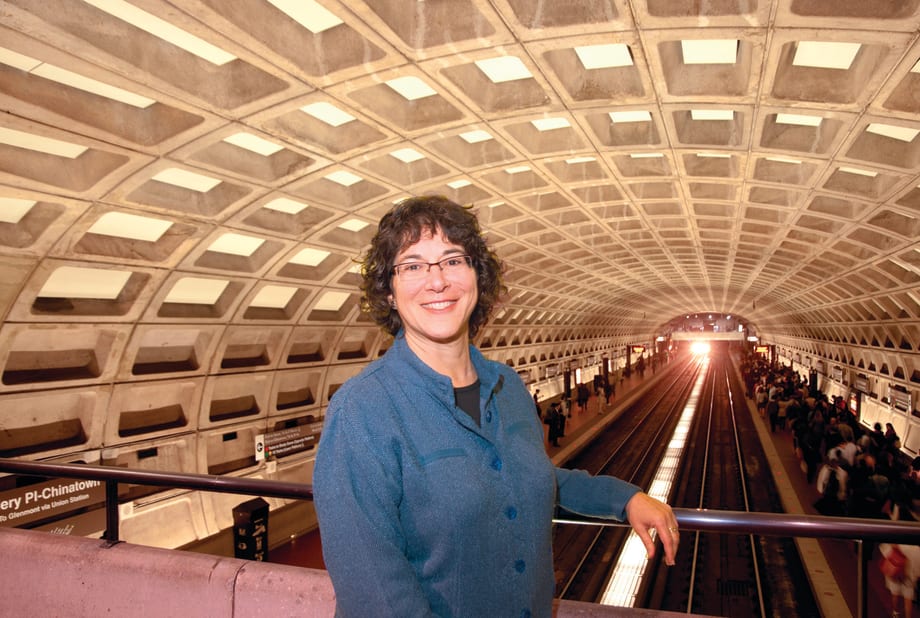
Straight out of university, Baltimore-raised Lisa Farbstein wanted to be a reporter. She got a job at a local newspaper as a sports writer, and as an ardent baseball fan, she called it the “post-college dream job.”
A few years later, a small private college in Maryland was hiring an assistant director of public relations, and it was in that position that Farbstein put her communications degree to work. Over time, she raised the school’s profile, produced admissions brochures and fundraising literature, helped start the college on the path of desktop publishing to websites and even earned a master’s degree.
Eleven years later, however, Farbstein was looking for something fresh. She took a spokesperson job for the Arlington, Va. public school system. This position gave her immersed news/media experience in Washington, D.C. and just the right skills needed to grab the attention of her next and second longest employer, the Washington Metropolitan Area Transit Authority (WMATA).
Farbstein was first hired as a spokesperson and then served as the director of media relations and public relations, overseeing 13 people with a $2 million budget.
While at WMATA, Farbstein launched a social media platform and developed the agency’s first emergency communications response plan for major crises. She covered everything from fatal train collisions to board turmoil.
“Typically the crises there would be operational, so I saw a strong need for having an emergency response plan compliant with the Department of Homeland Security response methodology from the communications side to work with folks internally and externally,” says Farbstein.
After 10 years at WMATA, Farbstein left to pursue her present position at the Transportation Security Administration (TSA): public affairs manager in the strategic communications/public affairs department.
Farbstein is the lead TSA spokesperson for the New York and New Jersey region. Because she’s based in Washington, D.C., she’s occasionally involved in projects for TSA’s headquarters as well. TSA has 10 spokespeople across the country. They each take turns being “on call” for four weeks of the year and must answer to nation-wide issues and emergencies.
“At WMATA, it would always be something odd, trivial or unusual because of the number of passengers being transferred daily,” says Farbstein. “Here, you see things on a national scale — because it’s the federal government, the stakes are higher.”
Currently, Farbstein is working closely with risk-based security. She helps promote risk-based initiatives, makes updates and improvements to current regulations, and rolls out initiatives in other states. From her experience at WMATA, she has become a bit of a crisis expert.
“It’s satisfying to know what good work is being done by TSA to keep people safe while using various transportation systems,” says Farbstein. “We help ensure people’s freedom of movement.”
She also writes about the events, issues and occurrences that happen throughout the transportation systems — airport, rail and mass transit in general — to notify the media, passengers and TSA’s internal team.
She says the most challenging part of her job is breaking into the media news cycle. If something unusual happens in transit, the media is quick to report on it; however, it frequently takes TSA time to investigate.
Once TSA resolves a problem, Farbstein must break into that rapid news cycle to provide a complete side of the story. She accomplishes this by posting Twitter updates or longer blurbs on the TSA blog.
“I enjoy working with the media,” says Farbstein. “Maybe that’s because of my initial background in reporting, but I understand what they’re looking for and why.”
More Bus

New York MTA Plans Largest Bus Fleet Upgrade in More Than a Decade
The agency is seeking manufacturers for 650 new CNG buses to replace aging vehicles, improve reliability, and advance its broader fleet modernization strategy.
Read More →
Building a Flexible Path to Transit Electrification
John Hroncich discusses BAE Systems’ modular and scalable approach, lessons learned from decades of real-world operations, and how agencies can identify electrification strategies that fit their fleets.
Read More →
Bus Tech Talk: Keeping Transit Technicians Ahead of the Technology Curve
LA Metro’s Obed Mejia discusses technician training, evolving maintenance technology, fleet replacement, and strategies for getting the most out of today’s transit fleets.
Read More →
Biz Briefs: RIPTA Unveils New Frontrunners, Clevland RTA Adds New Siemens, and More
In METRO's latest installment, we take a look at recent news from Siemens, Prevost, Dodge, and more partnerships making headlines across the transportation sector.
Read More →
People Movement: Holly Arnold Joins Transdev and More
In this edition, we also cover recent appointments and announcements at Pace, CamTran, MCI, and more, showcasing the individuals helping to shape the future of transportation.
Read More →
The High Cost of Transit Buses: Industry Leaders Look to Procurement Reform
Transit leaders and policymakers examine how standardized bus designs, streamlined procurement, and predictable funding could help agencies stretch budgets and deliver better service.
Read More →
The Business Voice Behind Public Transportation
As chair of APTA’s Business Members Board of Governors, Ray Melleady explains how more than 850 business members are partnering with transit agencies to advance funding, innovation, and industry-wide collaboration.
Read More →
From Surviving to Thriving: Building Stronger Transportation Organizations
Bus Business Consultants founder Brian Dickson shares lessons on leadership, organizational health, and creating options for long-term success in a changing transportation industry.
Read More →
Finding the ‘Happy Medium’: Optimizing Maintenance Without Sacrificing Reliability
The key to maintenance optimization isn’t doing less work—it’s doing the right work at the right time on the right assets.
Read More →
LA Metro, City of West Hollywood, and Partners Advance Smarter Bus Lane Enforcement
The award-winning partnership combines AI-powered detection with human oversight to improve bus reliability, accessibility, and enforcement efficiency.
Read More →