



Electro Wire connects rail industry with cable needs
Its facilities, automated equipment and lean manufacturing process reduce labor content and minimize waste resulting in significant cost savings for standard or custom cable assemblies, box builds or other electromechanical builds.
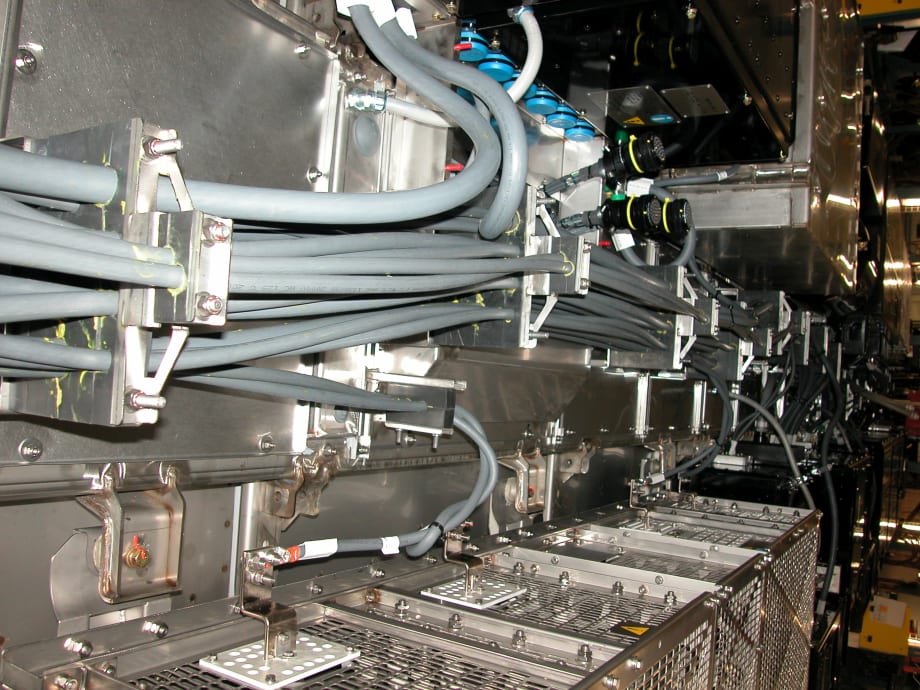
Exane is used to perform all electrical functions, including power, control, instrumentation and data transmission on the rail vehicle.
Exane is used to perform all electrical functions, including power, control, instrumentation and data transmission on the rail vehicle.
Electro Wire, a division of EIS Inc., is the leading supplier of Exane insulated wire and cable in the U.S. “Our extensive footprint of stocking locations across the country allow us to ship quickly and economically,” says Kevin McNamara, VP, Genuine Cable Group, the parent company of Electro Wire. Over the past 36-plus years, the company has established lasting relationships with most of the leading rail and transit companies and subcontractors, he adds.
Exane is the preferred electrical wire and cable for use in wiring transit vehicles of all kinds, including heavy and light rail, push-pull cars, airport peoplemovers, and high-power locomotives for both passenger and freight service. It is used to perform all electrical functions, including power, control, instrumentation and data transmission on the vehicle.
Made from a proprietary irradiation cross-linked polyolefin compound (XLPO), Exane exceeds all of the physical and electrical requirements including the flame, smoke and toxicity of the NFPA 130, AAR-5-501 and RP-585 rail/transit industry specifications.
In addition to its Exane wire and cable inventories, Electro Wire has an in-house cable assembly division, which designs, tests and manufactures assemblies to meet customers’ most exacting standards. Services offered include prototype, specialized low-volume, quick-turn, high-volume and end-of-life phases of production, McNamara says.
Electro Wire can take customer ideas from the design stage through testing, as well as build to existing specs and prints. Its facilities, automated equipment and lean manufacturing process reduce labor content and minimize waste resulting in significant cost savings for standard or custom cable assemblies, box builds or other electromechanical builds.
More Rail

New York MTA Advances Final Contract for Second Avenue Subway Expansion
Contract Four is the largest in the Second Avenue Subway Phase 2 project and includes construction of station infrastructure, tracks, and signals for the subway expansion, MTA officials said. Work on Contract Four will begin in 2027.
Read More →
San Diego MTS Breaks Monthly Trolley Ridership Record
Agency officials said July’s ridership indicates MTS’s continued recovery from the pandemic.
Read More →
Report Examines NJ TRANSIT Reliability, Funding Challenges
The Garden State Initiative analysis examines the roles of Amtrak infrastructure, fleet management, and agency operations while recommending a more performance-based approach to improving reliability.
Read More →
Stadler, CapMetro Sign Long-Term Rail Fleet Support Agreement
Beginning in 2027, Stadler will provide on-site technical expertise, spare parts support, training, and obsolescence management to help extend the reliability and longevity of CapMetro’s GTW fleet.
Read More →
Biz Briefs: Alstom Lands Canadian Contract, LYT to Supply California TSP, and More
In METRO's latest installment, we take a look at recent news from Complete Coach Works, Beep, FlixBus, and more partnerships making headlines across the transportation sector.
Read More →
CATS Gold Line Marks 5 Years of Service, 2.8M Passenger Trips
With a six-mile expansion planned, the Charlotte streetcar is positioned to connect more neighborhoods and major transit hubs across the region.
Read More →
Why Simulating Pedestrian Movement Has Become Essential for Modern Rail Stations
Pedestrian microsimulation is helping rail planners identify bottlenecks, test station designs, and prepare complex transit hubs for growing passenger volumes.
Read More →
Amtrak Begins Major Construction at New York’s Sunnyside Yard
The new maintenance facility will support Amtrak’s Airo trainsets while improving maintenance efficiency and turnaround times in New York.
Read More →
Chicago Leaders Unveil Plans for O’Hare Airport Express Train
The privately developed project would offer a 15-minute trip between downtown and O’Hare’s Terminal 2, with trains operating every 15 minutes on a dedicated track. The service would use battery-electric trains and three existing freight rail rights-of-way.
Read More →
OCTA Maps Out 30-Year Strategy to Protect Coastal Rail Corridor
The draft feasibility report identifies strategies to protect the coastal rail line for decades as the agency continues near-term stabilization and sand placement efforts.
Read More →