



Executive Q&A: COVID-19's Impact on Operational Planning
Transit agency executives discuss the the COVID-19 pandemic's impact on their agency's operational planning for the short- and long-term.
Executives discuss the shifts in approach to operational planning due to the COVID-19 pandemic.
Photo: Unsplash
How did the pandemic impact your agency’s operational planning for both the short- and long-term future?
Darrell E. Johnson, CEO, Orange County Transportation Authority

It became abundantly clear during the pandemic that, although ridership fell by as much as 70%, thousands of people in Orange County never stopped relying on OC Bus to reach essential jobs and medical services. Right now, OCTA is focused on gradually, safely restoring bus service to meet immediate needs. Long-term, we launched a comprehensive OC bus restructuring study to reflect changes in demand, travel patterns, and funding, ensuring optimum efficiency for our future.
Noah S. Berger, Administrator, Merrimack Valley Regional Transit Authority

COVID-19 has radically transformed the paradigm for how transit promotes and markets itself. We can no longer rely on word of mouth, or wait for all of our once loyal riders to come back. We must be “in your face,” increase our visibility, and be present in the community. Just blending in is no longer viable — we must stand out so that all potential new riders see us and see how we can serve them.
Steve Bland, CEO, WeGo Public Transit
In the weeks immediately following the onset of the pandemic, we reduced service levels reflecting both significantly reduced ridership and the need to protect our most vulnerable employees. Over the past six months, we’ve extended service hours and improved off-peak frequency on our busiest routes. Longer term, we’ll continue to build up our ‘all-day/all-week’ network with planned service expansion in spring 2022, and will continue monitoring regional travel trends before restoring express services.
Jeffrey C. Arndt, President/CEO, VIA Metropolitan Transit

The pandemic provided the opportunity for VIA to build back better. In the short-term, our focus was on right-sizing our services. This meant strengthening our network by shifting resources to support frequency in corridors serving essential workers. We simultaneously accelerated long-term projects, including Mobility On Demand and Advanced Rapid Transit projects, to efficiently meet future needs.
Anthony Mortillaro, Executive Director, North Central Regional Transit District

At North Central Regional Transit District, our focus is on post pandemic efforts. Projects are focused on upgrading vehicle ventilation systems, boosting customer confidence, expanding ridership, and route efficiencies to draw choice riders. Our strategic plan includes operational improvements by constructing a new maintenance facility and expansion of our headquarters, relocation and construction of the Taos Operations and Maintenance center, and the move to zero-emissions buses have continued in earnest without missing a beat.
Debra A. Johnson, GM/CEO, Regional Transportation District

Our Reimagine RTD effort to develop a near-term System Optimization Plan and long-term Motility Plan for the Future was underway when COVID-19 reduced ridership and changed travel behavior. In the immediate term, we recognized that ridership on some routes serving Title-VI protected populations was not as significantly impacted as commuter routes to business centers. This new reality of essential travel and flexible work locations is the focus for our build-back. With constrained workforce resources, our challenge is to serve these needs to equitably bring back customers.
More Management

Brian Dickson on Building Stronger, More Resilient Transportation Organizations
Bus Business Consultants Founder Brian Dickson discusses the leadership principles, operational discipline, and strategic planning that separate transportation companies positioned for long-term success from those stuck in survival mode.
Read More →
LA Metro Breaks Ground on Vermont BRT Project
The 12.4-mile corridor is projected to serve 66,200 daily riders, reduce travel times by up to 24%, and create the nation's busiest bus rapid transit corridor.
Read More →
Building Stronger Leaders, More Resilient Transit Teams
Dr. Carol Parker Walsh discusses leadership development, employee retention, workplace culture, and preparing transit’s workforce for AI and automation.
Read More →
Roman Cornell on ABC Companies’ Evolution and the Future of Passenger Transportation
The company’s CEO discusses carrying forward a third-generation family legacy, ABC’s continued evolution in passenger transportation, support for increasingly complex fleets, and how technology and continued investment could help operators improve uptime.
Read More →
CATS Launches West Charlotte Microtransit Zone, Expands Transit Services
The new microtransit zone connects residents to key destinations as Charlotte Area Transit System rolls out the first phase of its 2055 Transit System Plan.
Read More →
VIA Bus Ridership Grows 10.1% Through August 2026
San Antonio's VIA Metropolitan Transit reported the highest bus ridership growth among major Texas transit systems. Federal Transit Administration data ranked it second among the nation's 50 largest transit systems.
Read More →
CSA Group Releases Climate Resilience Standard for Transit, Passenger Rail
Developed with support from the Standards Council of Canada, CSA D700 guides assessing climate-related risks and planning adaptation measures for transit and passenger rail systems.
Read More →
ETA CEO John Maglio on Transit Technology, Innovation, and Building Agency Trust
ETA founder and CEO John Maglio explores the evolution of transit technology, the importance of reliable systems, and how stronger partnerships can help agencies improve operations and the passenger experience.
Read More →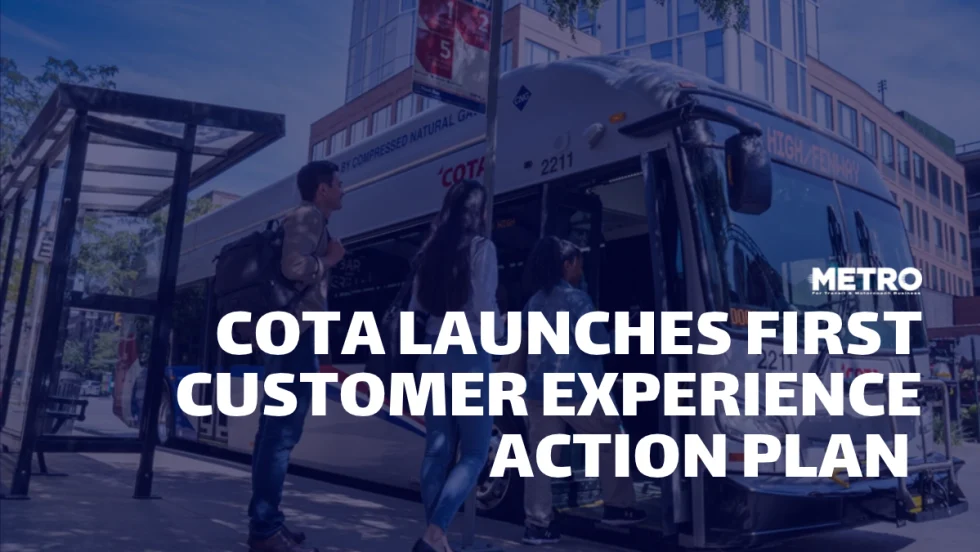
COTA Launches First Customer Experience Action Plan to Improve Transit Service
The new plan outlines improvements to service reliability, accessibility, communication, and the overall rider experience across Central Ohio's transit system.
Read More →
LA Metro September Ridership Climbs 3.9%, Led by Rail Growth
The agency recorded more than 27.2 million boardings, with rail ridership increasing 12.4% year over year and the D Line posting the largest gains.
Read More →