



IndyGo recycles stadium seats for bus stops
In partnership with Ecolaborative, Indianapolis Fabrications and Recycle Force, PUP is facilitating the refurbishment of the stadium seats, while a strategic relationship with IndyGo is bringing the rehabbed stand-alone benches to bus stops around Indianapolis.
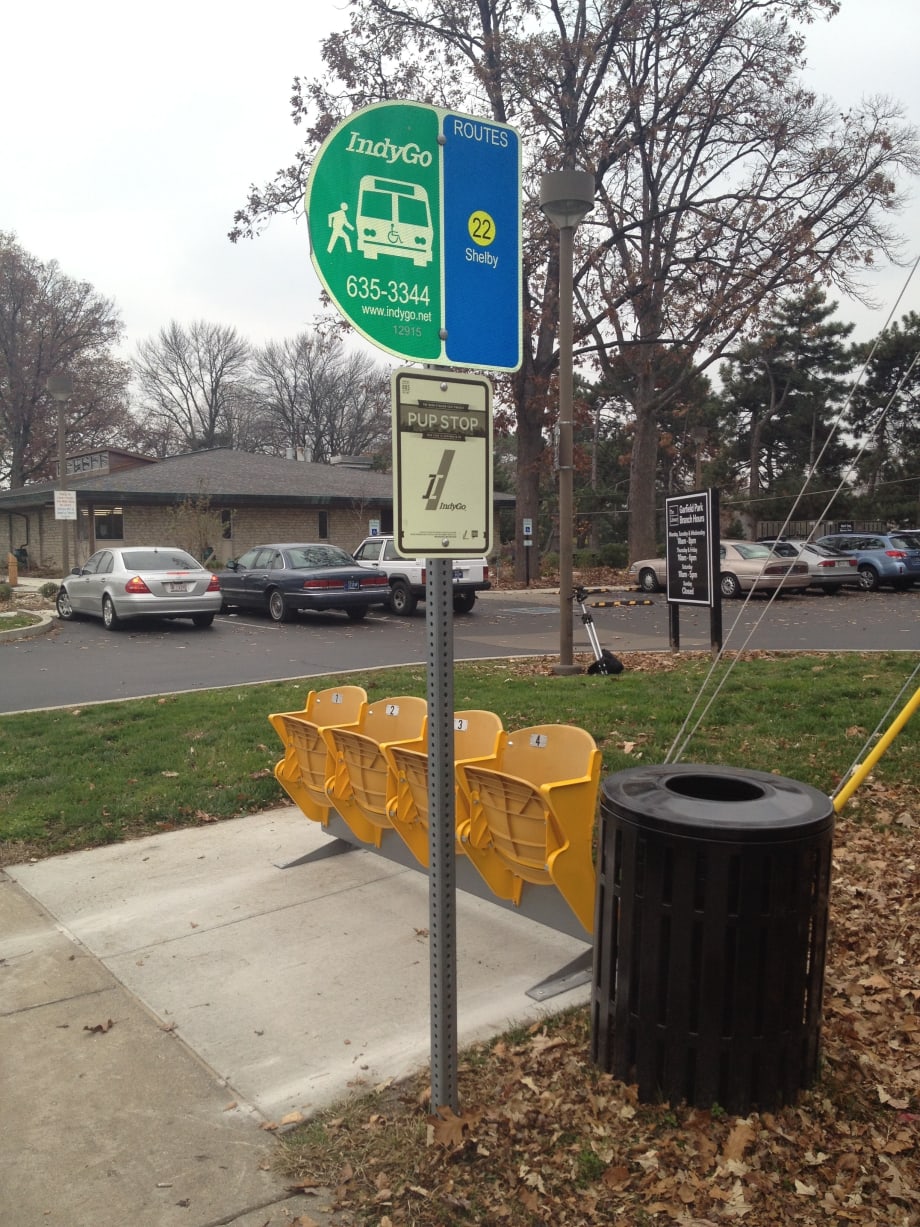
Each sponsored PUPstop will be branded with the supporter’s logo, community group or individual name on a dedicated commemorative sign.

Each sponsored PUPstop will be branded with the supporter’s logo, community group or individual name on a dedicated commemorative sign.
As developers began repurposing the historic Indianapolis ballpark Bush Stadium, former home of the Indianapolis Indians, to make way for a new technology district, People for Urban Progress (PUP), an Indianapolis innovation center and “do-tank” that develops projects that enhance the city’s urban quality of life, negotiated the rights to salvage the stadium seating that would have otherwise gone to landfills.
In partnership with Ecolaborative, Indianapolis Fabrications and Recycle Force, PUP is facilitating the refurbishment of the stadium seats, while a strategic relationship with IndyGo is bringing the rehabbed stand-alone benches to bus stops around Indianapolis.
In late 2011, the pilot PUPstop was installed at Alabama and Vermont Streets where a public art mural of Kurt Vonnegut is the backdrop, steps from Massachusetts Avenue at a stop served by IndyGo routes 2, 5 and 17. Additional PUPstops have been placed at various locations in Broad Ripple, downtown, Fountain Square and Nora, and more are planned for high pedestrian traffic areas, new developments like 16Tech (Bush Stadium redevelopment site), and community spaces including Madame C.J. Walker Theater Center.
“The redevelopment of the historic Bush Stadium site presented an opportunity to save reusable materials that would have otherwise gone to waste,” said Michael Bricker, chief innovator and co-founder of PUP. “The salvage project was happening alongside conversations with IndyGo about how to improve transit stops. We feel this project was a perfect opportunity to promote transit while preserving a piece of Indianapolis history.”

“Do-tank” People for Urban Progress is facilitating the refurbishment of the old Bush Stadium seats.
To place more PUPstops around the city, IndyGo is promoting the program to local businesses, community groups and even individuals. Each sponsored PUPstop will be branded with the supporter’s logo, community group or individual name on a dedicated commemorative sign.
“The PUPstop program presents community members with the opportunity to support transit in a unique way,” explained Samantha Cross, VP, business development, for IndyGo. “Through a donation to IndyGo, program participants will endow their very own PUPstop, made sustainably with a unique local flare.”
While IndyGo operates at several thousand bus stops in Indianapolis, not every stop will be eligible for upgrade to a PUPstop. Several factors are examined when placing transit amenities like benches and shelters, including whether or not the location is outfitted with existing infrastructure like sidewalks and curb cuts for ADA accessibility; whether the public right-of-way (city-owned property) will accommodate the improvement; and the number of daily average boardings at the stop.
Further, IndyGo planning staff must coordinate site engineering, licensure for public right-of-way use through the City’s Office of Code Enforcement and site construction.
Based on these factors, IndyGo staff determines site eligibility for upgrade to a PUPstop and will work with program participants to negotiate a donation to cover an appropriate share of site costs. Donations to endow PUPstops range from $850 to $1,700. IndyGo is currently working with more than 10 community organizations on placing new stops through the program.
RELATED ARTICLE:Check out, "IndyGo growth continues with new services."
More Bus
From Surviving to Thriving: Building Stronger Transportation Organizations
Bus Business Consultants founder Brian Dickson shares lessons on leadership, organizational health, and creating options for long-term success in a changing transportation industry.
Read More →
Finding the ‘Happy Medium’: Optimizing Maintenance Without Sacrificing Reliability
The key to maintenance optimization isn’t doing less work—it’s doing the right work at the right time on the right assets.
Read More →
LA Metro, City of West Hollywood, and Partners Advance Smarter Bus Lane Enforcement
The award-winning partnership combines AI-powered detection with human oversight to improve bus reliability, accessibility, and enforcement efficiency.
Read More →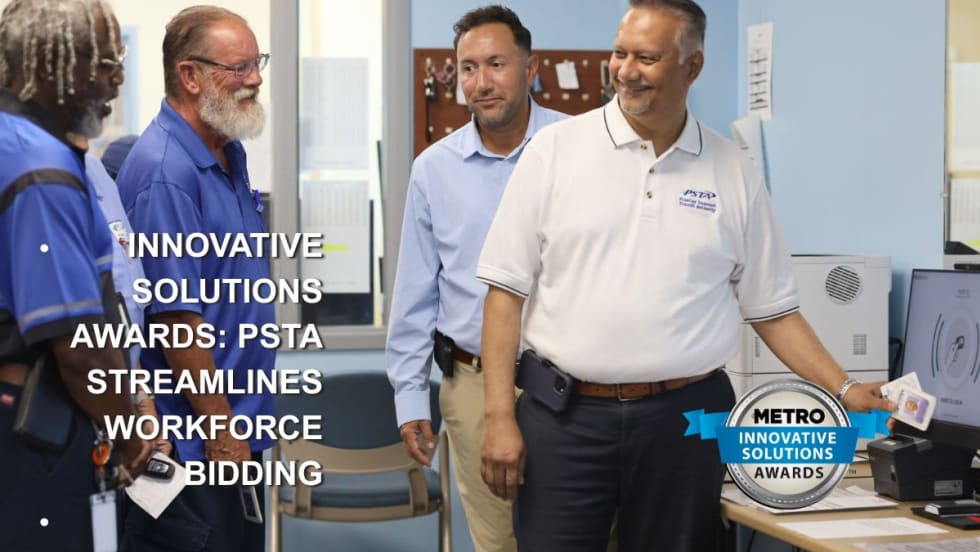
PSTA Modernizes Workforce Management with Digital Bidding System
The award-winning Workforce Transit Modernization project replaced paper bidding with a transparent digital platform, cutting administrative effort while improving access for operators.
Read More →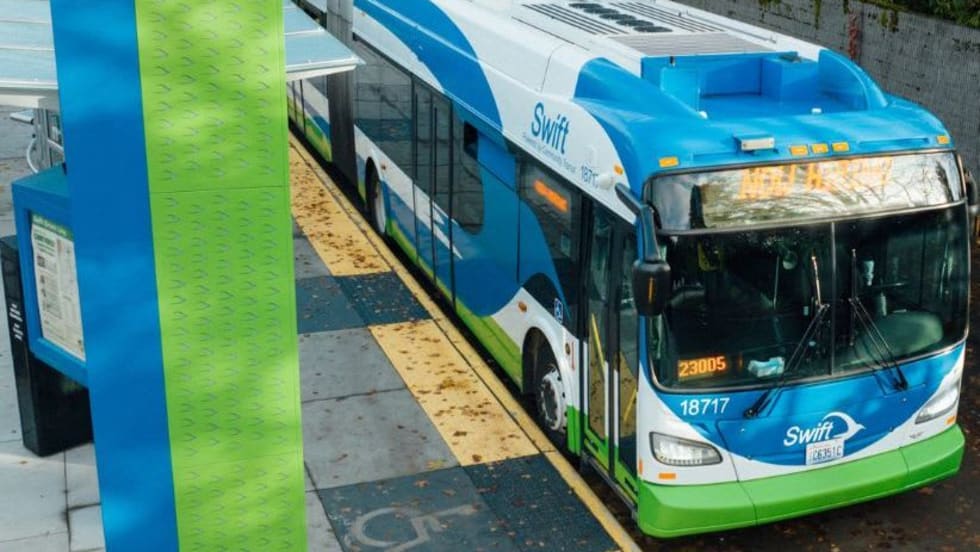
Washington's Community Transit Sets Six-Year Roadmap for Growth, Expansion
Approved TDP targets more bus service, new mobility options, Swift BRT expansion, and a potential Everett Transit annexation.
Read More →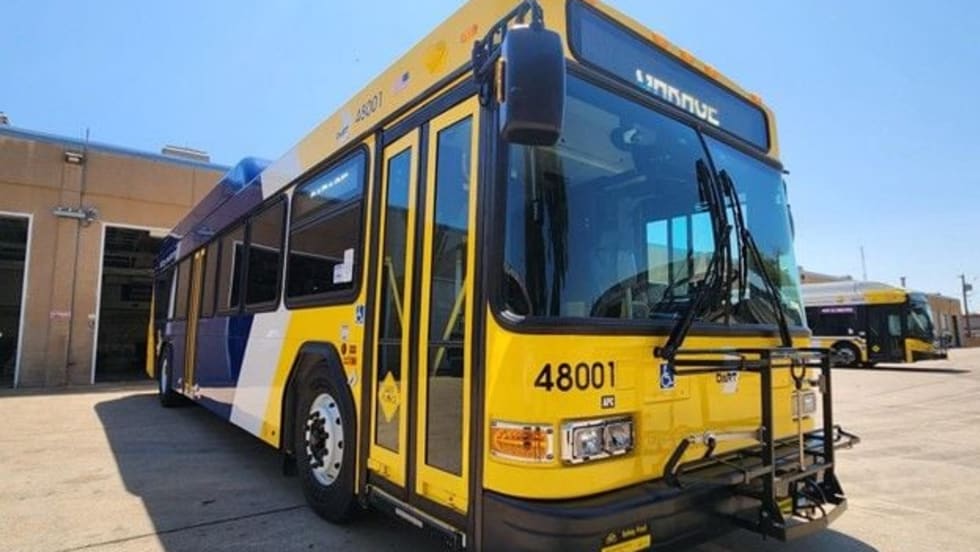
DART Customer Satisfaction Reaches Six-Year High
Overall satisfaction rose to 74.9%, while the agency’s Net Promoter Score reached a record 33.7.
Read More →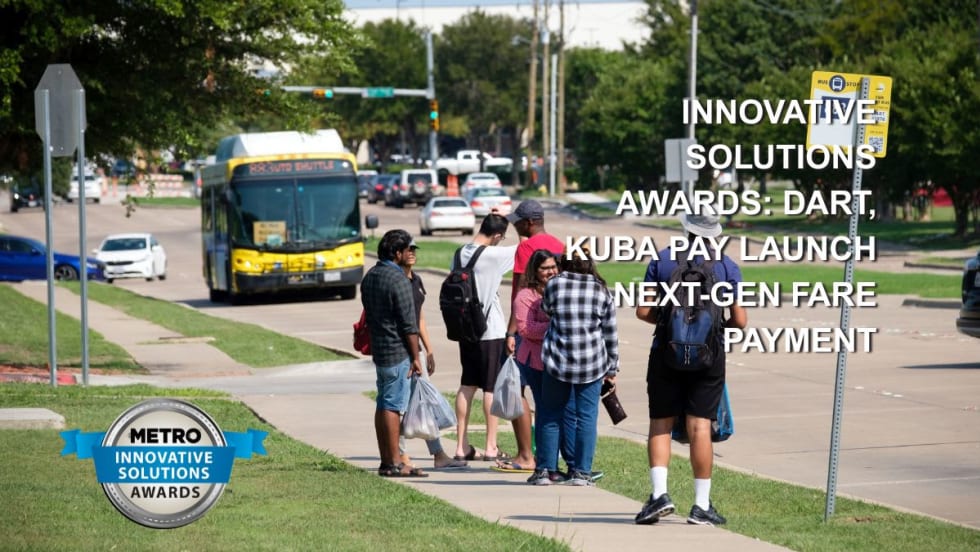
How DART's GoPass Is Redefining Regional Mobility
Serving 14 transit agencies, GoPass simplifies multimodal travel by allowing riders to plan, pay for, and manage an entire trip through one app.
Read More →
Biz Briefs: OCTA Taps Clean Energy for Hydrogen Station, Stadler to Supply Via Rail Vehicles, and More
From manufacturers and suppliers to transit agencies and motorcoach operators, these updates offer a snapshot of the projects, partnerships and business moves driving the industry forward.
Read More →
METRO Magazine Announces 2026 Innovative Solutions Awards Winners
Projects Recognized for Advancing Mobility Through Technology, Accessibility, Workforce Innovation, and Operational Excellence
Read More →
Biz Briefs: STV teams with Amtrak, Motorcoach Operators Boost Fleet and Land Contracts, and More
From manufacturers and suppliers to transit agencies and motorcoach operators, these updates offer a snapshot of the projects, partnerships and business moves driving the industry forward.
Read More →