



N.Y. to boost efforts to curb sexual harassment on subway
Although numbers reported reflect success combating sexual harassment on New York's subway system, advocates and police officials agree those numbers may not tell the whole story.
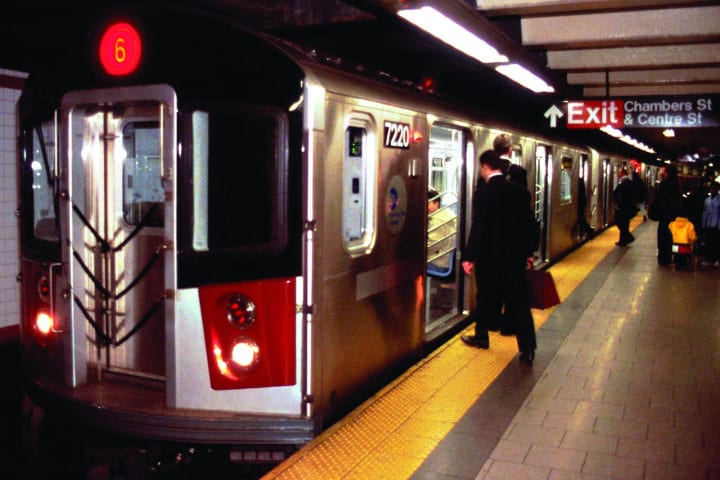
[IMAGE]NYMTA-.jpg[/IMAGE]Amid outcries from riders, grassroots advocates and politicians for more prevention and enforcement of sexual harassment on the subway system, three New York City Council committees — Transportation, Women's Issues and Public Safety — and officials from the New York Police Department (NYPD) and the Metropolitan Transportation Authority (MTA) met recently to discuss the issue and ways to curb the growing problem.
"The numbers may not support it, but [sexual harassment] does happen with great frequency," explains Oraia Reid, executive director/co-founder of the Brooklyn-based RightRides for Women's Safety, a grassroots organization that hopes to build safer communities by ending gender-based harassment and sexual assault.
In his testimony during the hearing, Transit Bureau Chief James Hall of the NYPD echoed Reid's sentiments, stating that the department strongly suspects sexual harassment is a highly underreported crime, despite data that shows as of Nov. 15, 2009, there had been 587 complaints and 412 arrests. "Many victims feel that there is nothing that can be done about such a fleeting incident and, worse, some feel an undeserved sense of shame that prevents their reporting the crime," he said.
Additionally, the police data shared by Hall also typed the ages of the victims - females over 17 — and the perpetrators — 39-year-old males.
Hall also discussed how crime, overall, on the system was on the decline - from 48 index crimes with a ridership of 3.5 million per day in 1990 to the current 5.3 crimes with a ridership of 5.2 million riders per day — thanks to programs such as the NYPD's Transit Order Maintenance Sweeps, or TOMS, which uses a multi-faceted approach to increase police presence on the system.
The numbers, however, are even more misleading according to Reid and others calling for more enforcement and prevention, because they say the NYPD only tracks assaults that fall into the felony range, which often doesn't include if victims are ogled, groped, flashed, harassed or witness any other types of lewd acts.
In his testimony, Hall added that his department had been in contact with its counterparts in police agencies from around the world and found that other cities face similar problems.
Another major issue of these sexual harassment crimes, says Reid, is that the victims are most often women, pointing to an overall safety issue for female passengers.
In fact, in a report recently published by the Mineta Transportation Institute at San Jose State University's College of Business, "How to Ease Women's Fear of Transportation Environments: Case Studies and Best Practices," Anastasia Loukaitou-Sideris surveyed 131 transit agencies and cities throughout the U.S., interviewed representatives of U.S. women's interest groups and examined case studies of innovative safety-program models and found a gap between women's well-documented transit safety needs and programs in the U.S. that respond to them.
"The perception that a bus station, train car, parking lot or particular neighborhood is dangerous forces many women to alter their travel patterns," said Loukaitou-Sideris, a professor of urban planning at the UCLA School of Public Affairs.
For its part, the MTA has made several efforts to increase awareness of the problem of sexual harassment and what a rider should do if it happens to them.
The awareness campaign includes ads, printed brochures and on-board announcements urging riders that if they are touched improperly to not stand for it, feel ashamed or be afraid to speak up and "report it to an MTA employee or police officer."
"NYCT is committed to raise customer awareness on various personal safety and security issues," said Charles Seaton, spokesperson for the MTA's New York City Transit. "Our sexual harassment awareness campaign is part of our ongoing efforts to communicate to our customers, provide information to prevent and report crimes, and support NYPD's efforts."
Additionally, information on the MTA's Website gives tips on how riders can protect themselves, including advising riders to follow their own instincts if they feel uncomfortable about a person or location and avoiding empty cars, especially late at night.
To help create more focus on the situation, Councilwoman Jessica S. Lappin introduced a bill that would require the police to collect sexual harassment data on the subway system.
Reid says that her group and the larger New Yorkers for Safe Transit, a coalition of several grassroots organizations, support Lappin's proposal and are also currently working on a bill with Assemblyman Jim Brennan. That bill would require greater transparency between the captured sexual harassment and assault crime data, including breaking the data down by subway line, station and time, and to have the NYPD and MTA release the information together in a comprehensive way that can benefit the public.
"We just don't know how the NYPD classifies 'sex offenses' and exactly how many reports and arrests have been made," says Reid. "However, given that only about 10 percent of survivors of sexual assault will file a report, I believe that there is a similar correlation between the numbers of those experiencing sexual harassment/assault and those reporting it."
More Rail
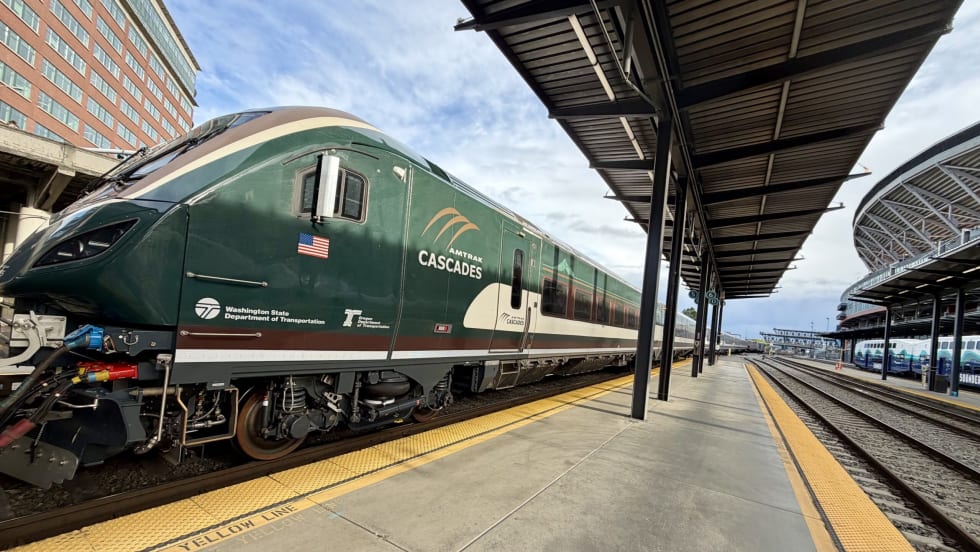
FRA Announces $5.3B in Rail Investments, Including $2B for Amtrak
Funding will support grade-crossing improvements, infrastructure upgrades, and new Amtrak equipment in 23 states.
Read More →
Finding the ‘Happy Medium’: Optimizing Maintenance Without Sacrificing Reliability
The key to maintenance optimization isn’t doing less work—it’s doing the right work at the right time on the right assets.
Read More →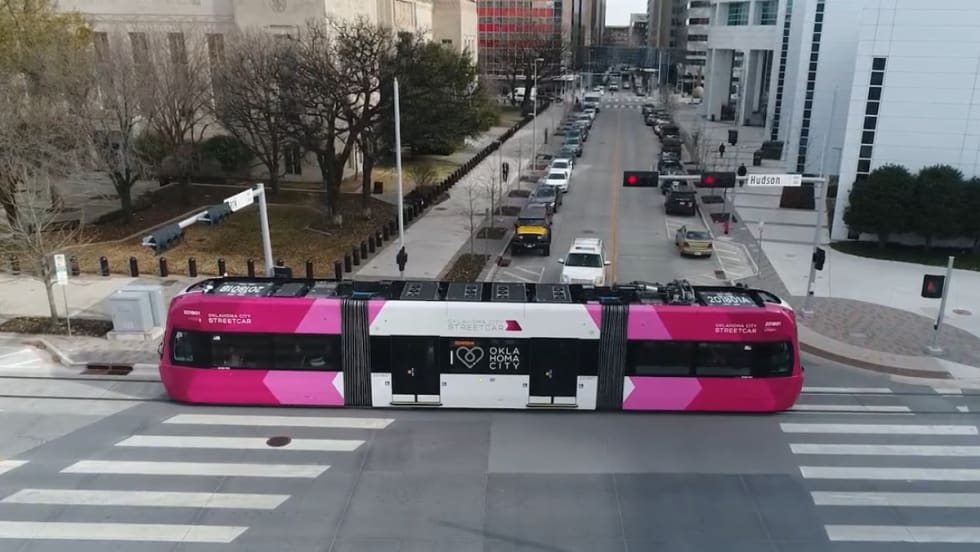
OKC Streetcar Makes Zero-Fare Service Permanent
Ridership increased an average of 71% compared with the same period a year earlier during the fare-free pilot.
Read More →
DART Customer Satisfaction Reaches Six-Year High
Overall satisfaction rose to 74.9%, while the agency’s Net Promoter Score reached a record 33.7.
Read More →
How DART's GoPass Is Redefining Regional Mobility
Serving 14 transit agencies, GoPass simplifies multimodal travel by allowing riders to plan, pay for, and manage an entire trip through one app.
Read More →
Amtrak Board Advances Plan to Restructure Organization, Seeks Public Input
The proposal, developed by Amtrak management and approved by the board for further consideration, is intended to modernize the organization's structure while improving accountability, operational efficiency, and customer service.
Read More →
Biz Briefs: STV teams with Amtrak, Motorcoach Operators Boost Fleet and Land Contracts, and More
From manufacturers and suppliers to transit agencies and motorcoach operators, these updates offer a snapshot of the projects, partnerships and business moves driving the industry forward.
Read More →
Metra Celebrates 100 Years of Electric Rail, Looks to the Future
The event was also a celebration of recent reforms to public transportation in the Chicago area, changes that could be as transformative in the future as the major civic achievement a century ago, said officials.
Read More →
LA Metro Marks Banner Year, Sets Ambitious Goals for New Fiscal Year
Incoming LA Metro Board Chair and Los Angeles Mayor Karen Bass joined outgoing Board Chair Fernando Dutra and LA Metro CEO Stephanie Wiggins to review accomplishments from fiscal year 2026, which included the opening of new rail extensions, advancement of major transit projects, expanded safety programs, and new rider amenities.
Read More →
DART Taps Nathaniel P. Ford Sr. as Next President/CEO
Since 2012, Ford has served as the CEO of the Jacksonville Transportation Authority
Read More →