



Transit agencies invest in propane vehicles
Propane autogas, the term used for propane when used in an on-road engine, has both economic and environmental benefits.
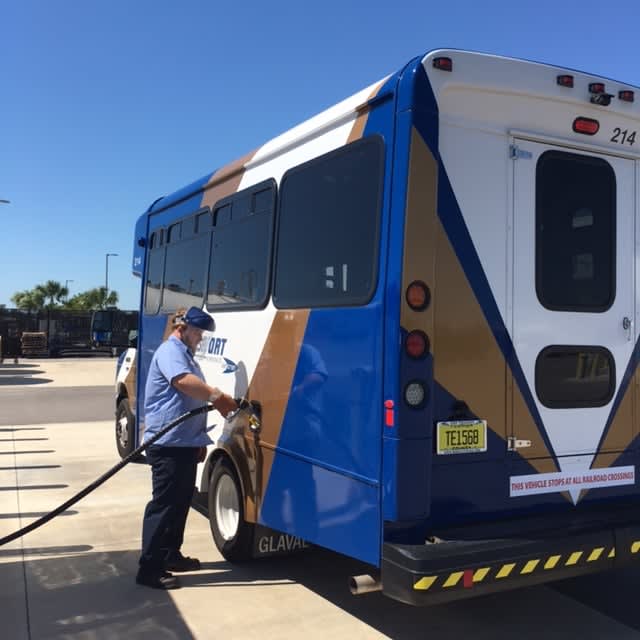
Propane autogas, the term used for propane when used in an on-road engine, has both economic and environmental benefits.
ROUSH CleanTech
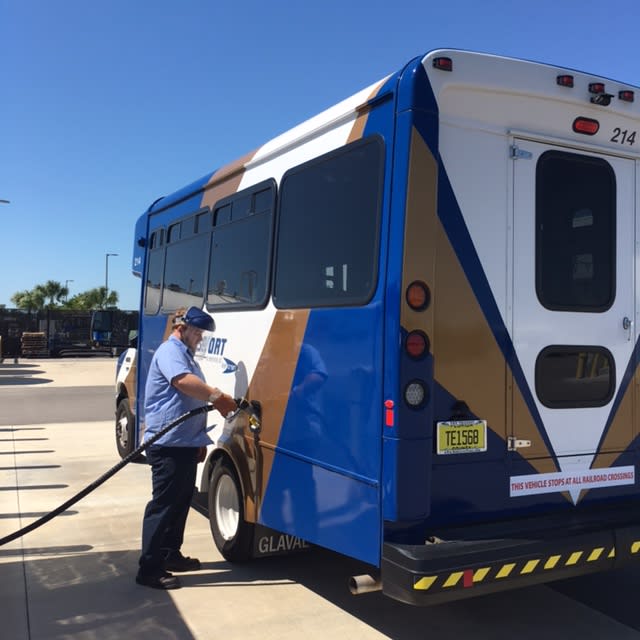
Propane autogas, the term used for propane when used in an on-road engine, has both economic and environmental benefits. ROUSH CleanTech
Transit fleets looking to decrease their emissions, save budget, and choose a sustainable fuel turn propane autogas. Across America, dozens of transit agencies operate these clean advanced technology vehicles, from Florida’s Broward County Transit and Lee County Transit to Michigan’s Suburban Mobility Authority for Regional Transportation and Flint Mass Transportation Authority to California’s San Diego Metropolitan Transit System.
Propane Transit Models
Many manufacturers offer propane autogas vehicles. For example, Ford prepares its medium-duty vehicles with engines prepped from the factory for gaseous fuels like propane autogas. ROUSH CleanTech then equips the Ford E-450 or E-550 chassis with the propane fuel system, which includes two propane tank options: the aft-axle tank with 41-usable gallons and the extended-range, 64-usable gallon tank. The Ford E-450, with up to 14,500 lbs. GVWR, has completed Federal Transit Administration’s New Model Bus Testing Program (Altoona Testing) and can be purchased using a transit agency’s FTA funds.
These bus options can be upfitted to meet the transit agency’s specifications.
Propane Autogas Benefits
Propane autogas, the term used for propane when used in an on-road engine, has both economic and environmental benefits.
On average, propane autogas costs about 50% less than diesel and up to 40% less than gasoline. In addition to fuel savings, transit fleet operators experience lower costs for oil changes and routine maintenance due to the fuel’s clean-burning properties. Propane vehicles have no cold-start issues and warm up quickly. Transit fleet operators report saving time and money on equipment and staff. And the engines are very quiet, allowing for drivers to focus on the road ahead.
Propane autogas has the added environmental benefit of reducing emissions. Vehicles that run on propane autogas emit fewer greenhouse gases, smog-producing hydrocarbons, and particulate emissions than conventional fuels.
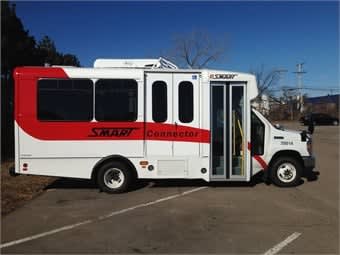
Propane autogas fueling infrastructure costs less than any other fueling station — conventional or alternative.
Propane Fueling Options
Propane autogas fueling infrastructure costs less than any other fueling station — conventional or alternative. An agency can install an onsite propane station, contract with a propane supplier to perform fueling services, or fill up at a public station.
Many propane vehicle manufacturers will connect owners directly with propane providers. These professionals specialize in helping fleets choose the right fueling option based on fleet size, routes, budget, and facility space. Many fleet operators choose to install onsite stations. This allows transit agencies to install fueling infrastructure on their property.
Some agencies opt for mobile fueling. In this scenario, the propane supplier comes to an agency location and fuels vehicles onsite with a propane delivery truck.
Plus, there are public stations. There are thousands of propane autogas fueling stations across the U.S. and stations in every state. A listing of public propane stations can be found at the U.S. Energy Department’s Alternative Fuels Data Center.
An Abundant, Domestic Fuel
The U.S. is rich in propane and using this domestic resource will help insulate fleets from the instability of foreign oil prices. Currently, more than 90% of U.S. propane supplies come from domestic production, making propane autogas a readily available alternative to imported oil. By fueling with propane, a fleet can extend its positive impact on the environment and our nation while saving even more budget.
For transit agencies, this advanced clean transportation solution creates the opportunity to transition fleets to clean, cost-effective propane autogas.
Todd Mouw is president of ROUSH CleanTech
More Bus

New York MTA Plans Largest Bus Fleet Upgrade in More Than a Decade
The agency is seeking manufacturers for 650 new CNG buses to replace aging vehicles, improve reliability, and advance its broader fleet modernization strategy.
Read More →
Building a Flexible Path to Transit Electrification
John Hroncich discusses BAE Systems’ modular and scalable approach, lessons learned from decades of real-world operations, and how agencies can identify electrification strategies that fit their fleets.
Read More →
Bus Tech Talk: Keeping Transit Technicians Ahead of the Technology Curve
LA Metro’s Obed Mejia discusses technician training, evolving maintenance technology, fleet replacement, and strategies for getting the most out of today’s transit fleets.
Read More →
Biz Briefs: RIPTA Unveils New Frontrunners, Clevland RTA Adds New Siemens, and More
In METRO's latest installment, we take a look at recent news from Siemens, Prevost, Dodge, and more partnerships making headlines across the transportation sector.
Read More →
People Movement: Holly Arnold Joins Transdev and More
In this edition, we also cover recent appointments and announcements at Pace, CamTran, MCI, and more, showcasing the individuals helping to shape the future of transportation.
Read More →
The High Cost of Transit Buses: Industry Leaders Look to Procurement Reform
Transit leaders and policymakers examine how standardized bus designs, streamlined procurement, and predictable funding could help agencies stretch budgets and deliver better service.
Read More →
The Business Voice Behind Public Transportation
As chair of APTA’s Business Members Board of Governors, Ray Melleady explains how more than 850 business members are partnering with transit agencies to advance funding, innovation, and industry-wide collaboration.
Read More →
From Surviving to Thriving: Building Stronger Transportation Organizations
Bus Business Consultants founder Brian Dickson shares lessons on leadership, organizational health, and creating options for long-term success in a changing transportation industry.
Read More →
Finding the ‘Happy Medium’: Optimizing Maintenance Without Sacrificing Reliability
The key to maintenance optimization isn’t doing less work—it’s doing the right work at the right time on the right assets.
Read More →
LA Metro, City of West Hollywood, and Partners Advance Smarter Bus Lane Enforcement
The award-winning partnership combines AI-powered detection with human oversight to improve bus reliability, accessibility, and enforcement efficiency.
Read More →