



Utah turns to Twitter to talk fare hikes
Under the fare hike proposal, base fares would gradually increase over three years, with the first going into effect May 1, 2011, if approved by UTA's board.
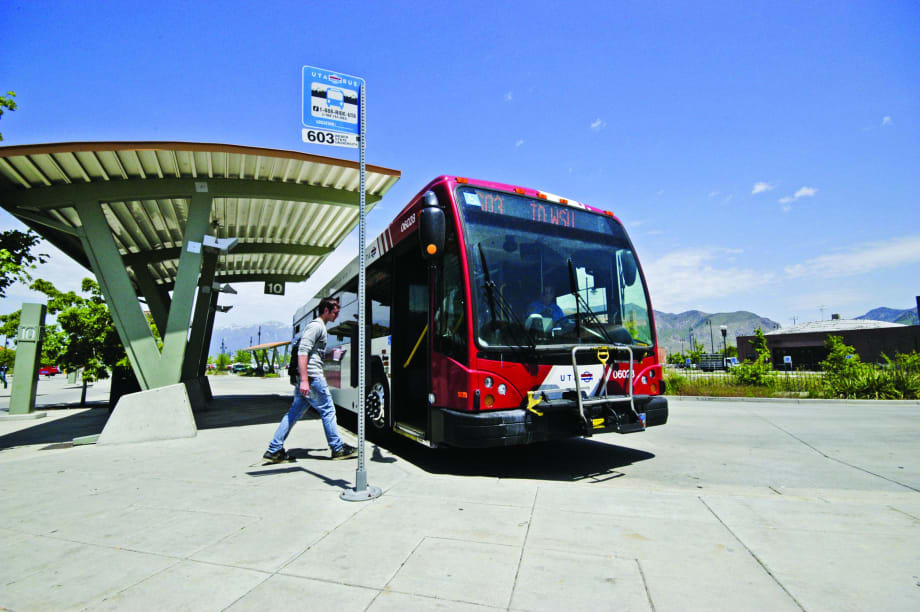
Photo Courtesy UTA
Photo Courtesy UTA
In what is thought to be a first, the Utah Transit Authority (UTA) used the social networking tool Twitter to conduct a public meeting to discuss the agency's proposed fare hike which, if approved, would go into effect in May 2011.
During the event, which took place in mid-February, UTA GM Michael Allegra presided over a team posting from the @rideuta account, using the hashtag #utafare, as they responded to comments during the hour-long chat.
An estimated 50 people tweeted 247 comments that were recorded and entered as part of the official public record on the UTA's current fare proposal.
Allegra and staff from UTA's fare collection department answered nearly 100 questions, ranging from the fare proposal to electronic fare collection and service.
The event generated a lot of interest, not only from the local community, but from around the world. People from as far away as London and Australia "listened" in, said Tauni Everitt, UTA's public relations officer.
When asked what prompted the UTA to take this step, Everitt said Allegra wants to focus on transparency and more open public communications, as well as take advantage of new forms of communication to reach out directly to customers without having to go through a third party. "What more public forum than Twitter to conduct a meeting of this nature," she said.
In addition to the Twitter chat, the UTA held seven public hearings on proposed fare increases, with the Twitter chat eliciting more participation than all the meetings combined, according to Everitt.
Attracting participation in traditional public hearings has been challenging for the UTA, something with which many transit systems can agree. At the most well-attended of these meetings 12 people showed up, while, at others, sometimes only one person was in attendance or, none at all.
"We have a very large service area...so we're traveling pretty far to go to these meetings, and when you go out and spend three or four hours with staff and court reporters, etc., it's a pricey endeavor for the agency," Everitt said. "So, we are exploring new ways to reach out to the public as public interests in these types of issues changes and public interaction with communication, in general, changes."
Before holding the Twitter chat forum, the UTA laid some ground rules, which they posted on their blog. They asked participants to focus on the set topic - the proposed fare hike — and stated that additional questions may not be answered during the course of the chat. The latter rule didn't come into play, as Allegra and his staff were able to answer all questions during the allotted time.
Once the chat concluded, the UTA asked participants for their feedback regarding the nature of the event and received all positive responses. Comments ranged from, "'Great chat, thanks for answering all my questions,' to 'I found it incredibly helpful,'" said Everitt.
Although the chat went smoothly, UTA staffers did see potential challenges and compiled a best-practices list to help with future Tweetings. "What happens when the number of people interested in the topic doubles? You can only have so many people involved without doubling up and answering the same question twice," Everitt said. The staffers also found it was important to have prepared messaging ready to post when there is a lull in the "conversation." "We never had a point where we weren't typing something, but it would be nice to put more information out to steer the conversation ...and use it to spark discussion," she said.
Due to the success with the initial Twitter chat, the agency held a second one in March to discuss another hefty issue — proposed service cuts.
More Bus

New York MTA Plans Largest Bus Fleet Upgrade in More Than a Decade
The agency is seeking manufacturers for 650 new CNG buses to replace aging vehicles, improve reliability, and advance its broader fleet modernization strategy.
Read More →
Building a Flexible Path to Transit Electrification
John Hroncich discusses BAE Systems’ modular and scalable approach, lessons learned from decades of real-world operations, and how agencies can identify electrification strategies that fit their fleets.
Read More →
Bus Tech Talk: Keeping Transit Technicians Ahead of the Technology Curve
LA Metro’s Obed Mejia discusses technician training, evolving maintenance technology, fleet replacement, and strategies for getting the most out of today’s transit fleets.
Read More →
Biz Briefs: RIPTA Unveils New Frontrunners, Clevland RTA Adds New Siemens, and More
In METRO's latest installment, we take a look at recent news from Siemens, Prevost, Dodge, and more partnerships making headlines across the transportation sector.
Read More →
People Movement: Holly Arnold Joins Transdev and More
In this edition, we also cover recent appointments and announcements at Pace, CamTran, MCI, and more, showcasing the individuals helping to shape the future of transportation.
Read More →
The High Cost of Transit Buses: Industry Leaders Look to Procurement Reform
Transit leaders and policymakers examine how standardized bus designs, streamlined procurement, and predictable funding could help agencies stretch budgets and deliver better service.
Read More →
The Business Voice Behind Public Transportation
As chair of APTA’s Business Members Board of Governors, Ray Melleady explains how more than 850 business members are partnering with transit agencies to advance funding, innovation, and industry-wide collaboration.
Read More →
From Surviving to Thriving: Building Stronger Transportation Organizations
Bus Business Consultants founder Brian Dickson shares lessons on leadership, organizational health, and creating options for long-term success in a changing transportation industry.
Read More →
Finding the ‘Happy Medium’: Optimizing Maintenance Without Sacrificing Reliability
The key to maintenance optimization isn’t doing less work—it’s doing the right work at the right time on the right assets.
Read More →
LA Metro, City of West Hollywood, and Partners Advance Smarter Bus Lane Enforcement
The award-winning partnership combines AI-powered detection with human oversight to improve bus reliability, accessibility, and enforcement efficiency.
Read More →