



What sustainable practices have you adopted?
See GM's response to this question.
Operate a CNG fl eet. Our Transportation Department's Equipment
Maintenance & Fleet Services Division has been certifi ed as a Green Model
shop for automotive maintenance and repair facilities by the Department
of Toxic Substances Control from the state. We use lead-free tire
wheel weights in all fl eet vehicles.
Recent fl eet replacement program included latest technology to further
reduce NOx emissions. We recycle our engine oils, coolants, e-waste, paper
products, etc. We are also setting up an internal "green" educational
program to show all employees how to protect the environment both at
work and at home.
We use biodiesel, we compost, we recycle everything and we started a
Green Team to develop other sustainable initiatives.
Initiated 'green' program in our administrative and operating divisions.
This includes reducing waste at the source, recycling and operating more
effi ciently.
We are renovating our main operations facility and including waste oil
burners, daylighting, possible solar and geothermal heating/AC.
We built a new CNG facility to replace the original, built in 1995. Eliminated
the last of diesel buses from fl eet. We operate a 100 percent CNG fl eet.
Purchase of hybrid buses, recycled paper for schedules, push for electronic
customer information; installed more effi cient HVAC systems; use
of biodiesel; introducing paperless shop.
Switched to hybrid buses.
Have an all-CNG fl eet, use solar energy and special lights.
We are ISO 14001 registered. We recently went through a successful reregistration
audit.
Expansion of light rail system; promoting development around stations.
Using CNG, experimented with Hydrogen-CNG blend, recycle to the extent
possible (oil, fi lters, coolant, metals, etc.) and use environmentally
friendly products where possible. We also work closely with the local university
and city offi cials to include transit needs in development proposals.
Procurement currently under way for hybrid buses for projects that help
congestion mitigation; also applied for grants to install energy effi cient lighting
at facilities. Promoting use of park-and-ride facilities.
Using biodiesel in one-third of fl eet. Designing new paratransit facility,
which will include environmental improvements such as solar and geothermal
power.
Reduced water usage, changed building lighting, changed all cleaning
products to environmentally friendly products.
Put hybrid vehicles in service on BRT line; pushing recycling with staff and
customers; applied for TIGER grants to improve energy effi ciency.
Using low sulfur fuels, particulate fi lters, hybrid electric buses, solar power
on rooftops, LEED certifi ed new facilities.
Switched to CNG fuel.
Implement policy to make all future bus purchases hybrid electric; experimented
with biodiesel but found it too expensive; implemented a program
that wherever possible, to use products that are green and sustainable, i.e.
cleaning solvents, etc.
Particulate fi lters on buses; use premium ULSD fuel. In winter we burn
used motor oil in furnace instead of recycling waste; bus idle policy to reduce
emissions; with stimulus funds we are replacing HVAC system and
lights to more energy effi cient and controlled system.
Signatories to the UITP Sustainability charter and the APTA Sustainability
Accord; seeking ISO 14001 rating; building LED Gold operating facility;
building LRT; hybrid buses.
•Converting to hybrid fl eet as new buses are ordered.
More Management

From Surviving to Thriving: Building Stronger Transportation Organizations
Bus Business Consultants founder Brian Dickson shares lessons on leadership, organizational health, and creating options for long-term success in a changing transportation industry.
Read More →
Everett Transit, Community Transit Outline Consolidation Agreement
The proposed agreement calls for a 50% increase in bus service in Everett, a new microtransit zone, continued paratransit service, and the transfer of Everett Transit operations to Community Transit.
Read More →
Strada360’s Steve Lassey on Turning Transit Data Into Better Decisions
From breaking down data silos to preparing for AI, Strada360 CEO Steve Lassey discusses how transit agencies can use technology to improve operations, customer information, and long-term decision-making.
Read More →
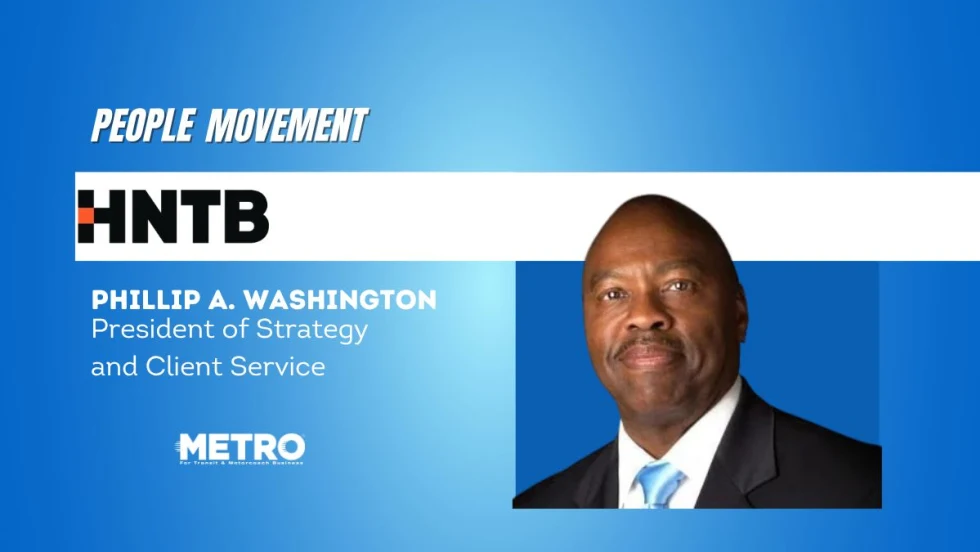
People Movement: Phil Washington Joins HNTB, Denver RTD Launches CEO Search, and More
In this edition, we also spotlight recent personnel moves at STV, the Eno Center for Transportation, and more, highlighting the people taking on new roles across the transportation industry.
Read More →
SEPTA Details Accelerate Vision for Transit System
The plan outlines investments in trolley modernization, new Metro and Regional Rail vehicles, accessible stations, and more frequent bus and rail service.
Read More →
FTA Ends Direct Oversight of MBTA Safety Actions
The federal agency closed its remaining special directive to the Massachusetts Department of Public Utilities following a safety review that began in 2022.
Read More →
Report: Transit Bus Manufacturing Supports 34,100 Jobs, $5.1B in GDP
The “Buses Mean Business” report examines the transit bus manufacturing industry’s economic footprint, supply chain, and rising demand for vehicle replacements.
Read More →
LIT Marks 10-Year Milestone at Annual Summit
Hosted by the COTA from September 10 to 13, the Summit carried the theme “Celebrating 10 Years of Excellence, Leadership, and Impact,” with every part of the program honoring the people, agencies, and partners who built LIT over its first decade.
Read More →
People Movement: Dan Dipert Coaches Adds Third-Generation Leader, Keolis Names New Valley Metro VP/GM, and More
In this edition, we also cover recent appointments and announcements at the Wabtec, SilverRide, HNTB, and more, showcasing the individuals helping to shape the future of transportation.
Read More →
METRO Opens Submissions for 2026 Motorcoach Awards
Nominations are now being accepted for METRO Magazine’s Operator of the Year and Innovative Operator of the Year awards.
Read More →