

Management
How World Cup Mobility Put Transit and Motorcoaches to the Test
Behind the seamless trips were months of planning, multimodal partnerships, and lessons agencies and operators can carry into the next mega-event.


 MENU
MENU SEARCH
Transit agencies are redefining safety with care-based response models. See how leaders are improving trust and operations.
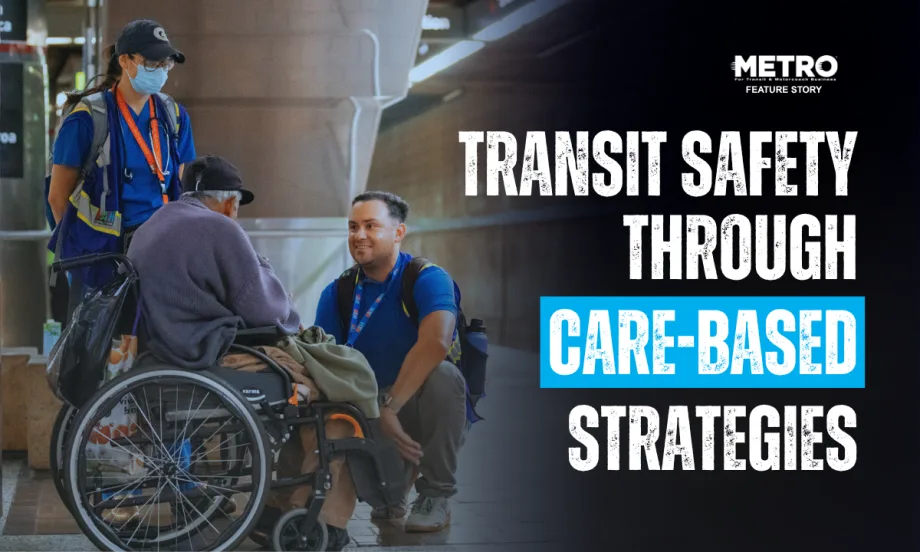
U.S. transit agencies like Los Angeles Metro, Charlotte Area Transit System, and WeGo Transit are beginning to adopt care-based response models to address nonviolent incidents, behavioral health crises, and mobility access.
Los Angeles Metro/METRO
*Summarized by AI
For decades, public transit agencies have measured safety and operational success largely through enforcement metrics like response times, citations, arrests, fare compliance, and incident reduction. But as transit systems continue to be frontline spaces for social challenges, including homelessness, behavioral health crises, substance abuse, and economic instability, many agencies are realizing that enforcement alone cannot solve problems rooted in human need.
A growing number of transit systems are adopting care-based service divisions designed to complement traditional security and operations models through outreach, crisis intervention, social service coordination, and community partnerships.
The goal is not to replace law enforcement, but to create a more effective “right response” model that improves operational efficiency and long-term system safety.
The shift reflects a broader change in how transit leaders define public safety itself.
We know that transit agencies are often among the most visible public-facing institutions in any city.
Bus stops, rail platforms, and transit centers function as de facto community spaces where societal issues become very visible, a reality that accelerated after the COVID-19 pandemic, according to agencies interviewed for this article.
In North Carolina, Charlotte Area Transit System (CATS) launched its CATS Connect initiative in 2024, specifically in response to increasing numbers of riders experiencing mental health crises, substance abuse issues, and housing instability on the transit system.
Similarly, the Los Angeles Metro in California formalized its Care-Based Services Division after recognizing that many of the calls it received were not criminal in nature but mainly involved quality-of-life concerns or behavioral health needs.
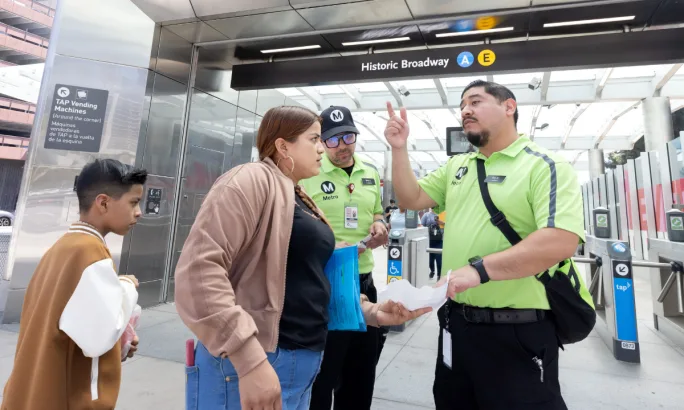
Los Angeles Metro offers services such as Metro Ambassadors, HOME outreach teams, Community Intervention Specialists, and planned Crisis Response Teams.
Los Angeles Metro
Transit leaders must keep working to clarify this distinction in their operations. For example, traditional enforcement-led responses are often poorly suited for situations involving vulnerable populations, particularly when the underlying issue is behavioral health, homelessness, or crisis stabilization rather than criminal intent.
As a result, agencies are beginning to treat care-based services as something necessary rather than a social add-on. However, there’s a big difference between operational necessity and operational efficiency. The latter is actually a strong point in arguments for care-based transit services.
Historically, many transit agencies have routed nearly all incidents to law enforcement or security personnel, regardless of the nature of the call, but that approach can escalate nonviolent situations or divert sworn officers from other, potentially more serious, safety concerns.
Care-based models, in contrast, introduce tiered response systems.
At LA Metro, programs such as Metro Ambassadors, HOME outreach teams, Community Intervention Specialists, and planned Crisis Response Teams are designed to handle issues ranging from wayfinding assistance to behavioral health stabilization.
“The majority of the calls for service we receive are quality of life issues,” said Craig Joyce, senior executive officer, special programs, at Los Angeles Metro. “The new division supports a holistic approach to public safety that prioritizes safety, dignity, and the right response for every situation.”
This thought mirrors what many municipalities are already implementing in 911 diversion programs, where clinicians or outreach workers respond to nonviolent crises instead of police officers.
For transit agencies, the benefits can include:
CATS officials said the agency has shifted its internal success metrics from “arrests made” to “connections facilitated.” In practice, reframing is significant because it moves transit agencies away from reactive incident management and toward long-term problem resolution.
Public perception remains one of transit’s biggest post-pandemic recovery challenges. Even when crime statistics improve, riders may still feel unsafe due to untreated mental illness or unpredictable behavior on the system. Care-based programs are designed to address both actual safety and perceived safety.
LA Metro’s Ambassador program provides a visible, uniformed, but unarmed presence across bus and rail systems focused on customer support and issue reporting.
Most importantly, these personnel are often perceived differently by riders than traditional enforcement officers. Their presence can reduce tension while still increasing visibility and responsiveness.
The distinction matters because rider comfort is directly tied to ridership retention. LA Metro reported that customer satisfaction regarding its approach to homelessness increased by 8% in January 2026 surveys.

The CATS See Say app is a free security tool that allows for the discreet reporting of safety concerns or maintenance issues.
Charlotte Area Transit System
Meanwhile, CATS said its See Say app now enables real-time intervention and faster coordination between transit police dispatch and outreach teams.
Something interesting about care-based services is that they are rider experience strategies as much as they are for transit operators who have found themselves on the front lines of crises they were never trained to manage. Care-based transit models can reduce that burden by creating clearer response pathways and providing employees with additional training and support resources.
CATS said bus operators and supervisors now receive Crisis Intervention Training, helping them identify mental health crises, connect individuals with resources, and better coordinate with emergency response systems.
In transit, we often underestimate the extent to which unresolved rider crises contribute to frontline workforce fatigue. Operators who repeatedly encounter escalated situations without proper support may experience higher stress levels and burnout, leading to increased absenteeism.
Care-based systems help create operational infrastructure around those encounters rather than leaving operators to navigate them alone.
Meeting riders where they already are is central to effective care-based transit models, and no transit agency can operate a successful care-based system on its own. One of the clearest themes emerging from agencies already implementing these programs is that partnerships are essential.
LA Metro works with six community-based organizations that provide multidisciplinary outreach teams including mental health specialists, peer counselors, housing navigators, and nursing support.
According to Joyce, in 2025, HOME and Ambassador teams helped connect thousands of riders to services, reduced the number of unhoused riders on the system by 39% in the 2025 point-in-time count, and saved 129 lives through Narcan deployments.
CATS emphasized the importance of coordination between transit police, county behavioral health departments, nonprofits, and social services agencies.
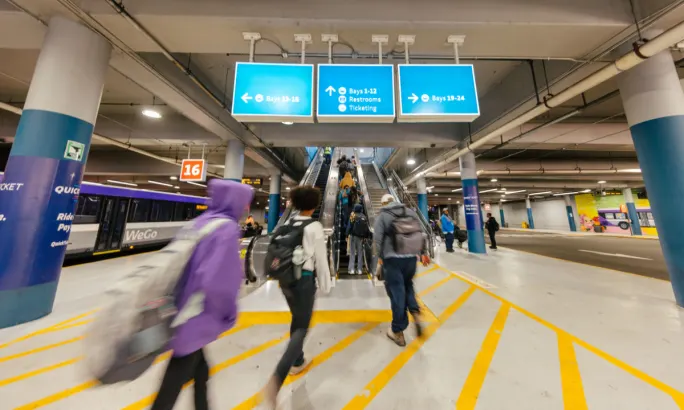
WeGo Transit in Nashville reported a 10% increase in ridership following the September 2025 implementation of its Journey Pass fare-free program for low-income riders.
WeGo Transit
WeGo Public Transit’s Journey Pass program in Nashville is another example of a partnership-driven, care-based transit strategy.
Journey Pass is a needs-based, fare-free transit program that provides eligible Davidson County residents with three years of unlimited free transit access. While focused on mobility access rather than crisis intervention, the program demonstrates how transit agencies can integrate social support systems directly into transit operations.
By partnering with agencies already serving low-income residents, WeGo embedded enrollment and transit access into existing community touchpoints rather than forcing riders to navigate additional bureaucratic systems.
WeGo reported a 10% increase in ridership following the September 2025 implementation of its Journey Pass fare-free program for low-income riders. Since then, Journey Pass users have taken over one million free rides.
“For agencies with more limited funding, the most important first step is identifying a sustainable, multi-year funding source that can support a program of this scale,” said Amanda Vandegrift, deputy CEO, finance and administration, at WeGo. “A strong financial foundation ensures that the agency does not have to reduce operating revenue, cut critical services, or implement a fare initiative instead of much-needed service expansion. Free fare programs work best when they accompany expanded and improved transit service.”
Overall, care-based transit strategies sit at the intersection of:
With this in mind, transit agencies nationwide are recognizing that care-based services can support ridership recovery and long-term system sustainability. A transit system perceived as chaotic, unsafe, or unsupported becomes less attractive to discretionary riders. Systems that feel organized and humane are more likely to retain and attract them.
While fare-free access differs operationally from crisis intervention programs, both approaches reflect the importance of reducing mobility barriers while strengthening public trust in transit systems.
One of the biggest misconceptions about care-based transit systems is that agencies need large budgets or fully developed departments to begin. The transit leaders interviewed emphasized that incremental implementation is often the most practical approach.
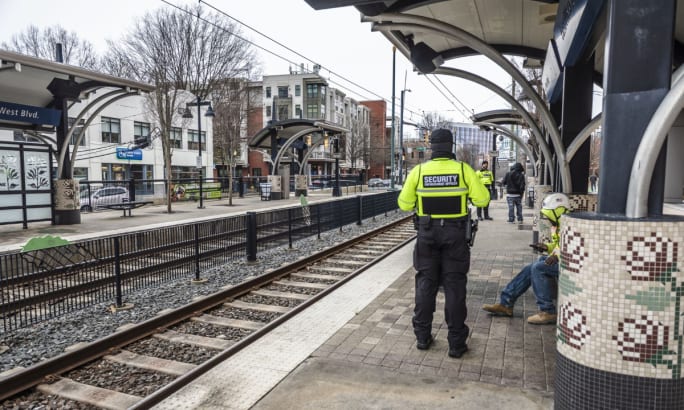
In a more human-oriented move, CATS officials said the agency has shifted its internal success metrics from “arrests made” to “connections facilitated.”
Charlotte Area Transit System
LA Metro noted that its Ambassador program began as a pilot vendor contract before eventually expanding into a large in-house operation. CATS similarly stressed that long-term success depends more on consistency, partnership-building, and staff training than on immediate scale.
For smaller agencies, initial steps may include:
The core principle of these programs emphasizes how transit systems function better when agencies address the underlying causes of recurring disruptions rather than repeatedly responding to symptoms. Care-based service divisions offer a framework that aligns operational performance with human-centered response strategies.
It should be noted that these models are not anti-enforcement. Instead, they recognize that public safety on transit systems requires multiple forms of expertise working together. The transit agencies with the strongest early outcomes are those building integrated ecosystems rather than relying on a single-response model.
“Implementing a care-based services framework doesn’t need to be a toggle switch. It can be accomplished over time with incremental steps,” Joyce said. “By building a team specifically trained for the unique environment of public transit, we can better address the needs of our community while delivering a higher standard of service and accountability.”
Loading data...

Management
Behind the seamless trips were months of planning, multimodal partnerships, and lessons agencies and operators can carry into the next mega-event.






Management
Once viewed primarily as transit operators, agencies are now leveraging land, partnerships, and long-term planning to boost ridership, expand housing, and strengthen communities.
Management
An Urban Institute evaluation found that a fare-free transit program increased ridership, reduced transportation barriers, and improved access to jobs, healthcare, and other essential services.
Security and Safety
Transit agencies are redefining safety with care-based response models. See how leaders are improving trust and operations.
Management
Advances in data and analytics are giving transit agencies new opportunities to refine maintenance practices, improve efficiency and make more informed decisions about asset performance.
Technology
The farebox is no longer just a payment machine. Learn how agencies are using new tech and pricing strategies to rethink how riders pay for transit.
Management
How stress, unresolved trauma, and chronic burnout can impact operator performance—and the steps agencies can take to improve safety and well-being.
Management
Mentorship programs at VTA and King County Metro are transforming the experience of new bus operators — boosting retention, improving safety, and strengthening connections among frontline workers, unions, and management.
Motorcoach
With more operators nearing retirement and investor interest on the rise, now is the time to plan your exit strategy. Here’s how to prepare your business for a successful sale that avoids leaving money on the table.