
Metro Magazine

 MENU
MENU SEARCHMENUSEARCH
The average transit executive spent 23 years in the industry, with an average annual salary of $113,000, according to METRO’s seventh annual survey.
Read More →
Implementing a fuel transition program and buying used buses are some tactics this year’s respondents are turning to.
Read More →
California’s state legislature authorized the first sale of $4.6 billion of the $9 billion voter-approved 2008 Proposition 1A High-Speed Rail (HSR) bonds. That matches and commits the state’s $3.4 billion federal HSR stimulus grant.
Read More →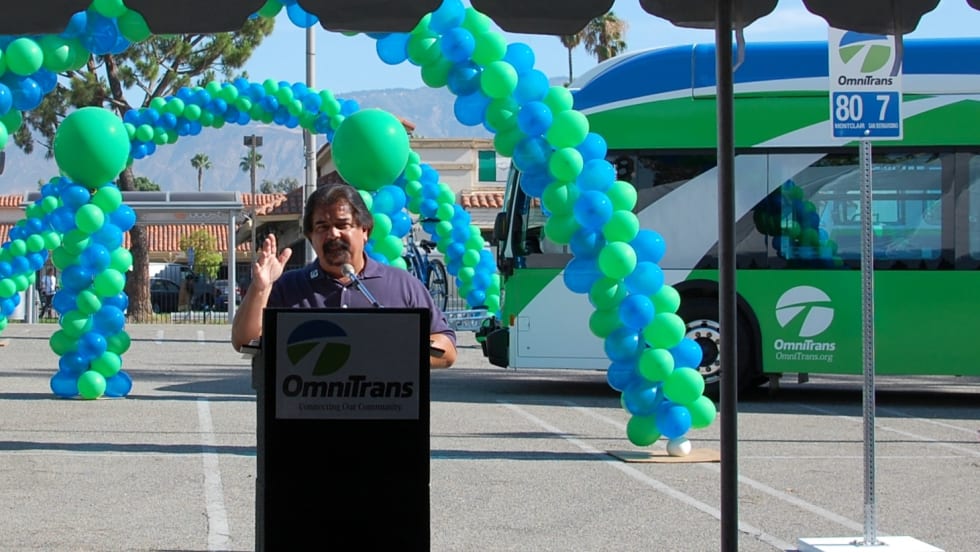
Established in 1976, Omnitrans carries approximately 15 million passengers each year throughout its 480-square-mile service area, covering 15 cities and portions of the unincorporated areas of San Bernardino County.
Read More →
Schuylkill Transportation System took children throughout Schuylkill County on a tour designed to teach them about public transit.
Read More →As part of its revamped paratransit program, Metro provides travel training and outreach to customers with disabilities to teach them about the accessibility features of the bus and rail systems.
Read More →
Survey showed demand down slightly from last year, but still high, with nearly two-thirds seeing an increase. More operators reported customer expectations and behavior as hurdles to providing good service. Scheduling software comes in handy and travel training saw a slight bump.
Read More →
The company’s newest vehicle will be introduced at BusCon in September of this year.
Read More →Congress should make it easier to use private contractors, consortia or financing so that agencies can better develop the best strategies that work for them.
Read More →
As technology evolves even more quickly, companies look into the future for ways to develop better products, such as infotainment systems and information kiosks to better serve their customers.
Read More →