



Alstom to develop zero-emission train
The new trains for Hermann-Hesse railway line will be completely emission-free. In times of increasing energy costs and higher level of pollution, the development of this technology is essential.

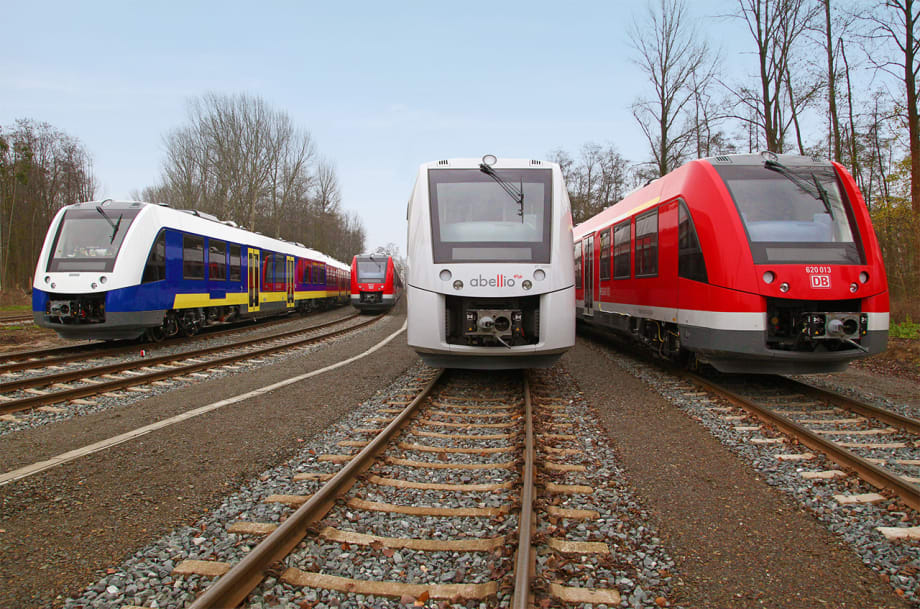
© Alstom Transport/ B. Rosenthal
© Alstom Transport/ B. Rosenthal
Alstom representatives and Helmut Riegger, district administrator of Calw, signed a letter of intent for the planned use of new emission-free fuel-cell drive trains on the Hermann-Hesse railway line. This line is set to improve access to the Black Forest and make it become a nearby area of relaxation.
The new trains for Hermann-Hesse railway line will be completely emission-free. In times of increasing energy costs and higher level of pollution, the development of this technology is essential.
The new train generation is based on the Alstom Coradia platform. In addition to being completely emission-free, the train consumes less energy, thanks to the use of an intelligent energy management system, and its noise level is drastically reduced compared to conventional diesel trains.
Moreover, it is equipped with fuel-cell drive — a device that converts the chemical energy from a fuel into electricity through a chemical reaction — a proven technology used on the automotive industry.
The trains are developed and will be manufactured in Salzgitter, Alstom’s competence center for regional trains in Germany.
More Rail

FTA Ends Direct Oversight of MBTA Safety Actions
The federal agency closed its remaining special directive to the Massachusetts Department of Public Utilities following a safety review that began in 2022.
Read More →
Amtrak, CN Reach Agreements to Strengthen Passenger Rail Service, Safety
The agreement resolves a more than decade-long proceeding before the Surface Transportation Board concerning the terms and conditions for Amtrak services, such as the City of New Orleans, Illini/Saluki, and Wolverine.
Read More →
New York MTA Advances Final Contract for Second Avenue Subway Expansion
Contract Four is the largest in the Second Avenue Subway Phase 2 project and includes construction of station infrastructure, tracks, and signals for the subway expansion, MTA officials said. Work on Contract Four will begin in 2027.
Read More →
San Diego MTS Breaks Monthly Trolley Ridership Record
Agency officials said July’s ridership indicates MTS’s continued recovery from the pandemic.
Read More →
Report Examines NJ TRANSIT Reliability, Funding Challenges
The Garden State Initiative analysis examines the roles of Amtrak infrastructure, fleet management, and agency operations while recommending a more performance-based approach to improving reliability.
Read More →
Stadler, CapMetro Sign Long-Term Rail Fleet Support Agreement
Beginning in 2027, Stadler will provide on-site technical expertise, spare parts support, training, and obsolescence management to help extend the reliability and longevity of CapMetro’s GTW fleet.
Read More →
Biz Briefs: Alstom Lands Canadian Contract, LYT to Supply California TSP, and More
In METRO's latest installment, we take a look at recent news from Complete Coach Works, Beep, FlixBus, and more partnerships making headlines across the transportation sector.
Read More →
CATS Gold Line Marks 5 Years of Service, 2.8M Passenger Trips
With a six-mile expansion planned, the Charlotte streetcar is positioned to connect more neighborhoods and major transit hubs across the region.
Read More →
Why Simulating Pedestrian Movement Has Become Essential for Modern Rail Stations
Pedestrian microsimulation is helping rail planners identify bottlenecks, test station designs, and prepare complex transit hubs for growing passenger volumes.
Read More →
Amtrak Begins Major Construction at New York’s Sunnyside Yard
The new maintenance facility will support Amtrak’s Airo trainsets while improving maintenance efficiency and turnaround times in New York.
Read More →