




More from Amtrak: Amtrak Marks ADA Anniversary with Continued Upgrades
Amtrak Line Renewal Ahead of Schedule
The Harrisburg Line track renewal project in Pennsylvania is going strong, allowing for the line to be reopened two weeks earlier than predicted.
October 10, 2024
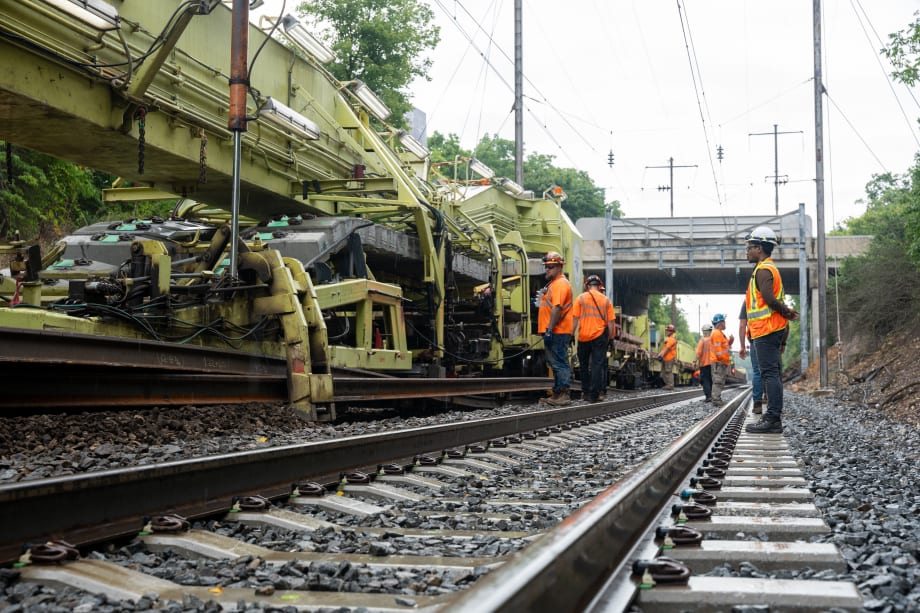
Workers were able to install 113,825 concrete ties and replace 43 miles of track since the project began in March.
Photo: Amtrak
2 min to read
Amtrak’s Harrisburg Line track renewal project in Pennsylvania is progressing ahead of schedule. The last day of replacement bus service was moved forward to November 7, two weeks earlier than expected.
Bringing in Modern Rails
The $122 million track replacement project began on March 15 and looked to replace 43 miles of track between Lanchester and Harrisburg.
The Harrisburg Line was utilizing infrastructure from the 1950s. With the project more than 95% of the way done, new infrastructure will allow for improved ride quality and increased service reliability.
The existing wooden ties are being replaced with more than 113,000 concrete ties, which have a 60-year lifespan.
In addition the project refreshed 226,500 feet of gravel track bed to support the track structure and improve drainage.
Service to Return to Normal
Keystone Service trains that ran on the line were replaced with buses starting on April 8 due to the significant track outages required by the project. However, regular rail service is expected to resume on November 8.
As the line resumes regular service, residual work will continue and the overall project will be completed in December.
Normally a project like this would take approximately two years. Amtrak implemented an innovative approach with expanded track outage windows that improved work efficiencies and reduced the duration of customer impacts.
Working to Update Quickly
Much of the rail infrastructure operated by Amtrak on the Northeast Corridor was last renewed in the 1970s. Amtrak historically renews approximately 30 miles of track per year.
This project is part of the company’s accelerated plan of renewing more than 55 miles of track in the coming year.
Due to the scope and scale of investment demands Amtrak is implementing new strategies to promote efficient and productive infrastructure project completion.
The strategy to expand construction outage schedules in the short term has helped accelerate work and complete the project faster. With this strategy, the long term impacts on customers and train service has been minimized.
More Rail

Strada360’s Steve Lassey on Turning Transit Data Into Better Decisions
From breaking down data silos to preparing for AI, Strada360 CEO Steve Lassey discusses how transit agencies can use technology to improve operations, customer information, and long-term decision-making.
Read More →
SEPTA Details Accelerate Vision for Transit System
The plan outlines investments in trolley modernization, new Metro and Regional Rail vehicles, accessible stations, and more frequent bus and rail service.
Read More →
FTA Ends Direct Oversight of MBTA Safety Actions
The federal agency closed its remaining special directive to the Massachusetts Department of Public Utilities following a safety review that began in 2022.
Read More →
Amtrak, CN Reach Agreements to Strengthen Passenger Rail Service, Safety
The agreement resolves a more than decade-long proceeding before the Surface Transportation Board concerning the terms and conditions for Amtrak services, such as the City of New Orleans, Illini/Saluki, and Wolverine.
Read More →
New York MTA Advances Final Contract for Second Avenue Subway Expansion
Contract Four is the largest in the Second Avenue Subway Phase 2 project and includes construction of station infrastructure, tracks, and signals for the subway expansion, MTA officials said. Work on Contract Four will begin in 2027.
Read More →
San Diego MTS Breaks Monthly Trolley Ridership Record
Agency officials said July’s ridership indicates MTS’s continued recovery from the pandemic.
Read More →
Report Examines NJ TRANSIT Reliability, Funding Challenges
The Garden State Initiative analysis examines the roles of Amtrak infrastructure, fleet management, and agency operations while recommending a more performance-based approach to improving reliability.
Read More →
Stadler, CapMetro Sign Long-Term Rail Fleet Support Agreement
Beginning in 2027, Stadler will provide on-site technical expertise, spare parts support, training, and obsolescence management to help extend the reliability and longevity of CapMetro’s GTW fleet.
Read More →
Biz Briefs: Alstom Lands Canadian Contract, LYT to Supply California TSP, and More
In METRO's latest installment, we take a look at recent news from Complete Coach Works, Beep, FlixBus, and more partnerships making headlines across the transportation sector.
Read More →
CATS Gold Line Marks 5 Years of Service, 2.8M Passenger Trips
With a six-mile expansion planned, the Charlotte streetcar is positioned to connect more neighborhoods and major transit hubs across the region.
Read More →