



Amtrak unveils 'GenSet' locomotives
The newly-repowered locomotives are now used daily in Washington, D.C. The engine configuration helps reduce diesel fuel consumption by about 50% and produces fewer pollutant emissions.

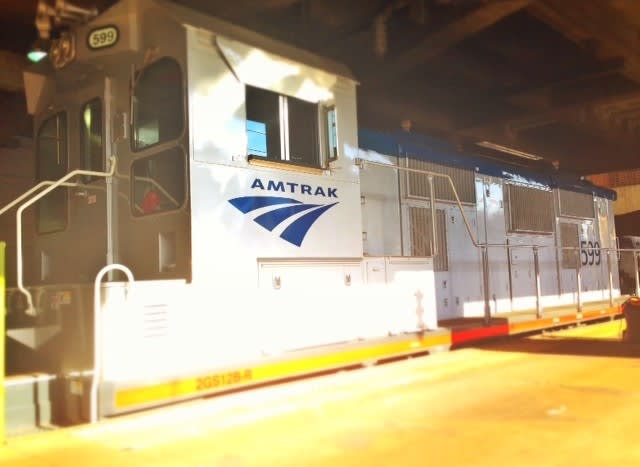
To celebrate Earth Day on Tuesday, Amtrak highlighted a project that replaces the engines in two locomotives with new energy-efficient generator sets at terminals that switch railcars between trains and in shop facilities.
The newly-repowered Generator Set “GenSet” locomotives are now used daily in Washington, D.C. Amtrak previously began using GenSet locomotives in Los Angeles; Oakland, Calif.; and Chicago.
Traditional locomotives have a large diesel engine idling continuously when in service. GenSets have two or three smaller, independently controlled engines that shut down when not in use. The engine configuration helps reduce diesel fuel consumption by about 50% and produces fewer pollutant emissions.
Using GenSet locomotives improves air quality and reduces the direct exposure of diesel emissions to rail employees, passengers and nearby residents
“GenSet technology is an example of our commitment to providing environmentally-sustainable and energy-efficient service,” President/CEO Joe Boardman said. “Amtrak is working to meet the nation’s travel and mobility needs while mitigating the impact of our operations on the environment.”
A $1.8 million Diesel Emissions Reduction Act grant awarded through EPA’s National Clean Diesel Funding Assistance Program is supporting the repowering of two older switching locomotives into GenSet locomotives for use at Amtrak facilities in Washington D.C., and in partnership with the Metropolitan Washington Council of Governments (COG) and the Brotherhood of Locomotive Engineers and Trainmen/District of Columbia–State Legislative Board.
More Rail

Strada360’s Steve Lassey on Turning Transit Data Into Better Decisions
From breaking down data silos to preparing for AI, Strada360 CEO Steve Lassey discusses how transit agencies can use technology to improve operations, customer information, and long-term decision-making.
Read More →
SEPTA Details Accelerate Vision for Transit System
The plan outlines investments in trolley modernization, new Metro and Regional Rail vehicles, accessible stations, and more frequent bus and rail service.
Read More →
FTA Ends Direct Oversight of MBTA Safety Actions
The federal agency closed its remaining special directive to the Massachusetts Department of Public Utilities following a safety review that began in 2022.
Read More →
Amtrak, CN Reach Agreements to Strengthen Passenger Rail Service, Safety
The agreement resolves a more than decade-long proceeding before the Surface Transportation Board concerning the terms and conditions for Amtrak services, such as the City of New Orleans, Illini/Saluki, and Wolverine.
Read More →
New York MTA Advances Final Contract for Second Avenue Subway Expansion
Contract Four is the largest in the Second Avenue Subway Phase 2 project and includes construction of station infrastructure, tracks, and signals for the subway expansion, MTA officials said. Work on Contract Four will begin in 2027.
Read More →
San Diego MTS Breaks Monthly Trolley Ridership Record
Agency officials said July’s ridership indicates MTS’s continued recovery from the pandemic.
Read More →
Report Examines NJ TRANSIT Reliability, Funding Challenges
The Garden State Initiative analysis examines the roles of Amtrak infrastructure, fleet management, and agency operations while recommending a more performance-based approach to improving reliability.
Read More →
Stadler, CapMetro Sign Long-Term Rail Fleet Support Agreement
Beginning in 2027, Stadler will provide on-site technical expertise, spare parts support, training, and obsolescence management to help extend the reliability and longevity of CapMetro’s GTW fleet.
Read More →
Biz Briefs: Alstom Lands Canadian Contract, LYT to Supply California TSP, and More
In METRO's latest installment, we take a look at recent news from Complete Coach Works, Beep, FlixBus, and more partnerships making headlines across the transportation sector.
Read More →
CATS Gold Line Marks 5 Years of Service, 2.8M Passenger Trips
With a six-mile expansion planned, the Charlotte streetcar is positioned to connect more neighborhoods and major transit hubs across the region.
Read More →