



Amtrak Welcomes Back Keystone Service Customers After Restoring Weekday Trains
While this work was estimated to take approximately two years, Amtrak developed an accelerated approach that expedited the project with a combination of single and full track outages, improving work efficiencies, and reducing the duration of the project.

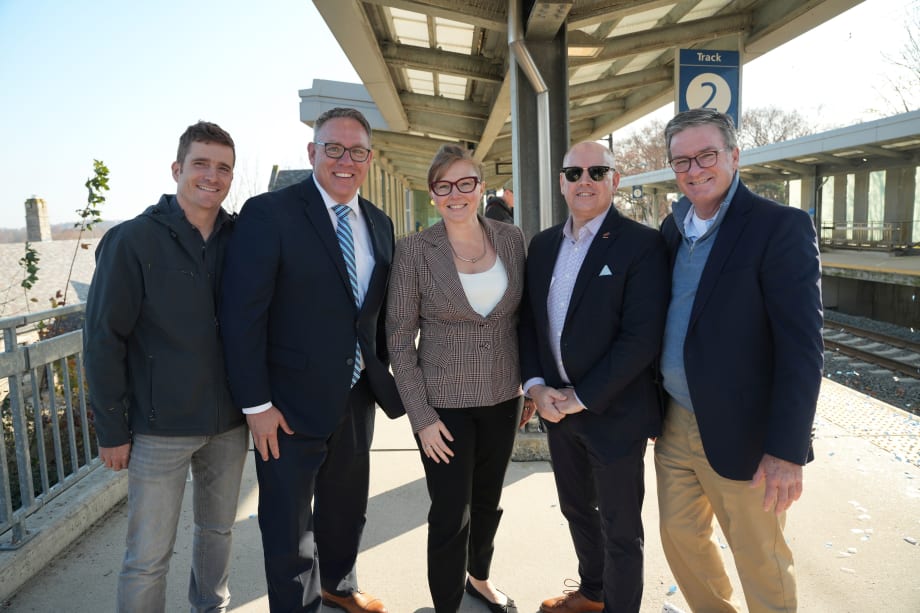
(Left to Right): Reist Popcorn Director of Operations Doug Metzler; State Rep. Tom Jones; Amtrak EVP Laura Mason; RPA President & CEO Jim Mathews; PennDOT Secretary Mike Carroll.
Photo: Amtrak
Amtrak joined Pennsylvania Secretary of Transportation Mike Carroll, State Representative Tom Jones, and other partners to celebrate the full restoration of weekday Keystone Service and thank customers for their patience during the Harrisburg Line Track Renewal Project, which concluded earlier this month.
"Amtrak's in-house construction crews achieved significant efficiency improvements compared with previous years, increasing production by 87% and reducing injuries by more than 80% from 2023,” said Amtrak Executive VP, Capital Delivery, Laura Mason.
An Accelerated Approach
While this work was estimated to take approximately two years, Amtrak developed an accelerated approach that expedited the project with a combination of single and full track outages, improving work efficiencies, and reducing the duration of the project.
Over the past eight months, Amtrak crews replaced more than 43 miles of track and installed 113,000 concrete ties during this major infrastructure project on Amtrak-owned tracks between Lancaster and Harrisburg, Pa.
Amtrak customers and freight operators in this area can now benefit from improved ride quality and comfort and increased service reliability thanks to these upgrades.
Amtrak worked with state partner PennDOT to preserve ridership and help ensure the continued success of the partnership. Amtrak provided replacement bus transportation at all affected stations and preserved midday Pennsylvanian train service through the area.
The project also involved close coordination with Norfolk Southern and many freight shippers who use these same tracks to transport raw materials and finished products on the corridor.
Continued Improvements
As Amtrak enters a new era of rail, the company has made unprecedented investments to improve Northeast Corridor (NEC) infrastructure.
Due to the scope and scale of investment demands, Amtrak is implementing innovative strategies like this to promote efficient and productive infrastructure project delivery.
Given the project’s success, Amtrak is actively exploring opportunities along the NEC to collaborate with stakeholders in developing and implementing innovative outages like the Harrisburg Line Track Renewal Project, which ultimately deliver benefits to the public more rapidly and cost-effectively.
Another example includes catenary upgrades on the south end of the NEC in Maryland, which have benefitted from expanded overnight work hours in partnership with Maryland Department of Transportation Maryland Transit Administration.
The projects represent the importance of strong partnerships between Amtrak, state departments of transportation, freight railroads and other entities working together to advance important renewal projects and build a new era of rail in America.
More Rail

New York MTA Advances Final Contract for Second Avenue Subway Expansion
Contract Four is the largest in the Second Avenue Subway Phase 2 project and includes construction of station infrastructure, tracks, and signals for the subway expansion, MTA officials said. Work on Contract Four will begin in 2027.
Read More →
San Diego MTS Breaks Monthly Trolley Ridership Record
Agency officials said July’s ridership indicates MTS’s continued recovery from the pandemic.
Read More →
Report Examines NJ TRANSIT Reliability, Funding Challenges
The Garden State Initiative analysis examines the roles of Amtrak infrastructure, fleet management, and agency operations while recommending a more performance-based approach to improving reliability.
Read More →
Stadler, CapMetro Sign Long-Term Rail Fleet Support Agreement
Beginning in 2027, Stadler will provide on-site technical expertise, spare parts support, training, and obsolescence management to help extend the reliability and longevity of CapMetro’s GTW fleet.
Read More →
Biz Briefs: Alstom Lands Canadian Contract, LYT to Supply California TSP, and More
In METRO's latest installment, we take a look at recent news from Complete Coach Works, Beep, FlixBus, and more partnerships making headlines across the transportation sector.
Read More →
CATS Gold Line Marks 5 Years of Service, 2.8M Passenger Trips
With a six-mile expansion planned, the Charlotte streetcar is positioned to connect more neighborhoods and major transit hubs across the region.
Read More →
Why Simulating Pedestrian Movement Has Become Essential for Modern Rail Stations
Pedestrian microsimulation is helping rail planners identify bottlenecks, test station designs, and prepare complex transit hubs for growing passenger volumes.
Read More →
Amtrak Begins Major Construction at New York’s Sunnyside Yard
The new maintenance facility will support Amtrak’s Airo trainsets while improving maintenance efficiency and turnaround times in New York.
Read More →
Chicago Leaders Unveil Plans for O’Hare Airport Express Train
The privately developed project would offer a 15-minute trip between downtown and O’Hare’s Terminal 2, with trains operating every 15 minutes on a dedicated track. The service would use battery-electric trains and three existing freight rail rights-of-way.
Read More →
OCTA Maps Out 30-Year Strategy to Protect Coastal Rail Corridor
The draft feasibility report identifies strategies to protect the coastal rail line for decades as the agency continues near-term stabilization and sand placement efforts.
Read More →