



Apollo Video, C-Tran paves the way for higher quality onboard transit video
Apollo Video Technology has worked with several agencies through their IP implementations, refining a solution that maximizes all of the benefits of IP technology, and learning a few lessons along the way. C-Train is one agency who recently put this technology to the test.

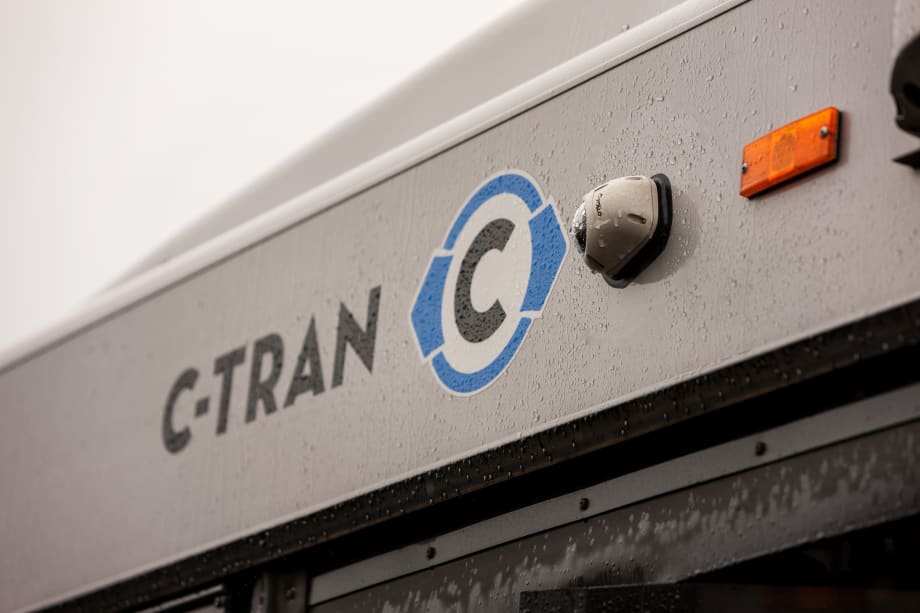
Utilizing the Optimal Quality Recording feature, C-TRAN is realizing the benefits of the dual recording streams.

Utilizing the Optimal Quality Recording feature, C-TRAN is realizing the benefits of the dual recording streams.
With smarter mobile video systems dominating the surveillance conversation, transit agencies are demanding more out of their mobile technology, and many are foregoing analog video in favor of IP technology. IP systems provide the latest and greatest capabilities, particularly high-definition (HD) quality video and fast network performance.
Apollo Video Technology has worked with several agencies through their IP implementations, refining a solution that maximizes all of the benefits of IP technology, and learning a few lessons along the way. Recognizing potential complications of IP systems and anticipating the growing demands of network administrators, the company has developed a finely-tuned solution that eliminates the arduous deployment and unforeseen costs often associated with an upgrade to IP. The Vancouver, Wash.-based Clark County Public Transit Benefit Area Authority (C-TRAN) is one agency who recently put this technology to the test.
C-TRAN gets smart IP
C-TRAN was in need of an easy-to-use system that offered accessible HD recordings and long-term storage capabilities. Uncomplicated installation and compatibility with existing analog cameras was also a must.
In June 2014, deployment began of Apollo Video’s RoadRunner HD™ on-board video surveillance system and Vehicle Information Management (ViM™) Software across C-TRAN’s 88 fixed-route and 45 paratransit vehicles. Unlike standard IP systems, Apollo Video’s systems offer the highest quality video while fulfilling requirements for retention data. This is possible because of its Optimal Quality Recording feature, which records two simultaneous video streams. Using this technology, C-TRAN is able to adjust the number of days the system records in HD quality and simultaneously records a long-term recording stream, ensuring that HD video is available for critical events while maintaining weeks or months of high quality video. C-TRAN is enjoying efficiency when collecting and reviewing surveillance footage. Transit managers are able to pull segments multiple times per day through wireless video download using the ViM™ Software.
“In a recent incident, a C-TRAN driver took evasive action to avoid a collision and the requested video clip was seamlessly and quickly downloaded and viewed using ViM™ Software. Thanks to the high quality footage provided by the new HD cameras on the bus, the driver’s report was substantiated and plainly revealed the license plate number on the other vehicle involved. Such a timely pull of high quality footage would not have been possible with a standard IP system,” according to Bob Medcraft, field operations manager, at C-TRAN.
Utilizing the Optimal Quality Recording feature, C-TRAN is realizing the benefits of the dual recording streams. With HD-quality video available for critical incidents like the collision they experienced, they also have weeks or months of onboard recording available in the event of a delayed report of a rider complaint or customer service issue.

In June 2014, deployment began of Apollo Video’s RoadRunner HD™ on-board video surveillance system and Vehicle Information Management (ViM™) Software across C-TRAN’s 88 fixed-route and 45 paratransit vehicles.
Considerations for a successful IP implementation
While C-TRAN is taking full advantage of IP advances, some agencies have experienced complications and added expenses when implementing an IP solution. Agencies can avoid these issues if they keep a few things in mind.
1) Get support or get “smart” with your IP. Many IP systems require networking expertise, not only for installation and configuration, but for repairs and troubleshooting as well. IP addressing of each individual camera can quickly make a task as simple as replacing a vandalized camera a complicated and costly undertaking unless your system comes with support. Better yet, plug-and-play systems that feature auto-connecting cameras eliminate the need for programming or configuration at the camera level.
2) You may not need ALL new equipment. Existing equipment doesn’t have to become useless with the implementation of a new IP system. Agencies seeking an economical upgrade to new technology should be on the lookout for systems that can utilize existing equipment. For instance, analog cameras can often be integrated into a new IP system using an encoder. By keeping existing cameras in lower-priority areas, the system can leverage new technology while transitioning with existing equipment.
3) Make sure that IP equates to HD. While some IP systems record one camera in HD quality, other systems may not provide higher quality recordings compared to older analog systems. If the increase in video quality is marginal (or in some cases, non-existent), it may not be a valuable upgrade from simple analog technology to intricate IP technology, particularly if the system will require complicated programming of individual cameras.
4) IP should not compromise onboard storage. For those systems that do provide HD video, higher quality often translates to less onboard storage. This can force agencies to record at a lower quality image rate to meet retention requirements. In many cases, this can equate to recording at analog-type recording quality in order to meet those requirements. Because of this, agencies should be cautious of high-quality video demonstrations — if the quality can only be maintained for a few hours, it is unlikely that high video quality will actually be effectively used in real world scenarios.

Industry experts are finding ways to harness IP into an opportunity for system-wide advancements.
Getting smart IP now
Across the industry, agencies are always in search of technology that satisfies all their operational needs so that they can access the highest quality video during critical times. Industry experts are finding ways to harness IP into an opportunity for system-wide advancements.
Apollo Video has been leading this charge, offering a solution that meets and exceeds agencies’ needs. The company's engineers and software developers created plug-and-play applications that skip over all the clunky configuration needs for individual cameras. Smart IP systems available in the market today boast HD recording on all cameras simultaneously with long term recording feeds. Agencies switching from analog to smart IP will benefit from encoders that provide for an easy and cost-effective migration — and the ability to retain analog cameras while gaining HD for more crucial viewpoints from the bus or railcar.
There is no doubt that technology in the transit space is rapidly changing and will continue to do so. Apollo Video leads the effort leveraging the industry’s technology advancements, minimizing the impact on agencies’ valuable resources and forging the path to the future with innovative solutions, just as it has with IP.
Rodell Notbohm, CEO of Apollo Video Technology
More Management

LA Metro Ridership Continues Growth as Rail Gains Accelerate
New rail connections and major events help drive continued ridership gains, with Metro recording its eighth consecutive month of year-over-year rail growth.
Read More →
TransDASH Summit Focuses on Measuring What Matters in Transit
Transit agencies unveil a national performance platform designed to benchmark customer experience, safety, community value, and other outcomes.
Read More →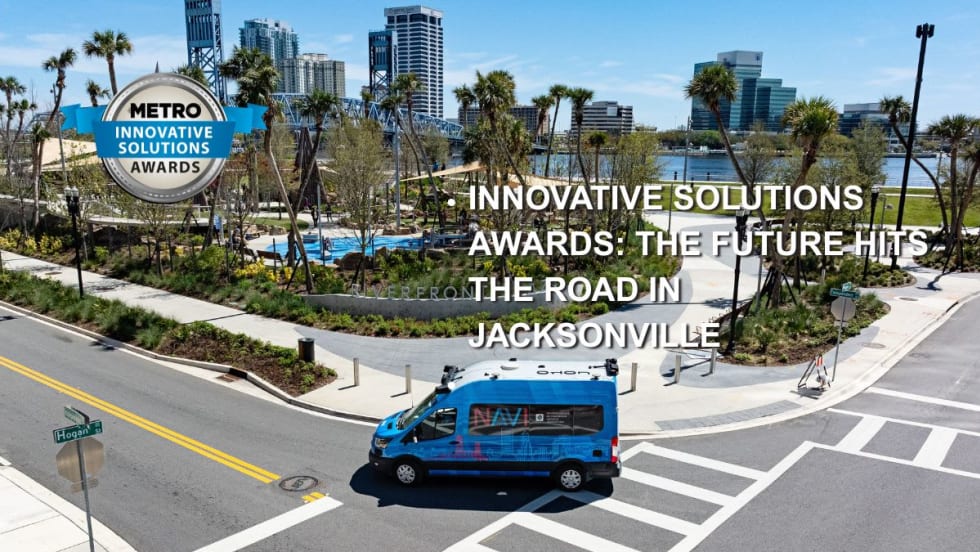
Jacksonville’s NAVI Project Charts a New Course for Autonomous Public Transportation
Through its NAVI program, JTA is showing how autonomous vehicles, intelligent infrastructure, and coordinated operations can work together to deliver everyday public transportation.
Read More →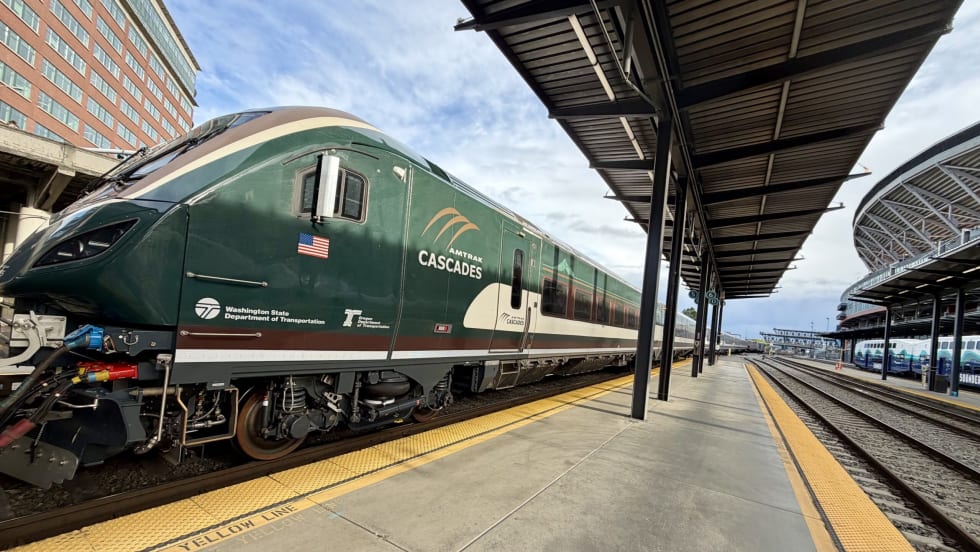
FRA Announces $5.3B in Rail Investments, Including $2B for Amtrak
Funding will support grade-crossing improvements, infrastructure upgrades, and new Amtrak equipment in 23 states.
Read More →
Finding the ‘Happy Medium’: Optimizing Maintenance Without Sacrificing Reliability
The key to maintenance optimization isn’t doing less work—it’s doing the right work at the right time on the right assets.
Read More →
People Movement: MARTA Drops Interim Tag on GM/CEO Hunt and More
In this edition, METRO covers recent appointments and announcements at the FMCSA, HDR, SilverRide, and more, showcasing the individuals helping to shape the future of transportation.
Read More →
VIA Metropolitan Transit Reports 2 Million More Passenger Trips as Better Bus Plan Gains Momentum
San Antonio's transit agency said accelerated service improvements are driving ridership growth, offering another example of how increased frequency and workforce investments can translate into stronger transit performance.
Read More →
ABAF Study Reveals Growing Insurance Crisis for Motorcoach Operators
Preliminary findings show 98% of operators faced premium increases over the past five years, while shrinking insurer participation is putting added pressure on businesses and customers.
Read More →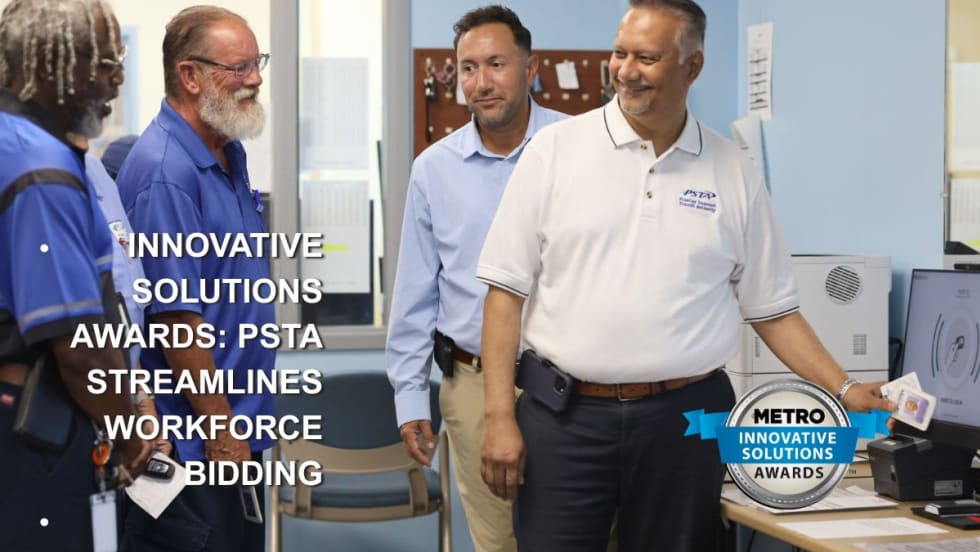
PSTA Modernizes Workforce Management with Digital Bidding System
The award-winning Workforce Transit Modernization project replaced paper bidding with a transparent digital platform, cutting administrative effort while improving access for operators.
Read More →
Chicago to Host Public Transportation's Biggest Gathering at APTA TRANSform & EXPO 2026
North America’s largest public transportation gathering returns to Chicago, connecting transit decision-makers with the technologies, ideas, and partnerships driving the industry forward.
Read More →