



BAE launches HybriDrive for artic buses
The hybrid-electric propulsion system saves an additional 10-20 percent on fuel for bus fleets, which doesn’t include the other 10 percent in fuel savings made possible through a new idling function.

Photos by Joanne Tucker
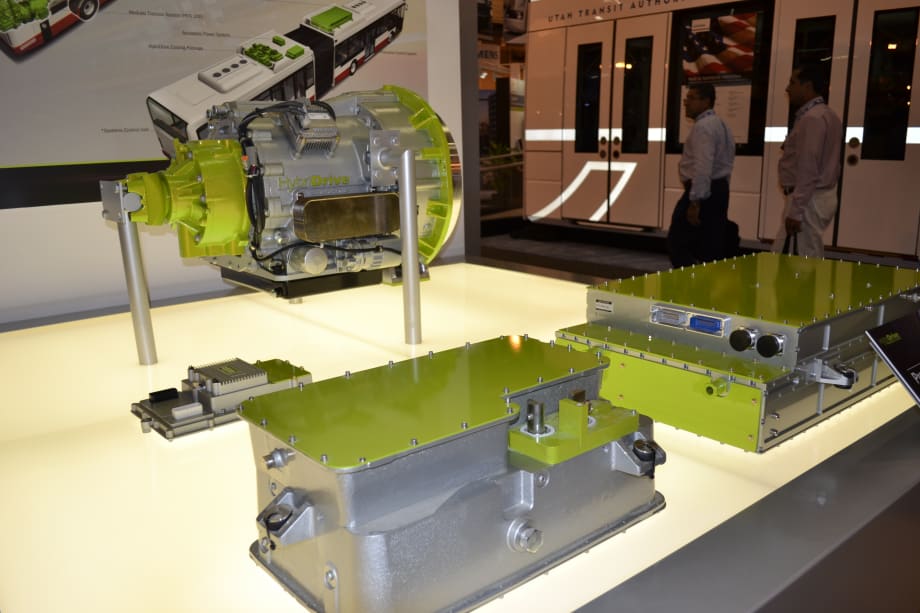
Pictured is the HybriDrive System 200, which is for 40-ft. transit buses.
Photos by Joanne Tucker
Pictured is the HybriDrive System 200, which is for 40-ft. transit buses.
At the APTA Expo on Oct. 3, BAE Systems announced the production of an additional HybriDrive System, the HDS-300 — a sister engine to HDS-200 — that can run articulated buses up to 60 feet. Prior to this announcement, BAE didn’t offer a hybrid-electric propulsion system for this type of vehicle, which requires increased power that the HDS-200 couldn’t accommodate.
The announcement of the new system comes with upgrades in features for the HybriDrive systems, as well, such as an engine start-stop feature to reduce idle time.
Available in June 2012, the HDS-300 will also include new technology that supports full electrification of accessory systems, such as power steering, air conditioning and engine cooling.
In other features, Thomas Webb, BAE’s director of business development and platform solutions, says the system can also decrease idling, in which many larger agencies, he adds, are idling up to 50 percent of the time. Through an engine start-stop function — subject to OEM approval — fleets can expect to save another 10 percent in fuel costs on top of the savings gained through installing a hybrid system.
“It’s a complicated step because you have to work closely with the OEMs,” Webb says. BAE Systems has secured two orders, including Nova Bus and 52 units through New Flyer, which are heading to Santa Rosa, Calif., Massachusetts and several other agencies.
Other features in the new technology include a quieter ride, increased safety and less maintenance since HybriDrive ends the needs for belts, guards, alternators and starters because the vehicle accessories are powered electronically through a 28 volt DC power supply. And, because the system is able to save on the battery through the engine start-stop function, no large increase in battery storage was needed for the HDS-300, according to Webb.
Webb says that BAE Systems has continued in the hybrid-electric technology because of the battery expenses and battery lifecycles. But, he says, these new features in HybriDrive is “the next incremental step” toward that direction.
More Bus

People Movement: Dan Dipert Coaches Adds Third-Generation Leader, Keolis Names New Valley Metro VP/GM, and More
In this edition, we also cover recent appointments and announcements at the Wabtec, SilverRide, HNTB, and more, showcasing the individuals helping to shape the future of transportation.
Read More →
New York MTA Plans Largest Bus Fleet Upgrade in More Than a Decade
The agency is seeking manufacturers for 650 new CNG buses to replace aging vehicles, improve reliability, and advance its broader fleet modernization strategy.
Read More →
Building a Flexible Path to Transit Electrification
John Hroncich discusses BAE Systems’ modular and scalable approach, lessons learned from decades of real-world operations, and how agencies can identify electrification strategies that fit their fleets.
Read More →
Bus Tech Talk: Keeping Transit Technicians Ahead of the Technology Curve
LA Metro’s Obed Mejia discusses technician training, evolving maintenance technology, fleet replacement, and strategies for getting the most out of today’s transit fleets.
Read More →
Biz Briefs: RIPTA Unveils New Frontrunners, Clevland RTA Adds New Siemens, and More
In METRO's latest installment, we take a look at recent news from Siemens, Prevost, Dodge, and more partnerships making headlines across the transportation sector.
Read More →
People Movement: Holly Arnold Joins Transdev and More
In this edition, we also cover recent appointments and announcements at Pace, CamTran, MCI, and more, showcasing the individuals helping to shape the future of transportation.
Read More →
The High Cost of Transit Buses: Industry Leaders Look to Procurement Reform
Transit leaders and policymakers examine how standardized bus designs, streamlined procurement, and predictable funding could help agencies stretch budgets and deliver better service.
Read More →
The Business Voice Behind Public Transportation
As chair of APTA’s Business Members Board of Governors, Ray Melleady explains how more than 850 business members are partnering with transit agencies to advance funding, innovation, and industry-wide collaboration.
Read More →
From Surviving to Thriving: Building Stronger Transportation Organizations
Bus Business Consultants founder Brian Dickson shares lessons on leadership, organizational health, and creating options for long-term success in a changing transportation industry.
Read More →
Finding the ‘Happy Medium’: Optimizing Maintenance Without Sacrificing Reliability
The key to maintenance optimization isn’t doing less work—it’s doing the right work at the right time on the right assets.
Read More →