




RELATED: Wiggins named CEO of Metrolink
Calif.'s Metrolink adds to executive leadership team
CEO Stephanie Wiggins has added a new COO, chief mobilization officer, and chief of staff.
August 7, 2019
2 min to read
Metrolink CEO Stephanie Wiggins announced three chief-level appointments to the agency’s leadership team. The three positions will be critical as the team delivers on Wiggins’ customer-focused vision to create a modern commuter rail system that is safe and integrated with other transportation systems to best serve Southern Californians.
Eric Hosey, a seasoned passenger and freight rail operations and safety executive, joined Metrolink as COO, overseeing the dispatching and operations of Metrolink’s 538-mile network. Darrell Maxey, who was previously Metrolink’s deputy COO, and known for his role in implementing life-saving Positive Train Control Technology, has been promoted to a new role, chief mobilization officer, which will focus on leading and implementing new agency-wide projects such as the new bundling contract for Metrolink operations. Finally, Noelia Rodriguez, a seasoned executive who has held leadership positions at multiple Southern California transportation agencies, will be responsible for managing the CEO’s office, overseeing customer relations, driving excellence in performance, and reporting in her newly created role of chief of staff.
Hosey, who started his role at Metrolink in July, has more than 25 years of experience in both freight and passenger rail. Most recently, he served as assistant VP, transportation, for Amtrak’s Southwestern Division. He started his rail career with Norfolk Southern Railway as a brakeman and locomotive engineer.
Maxey, who transitioned to his new role in July, joined Metrolink in 2006. With almost 40 years of experience, Maxey has held several important positions with Metrolink, including deputy COO. Maxey served as executive in charge of leading the implementation of PTC for Metrolink, which has become the industry standard for improving the safety of railway traffic. Earlier in his career, he spent 18 years with the Southern Pacific (now Union Pacific Railroad) and nine years with Caltrain in Northern California.
Rodriguez, who will join the agency on August 26, brings more than 30 years of experience to Metrolink. She has served in leadership roles at Southern California transportation agencies such as the Port of Long Beach and Los Angeles County Metropolitan Transportation Authority. She has also served in key roles supporting First Lady Laura Bush and Los Angeles Mayor Richard Riordan. She served as a resident and fellow at Harvard University’s Institute of Politics, followed by nearly five years as the director of the Kennedy School’s John F. Kennedy Jr. Forum. Before her career in academia, she was VP, communications, for Univision Communications.
More Management

Castro to Lead RTC of Southern Nevada and More in People Movement
In this edition, we also cover recent appointments and announcements at the STV, MCI, and more, showcasing the individuals helping to shape the future of transportation.
Read More →
STraffic Expands North American Presence with Fare Collection Technology
John Moon, Associate Director, Product Strategy at STraffic, discusses the company's growth in North America, its efforts to reduce fare evasion, and more.
Read More →
Study: Denver RTD Generates $2.1 Billion in Annual Economic Activity
An economic impact study finds the agency supports approximately 17,500 jobs, delivers $1.6 billion in annual community and mobility benefits, and generates $2.42 in economic value for every dollar invested.
Read More →
Mark Aesch Nominated to Lead Federal Transit Administration
The former Rochester transit chief and TransPro founder, who has also contributed to METRO Magazine, brings decades of industry experience and a focus on performance, accountability, and financial sustainability to the nomination.
Read More →
Best and Worst U.S. Cities for Public Transportation in 2026
A new analysis of 50 major U.S. urban areas ranks public transit systems based on accessibility, affordability, usefulness, and safety, highlighting where transit performs best and where challenges remain.
Read More →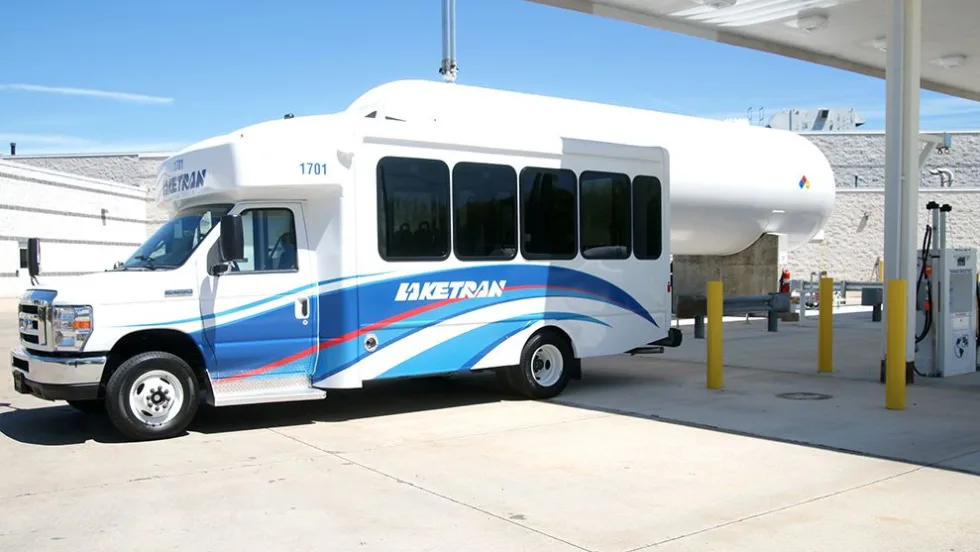
Laketran Cuts Fuel Costs, Boosts Efficiency with Propane-Powered Fleet
The Ohio transit agency is using propane-powered vehicles and on-site fueling infrastructure to cut fuel and maintenance costs while meeting growing demand for paratransit services.
Read More →
Canada’s Public Transit Supports $65.6 Billion in Annual GDP
New research from the Canadian Chamber of Commerce examines transit's economic contributions, including job creation and the financial implications of transportation investment.
Read More →
Pierce Transit Moves to Expand Fleet Following Proposition 1 Approval
The agency authorized the purchase or refurbishment of up to 60 buses to support a 47% service expansion, as voters nationwide approved billions in new transit funding.
Read More →
Right-Sizing Rural Transit: Lessons from North Grenville’s On-Demand Model
A small municipality shows how flexible service, rider needs, and public accountability can expand mobility with limited resources.
Read More →
Transit Ballot Victories Signal Strong Voter Support: What Comes Next?
Voters approved billions in public transportation investments in 2026, giving agencies opportunities to preserve service, expand operations, and strengthen regional connections amid a changing political landscape.
Read More →