



Chicago Transit closes $79M TIFIA loan
As part of the CTA 2013-2017 Capital Improvement Plan, the 9.4 mile Dan Ryan Branch of the CTA Red Line is being fully reconstructed. Improvements to the terminal will mean better bus and rail connections and reduced travel congestion and delays.

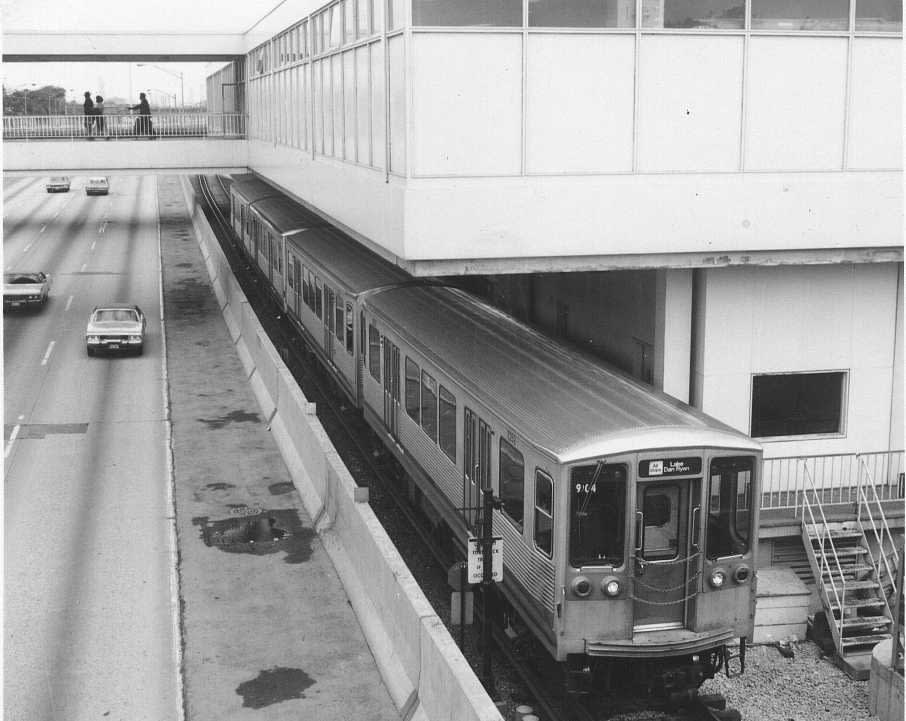
A train of Lake-Dan Ryan All-Stop 2200's are heading southbound into 95th Street, finishing their run, looking north from the 95th St. bridge in 1973. Photo courtesy Chicago "L"
A train of Lake-Dan Ryan All-Stop 2200's are heading southbound into 95th Street, finishing their run, looking north from the 95th St. bridge in 1973. Photo courtesy Chicago
The Chicago Transit Authority (CTA) closed a $79 million Transportation Infrastructure Finance Innovation Act (TIFIA) loan for its 95th Street Bus and Rail project.
As part of the CTA 2013-2017 Capital Improvement Plan, the 9.4 mile Dan Ryan Branch of the CTA Red Line is being fully reconstructed. Improvements to the terminal will mean better bus and rail connections and reduced travel congestion and delays.
The project will enable CTA riders connecting to and from rail services to access multiple transportation options, including bus service, bike-and-ride, and car sharing. Planned improvements will include increased lighting and security cameras, wider walkways, a pedestrian bridge to reduce potential collisions, full wheelchair accessibility, improved bus maneuverability and other design amenities lacking in the current 1969 facility.
The Red Line accounts for nearly 40% of annual CTA ridership and the Dan Ryan branch accounts for roughly 2o% of Red Line trips. Of these, roughly one quarter originate at the 95th Street Terminal.
The construction site, which is over the median of the Dan Ryan Expressway I-94, will require CTA to purchase a 2.3 acre parcel adjacent to the current terminal in order to serve as a staging area during reconstruction. Following completion of the construction, CTA may convert the stating area to a park-and-ride facility.
The loan will go toward the $240 million total cost of the project. The project also received a $20 million Transportation Investment Generating Economic Recovery grant in 2012 from the U.S. Department of Transportation.
More Bus

People Movement: Dan Dipert Coaches Adds Third-Generation Leader, Keolis Names New Valley Metro VP/GM, and More
In this edition, we also cover recent appointments and announcements at the Wabtec, SilverRide, HNTB, and more, showcasing the individuals helping to shape the future of transportation.
Read More →
New York MTA Plans Largest Bus Fleet Upgrade in More Than a Decade
The agency is seeking manufacturers for 650 new CNG buses to replace aging vehicles, improve reliability, and advance its broader fleet modernization strategy.
Read More →
Building a Flexible Path to Transit Electrification
John Hroncich discusses BAE Systems’ modular and scalable approach, lessons learned from decades of real-world operations, and how agencies can identify electrification strategies that fit their fleets.
Read More →
Bus Tech Talk: Keeping Transit Technicians Ahead of the Technology Curve
LA Metro’s Obed Mejia discusses technician training, evolving maintenance technology, fleet replacement, and strategies for getting the most out of today’s transit fleets.
Read More →
Biz Briefs: RIPTA Unveils New Frontrunners, Clevland RTA Adds New Siemens, and More
In METRO's latest installment, we take a look at recent news from Siemens, Prevost, Dodge, and more partnerships making headlines across the transportation sector.
Read More →
People Movement: Holly Arnold Joins Transdev and More
In this edition, we also cover recent appointments and announcements at Pace, CamTran, MCI, and more, showcasing the individuals helping to shape the future of transportation.
Read More →
The High Cost of Transit Buses: Industry Leaders Look to Procurement Reform
Transit leaders and policymakers examine how standardized bus designs, streamlined procurement, and predictable funding could help agencies stretch budgets and deliver better service.
Read More →
The Business Voice Behind Public Transportation
As chair of APTA’s Business Members Board of Governors, Ray Melleady explains how more than 850 business members are partnering with transit agencies to advance funding, innovation, and industry-wide collaboration.
Read More →
From Surviving to Thriving: Building Stronger Transportation Organizations
Bus Business Consultants founder Brian Dickson shares lessons on leadership, organizational health, and creating options for long-term success in a changing transportation industry.
Read More →
Finding the ‘Happy Medium’: Optimizing Maintenance Without Sacrificing Reliability
The key to maintenance optimization isn’t doing less work—it’s doing the right work at the right time on the right assets.
Read More →