




Looking Back: Pace Adds First Electric Paratransit Vehicle
Chicago’s Pace Advances Zero-Emission Fleet, Paratransit Policy & Budget Plans
New electric buses, pilot route expansions, and paratransit reforms signal Pace’s push for sustainable, inclusive transit.
July 18, 2025
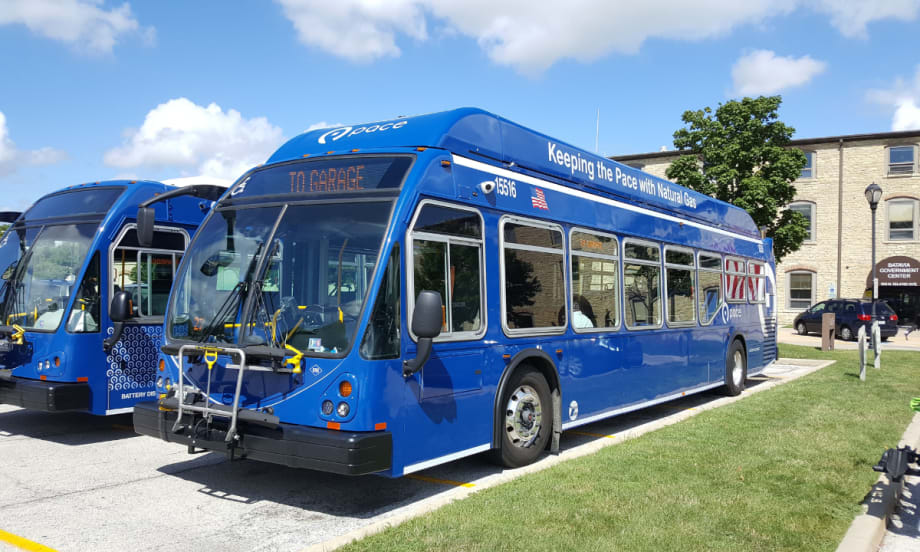
Board action includes electric bus purchase, route expansions, and paratransit hearing prep.
Photo: Pace
2 min to read
At a recent Pace Suburban Bus Board of Directors meeting, agency leadership shared developments in service delivery, zero-emission fleet procurement, budget planning, and regional paratransit policy.
Recent board action included the purchase of new electric buses, the permanent adoption of successful pilot routes, and preparation for upcoming public hearings on proposed changes to the Taxi Access and Rideshare Access Programs.
As part of its Project Zero transition to a zero-emission fleet, the Pace board authorized the purchase of 27 new 40-foot battery-electric buses from Gillig, LLC. Plus, Pace’s work with the Chicago Transit Authority (CTA) was approved for a joint procurement of battery-electric buses for 2025 and 2026.
Several pilot service expansions were made permanent after implementation last year. Effective on or after July 17, 2025, routes 330, 331, 755, 850, 851, and 855 will continue operating under their expanded schedules, which have seen measurable ridership increases between August 2024 and May 2025. The service enhancements were designed to connect residents to jobs, education, and essential services, and they are funded in Pace’s 2025 operating budget.
Public Hearings, Budget Challenges, and ‘Ride Kind’ Success
In a report to the board, Pace Executive Director Melinda Metzger shared that starting July 24, Pace will host six public hearings regarding proposed changes to the Taxi Access Program (TAP) and the Rideshare Access Program (RAP), as outlined in the Regional Transportation Authority’s (RTA) ADA Paratransit Action Plan. RTA’s proposal includes increasing the fare to $3.25 and implementing a 30-trip-per-month cap.
Metzger also shared that Pace has started its 2026 budget development in accordance with the RTA’s recent Budget Call, which asks service boards to develop two budget scenarios due to ongoing fiscal uncertainty. The first scenario provides no new funding in 2026, and the second provides a temporary stopgap that maintains current service levels.
The RTA has requested that both scenarios include a fare increase and identify operational efficiencies equal to 5% of 2024 expenses. Pace also has a third scenario that assumes funding for its ReVision plan, a blueprint to strengthen suburban transit service.
“The coming months are critical,” Metzger said. “We are actively working with legislators and stakeholders to secure a sustainable funding solution that allows us to build the transit system our region needs.”
Finally, Metzger shared that Pace’s 2024 “Ride Kind” campaign earned two Gold Addy Awards from the American Advertising Federation’s Chicago Chapter.
The marketing campaign, developed with Gatesman Agency, uses powerful visuals of drivers in uniform and their personal lives, centering on the message that “driving is just the half of it”, to encourage empathy and respect onboard buses.
“This meaningful campaign reinforces that if we Ride Kind, everyone gets home safely,” Metzger said.
More Bus

New York MTA Plans Largest Bus Fleet Upgrade in More Than a Decade
The agency is seeking manufacturers for 650 new CNG buses to replace aging vehicles, improve reliability, and advance its broader fleet modernization strategy.
Read More →
Building a Flexible Path to Transit Electrification
John Hroncich discusses BAE Systems’ modular and scalable approach, lessons learned from decades of real-world operations, and how agencies can identify electrification strategies that fit their fleets.
Read More →
Bus Tech Talk: Keeping Transit Technicians Ahead of the Technology Curve
LA Metro’s Obed Mejia discusses technician training, evolving maintenance technology, fleet replacement, and strategies for getting the most out of today’s transit fleets.
Read More →
Biz Briefs: RIPTA Unveils New Frontrunners, Clevland RTA Adds New Siemens, and More
In METRO's latest installment, we take a look at recent news from Siemens, Prevost, Dodge, and more partnerships making headlines across the transportation sector.
Read More →
People Movement: Holly Arnold Joins Transdev and More
In this edition, we also cover recent appointments and announcements at Pace, CamTran, MCI, and more, showcasing the individuals helping to shape the future of transportation.
Read More →
The High Cost of Transit Buses: Industry Leaders Look to Procurement Reform
Transit leaders and policymakers examine how standardized bus designs, streamlined procurement, and predictable funding could help agencies stretch budgets and deliver better service.
Read More →
The Business Voice Behind Public Transportation
As chair of APTA’s Business Members Board of Governors, Ray Melleady explains how more than 850 business members are partnering with transit agencies to advance funding, innovation, and industry-wide collaboration.
Read More →
From Surviving to Thriving: Building Stronger Transportation Organizations
Bus Business Consultants founder Brian Dickson shares lessons on leadership, organizational health, and creating options for long-term success in a changing transportation industry.
Read More →
Finding the ‘Happy Medium’: Optimizing Maintenance Without Sacrificing Reliability
The key to maintenance optimization isn’t doing less work—it’s doing the right work at the right time on the right assets.
Read More →
LA Metro, City of West Hollywood, and Partners Advance Smarter Bus Lane Enforcement
The award-winning partnership combines AI-powered detection with human oversight to improve bus reliability, accessibility, and enforcement efficiency.
Read More →