




RELATED: [Video] Engergizing people about the future of public transportation
Civic action, leadership key to transportation innovation, reform, study says
The report studied recent innovations in transportation practice in New York City, Portland, Chicago, Pittsburgh, Denver, and Charlotte and found that local advocacy and civic engagement were a necessary prerequisite for revitalizing urban transportation.
July 29, 2015
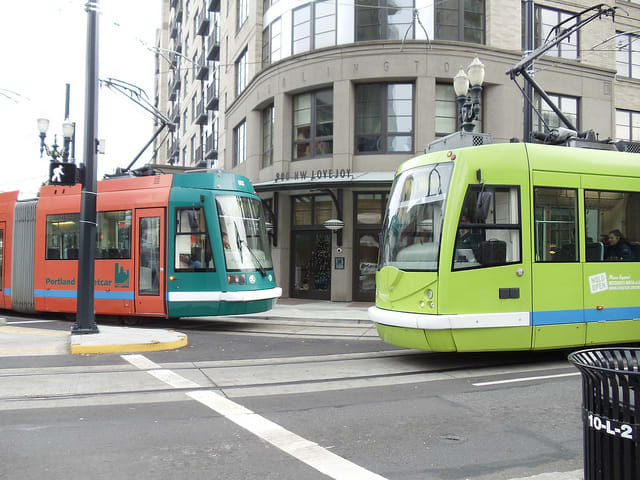
Portland Streetcar
3 min to read
Portland Streetcar
A report examining the history of transportation reform in six major cities finds that citizen-led efforts are necessary to achieve reform. The report studied recent innovations in transportation practice in New York City, Portland, Chicago, Pittsburgh, Denver, and Charlotte and found that local advocacy and civic engagement were a necessary prerequisite for revitalizing urban transportation.
In the past decade, several cities have transformed their streets by adding bus and bike lanes, creating new pedestrian plazas, and emphasizing the movement of people instead of cars. These changes were initiated and led by local-level advocacy, according to the report, “A People’s History of Recent Urban Transportation Innovation,” released today by TransitCenter, a foundation that supports efforts to improve urban transportation, and supported by the John S. and James L. Knight Foundation.
“Transformation happens at the local level, with civic organizations and transportation leaders who coordinate their actions and work together,” said David Bragdon, Executive Director of TransitCenter. “Municipal leaders should be bold in their attempts to innovate, and state and federal policy should encourage local-level innovation.”
Local transportation advocates and government officials have rebranded transportation reform as quality of life issues, allowing them to galvanize higher levels of local support.
There are three factors required in order to accomplish this type of innovation: a civic sector that is resident-led, non-elite, and outside government that can direct public support; a bold mayor and transportation agency head who have the vision and skills to manage this innovation; and a staff willing to challenge the existing culture within local government, according to TransitCenter data.
“Civic leaders stand up for bold ideas and support politicians willing to take risks. Elected leaders articulate strong transportation visions and inspire change across agencies. Agency leaders navigate desired changes through the bureaucracy and create new practices,” said Shin-pei Tsay, Research and Development Director of TransitCenter and the report primary author. “When one is missing, change happens much more slowly.”
Despite significant differences in the local conditions and history, all of the cities examined implemented innovative and lasting transportation policies, illustrating that any city can use bottom-up approaches to change transportation policy.
Based on the experiences of these six cities, TransitCenter recommends that transit advocates, policymakers, foundations, and anyone interested in transportation change:
Encourage civic organizations to emerge and reframe transportation issues as quality-of-life issues;
Reinforce public support through political organizing and leveraging technical expertise or data;
Bolster the courage of leaders willing to take on reform by connecting them with visible public support and a compelling communications strategy;
Position advocates on the inside to catalyze a reorientation of city agency and staff culture;
Perpetuate new norms by changing agency standards;
Create federal and state policies that recognize and reward small-scale urban transportation reform and tip the scales toward innovation.
“TransitCenter’s recounting of how leading cities have changed the way they build and plan urban transportation shows how engaged citizens can set the stage for big shifts in our cities,” said Benjamin de la Peña, Knight Foundation director for community and national strategy. “Advocates and local leaders in these cities are at the forefront of this transformation. Less car-centric transportation that provides more options can help to improve the quality of life in our cities and give them an edge in the competition to attract and keep talent.”
More Management
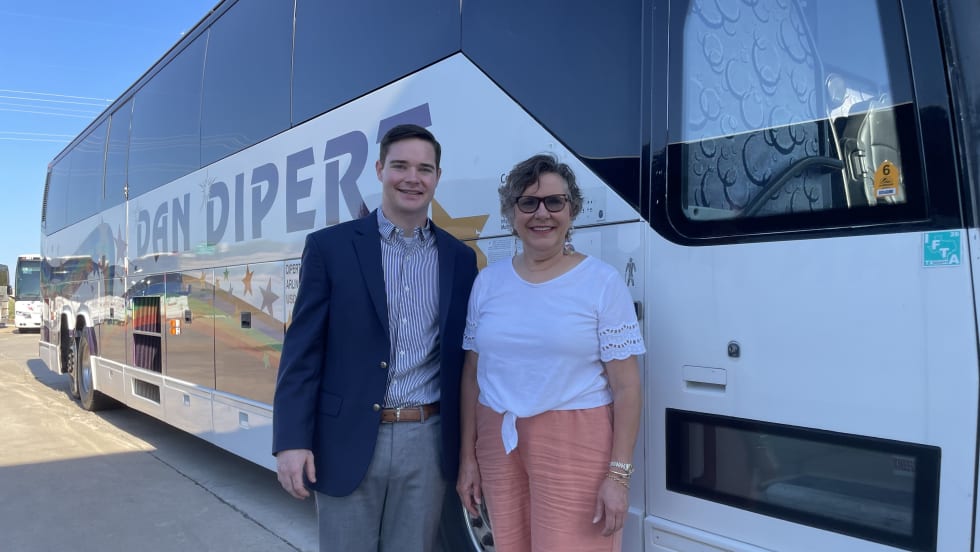
People Movement: Dan Dipert Coaches Adds Third-Generation Leader, Keolis Names New Valley Metro VP/GM, and More
In this edition, we also cover recent appointments and announcements at the Wabtec, SilverRide, HNTB, and more, showcasing the individuals helping to shape the future of transportation.
Read More →
METRO Opens Submissions for 2026 Motorcoach Awards
Nominations are now being accepted for METRO Magazine’s Operator of the Year and Innovative Operator of the Year awards.
Read More →
New York MTA Advances Final Contract for Second Avenue Subway Expansion
Contract Four is the largest in the Second Avenue Subway Phase 2 project and includes construction of station infrastructure, tracks, and signals for the subway expansion, MTA officials said. Work on Contract Four will begin in 2027.
Read More →

Transit Agencies Highlight Safety Gains at National Summit
Leaders from 15 major transit systems shared crime-reduction results and safety initiatives while discussing the role of continued federal support.
Read More →
NITA Names New Leadership, Expands Reduced-Fare Program at First Board Meeting
The new regional transit authority appointed its first board chair and interim executive director while extending reduced fares across CTA, Metra, and Pace for eligible riders.
Read More →
Beyond the Checklist: A Structured Approach to Transit Maintenance
Reliability-Centered Maintenance helps transit agencies move beyond routine checklists to focus limited resources on the assets and failures that have the greatest impact on safety, reliability, and service.
Read More →
APTA 2026 Nominating Committee Selects Leadership Slate, Names Chair and Vice Chair Nominees
Leadership changes will help shape the association’s priorities and its representation of the transportation industry during the 2026–2027 term.
Read More →
DART Launches Major Security, Fare Enforcement Initiative
The 90-day demonstration will deploy coordinated security teams at five light rail stations while testing controlled access and gathering data to guide future investments.
Read More →
Sponsored•September 9, 2026
Advancing Fare Collection Through Technology and Innovation
Learn about delivering 1300 gates at 91 stations while managing fare evasion. Explore the large scale deployment, solution customization and real-world results that affect the region. Prepare for deployment in your region now.
Read More →
Game Day in Motion: Moving Millions During the 2026 World Cup
Between packed transit stations and team motorcoaches, see how agencies and operators across North America tackled the transportation demands of the 2026 FIFA World Cup.
Read More →