




RELATED: Amtrak investigation turns to why equipment on tracks
Feds find ignored safety procedures, fractured safety program led to Amtrak derailment
The train engineer saw equipment and people working on and near track 3 and initiated emergency braking that slowed the train from 106 mph to approximately 99 mph at the time of impact.
November 15, 2017
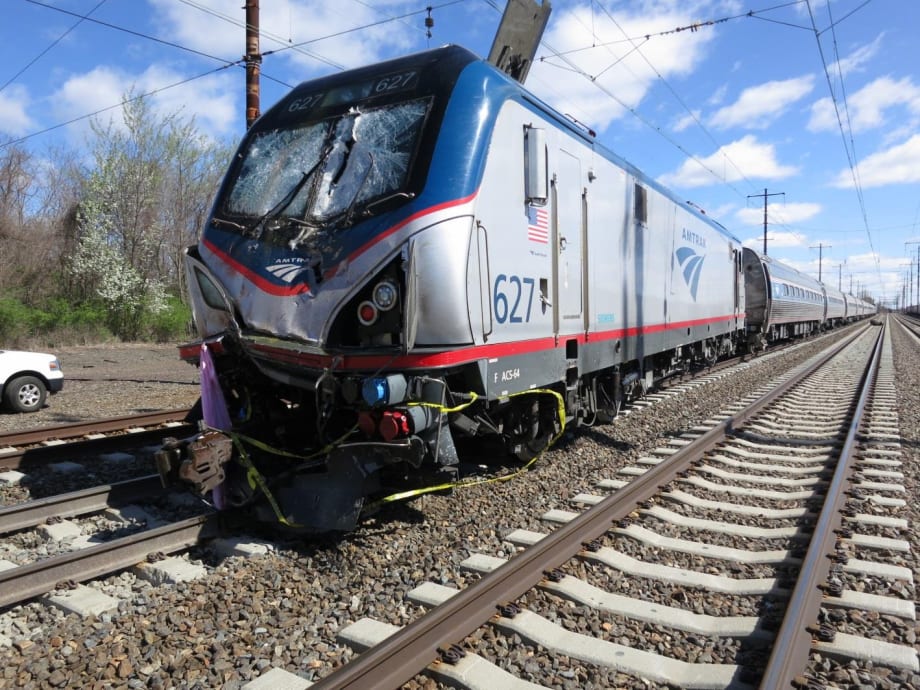
A backhoe operator and a track supervisor were killed, and 39 people were injured, when Amtrak train 89, traveling on the Northeast Corridor from Philadelphia to Washington on track 3, struck a backhoe at about 7:50 a.m.
photo via NTSB
2 min to read

The National Transportation Safety Board (NTSB) determined that the April 3, 2016, derailment of Amtrak train 89 near Chester, Pa. was caused by deficient safety management across many levels of Amtrak and the resultant lack of a clear, consistent, and accepted vision for safety.
A backhoe operator and a track supervisor were killed, and 39 people were injured, when Amtrak train 89, traveling on the Northeast Corridor from Philadelphia to Washington on track 3, struck a backhoe at about 7:50 a.m. The train engineer saw equipment and people working on and near track 3 and initiated emergency braking that slowed the train from 106 mph to approximately 99 mph at the time of impact.
The NTSB also determined allowing a passenger train to travel at maximum authorized speed on unprotected track where workers were present, the absence of shunting devices, the foreman’s failure to conduct a job briefing at the start of the shift, all coupled with the numerous inconsistent views of safety and safety management throughout Amtrak, led to the accident.
“Amtrak’s safety culture is failing, and is primed to fail again, until and unless Amtrak changes the way it practices safety management,” said NTSB Chairman Robert L. Sumwalt. “Investigators found a labor-management relationship so adversarial that safety programs became contentious at the bargaining table, with the unions ultimately refusing to participate.”
The NTSB also noted the Federal Railroad Administration’s failure to require redundant signal protection, such as shunting, for maintenance-of-way work crews contributed to this accident.
Post-accident toxicology determined that the backhoe operator tested positive for cocaine, and the track supervisor and tested positive for codeine and morphine. The locomotive engineer tested positive for marijuana. The NTSB determined that while drug use was not a factor in this accident, it was symptomatic of a weak safety culture at Amtrak.
As a result of this investigation, the NTSB issued 14 safety recommendations including nine to Amtrak.
The NTSB also made two safety recommendations to the Federal Railroad Administration, and three safety recommendations were issued to the Brotherhood of Maintenance of Way Employees Division, American Railway and Airway Supervisors Association, Brotherhood of Locomotive Engineers and Trainmen, and Brotherhood of Railroad Signalmen.
The abstract of the NTSB’s final report, that includes the findings, probable cause and safety recommendations are available here.
The final report will be publicly released in the next several days.
More Rail
OKC Streetcar Makes Zero-Fare Service Permanent
Ridership increased an average of 71% compared with the same period a year earlier during the fare-free pilot.
Read More →
DART Customer Satisfaction Reaches Six-Year High
Overall satisfaction rose to 74.9%, while the agency’s Net Promoter Score reached a record 33.7.
Read More →
How DART's GoPass Is Redefining Regional Mobility
Serving 14 transit agencies, GoPass simplifies multimodal travel by allowing riders to plan, pay for, and manage an entire trip through one app.
Read More →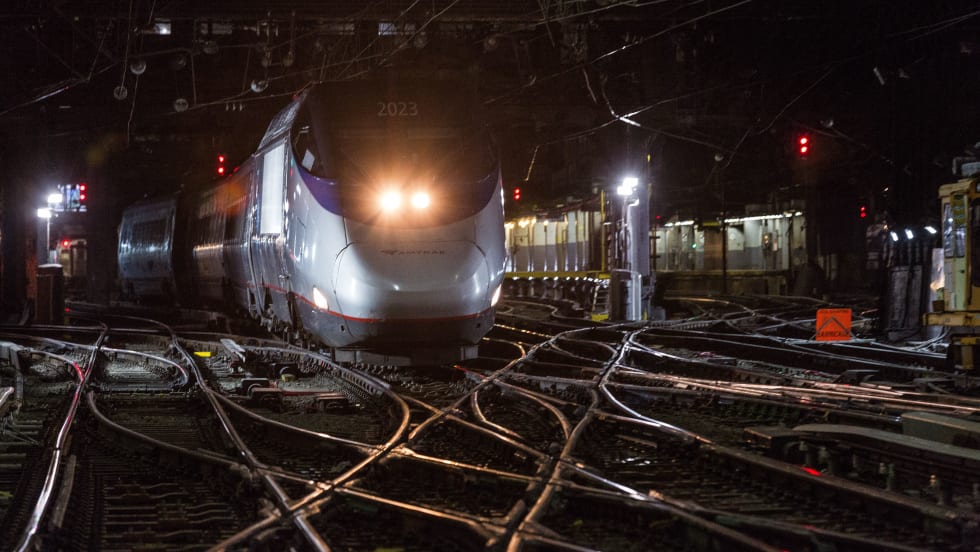
Amtrak Board Advances Plan to Restructure Organization, Seeks Public Input
The proposal, developed by Amtrak management and approved by the board for further consideration, is intended to modernize the organization's structure while improving accountability, operational efficiency, and customer service.
Read More →
Biz Briefs: STV teams with Amtrak, Motorcoach Operators Boost Fleet and Land Contracts, and More
From manufacturers and suppliers to transit agencies and motorcoach operators, these updates offer a snapshot of the projects, partnerships and business moves driving the industry forward.
Read More →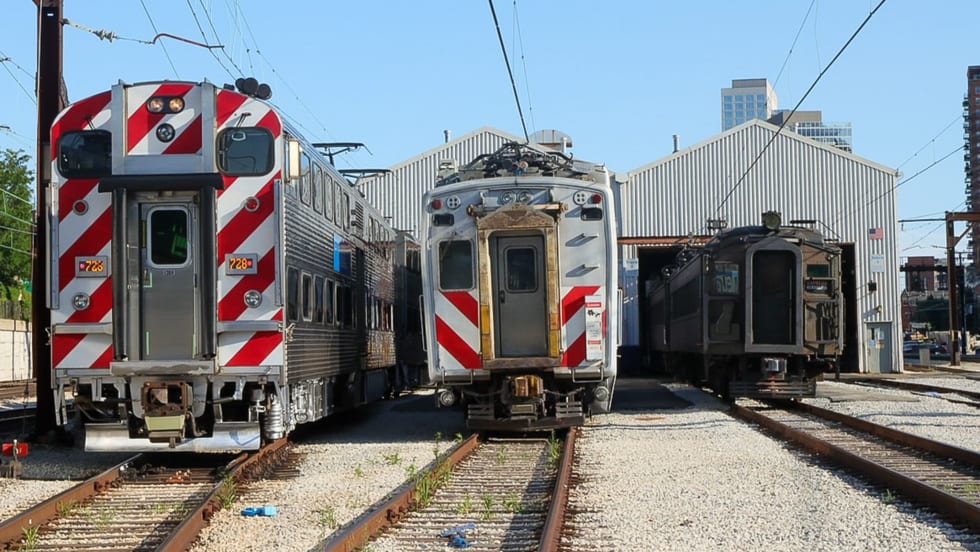
Metra Celebrates 100 Years of Electric Rail, Looks to the Future
The event was also a celebration of recent reforms to public transportation in the Chicago area, changes that could be as transformative in the future as the major civic achievement a century ago, said officials.
Read More →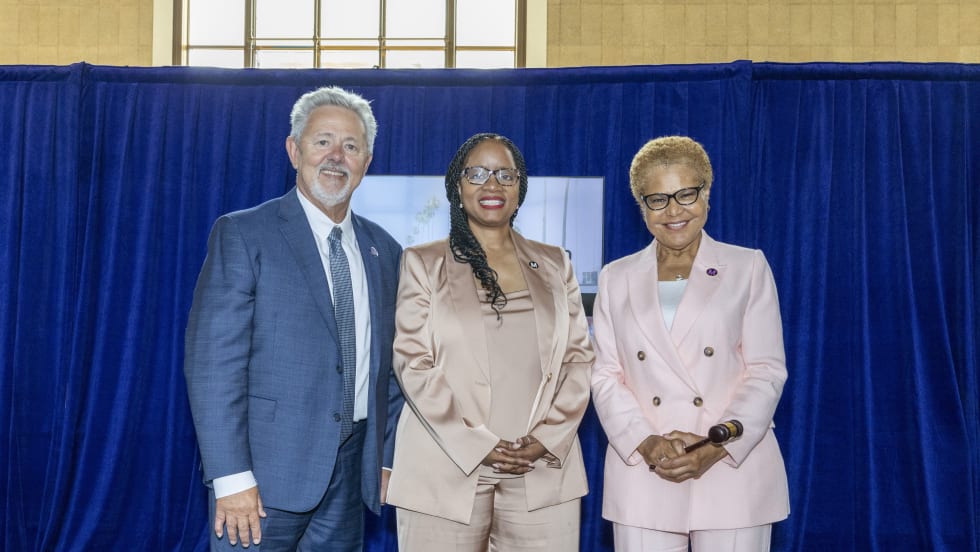
LA Metro Marks Banner Year, Sets Ambitious Goals for New Fiscal Year
Incoming LA Metro Board Chair and Los Angeles Mayor Karen Bass joined outgoing Board Chair Fernando Dutra and LA Metro CEO Stephanie Wiggins to review accomplishments from fiscal year 2026, which included the opening of new rail extensions, advancement of major transit projects, expanded safety programs, and new rider amenities.
Read More →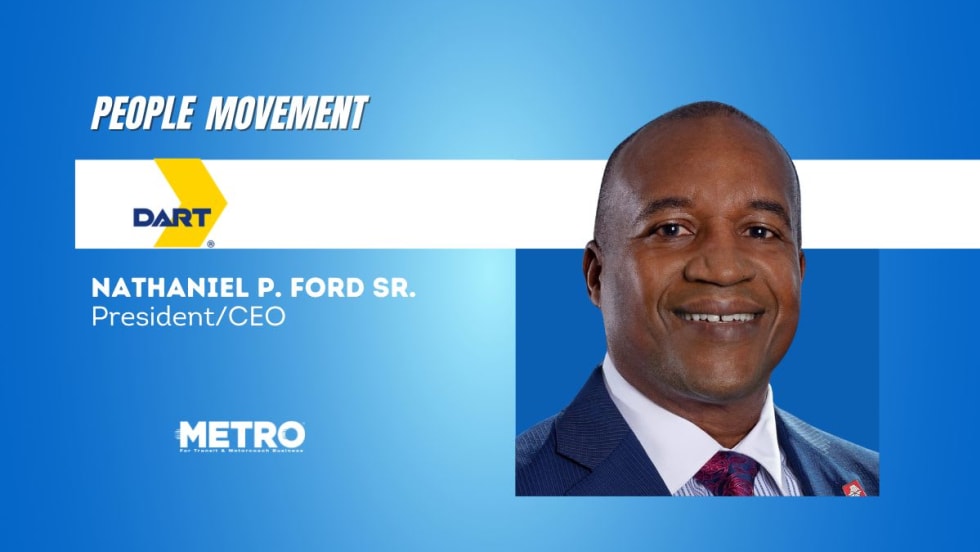
DART Taps Nathaniel P. Ford Sr. as Next President/CEO
Since 2012, Ford has served as the CEO of the Jacksonville Transportation Authority
Read More →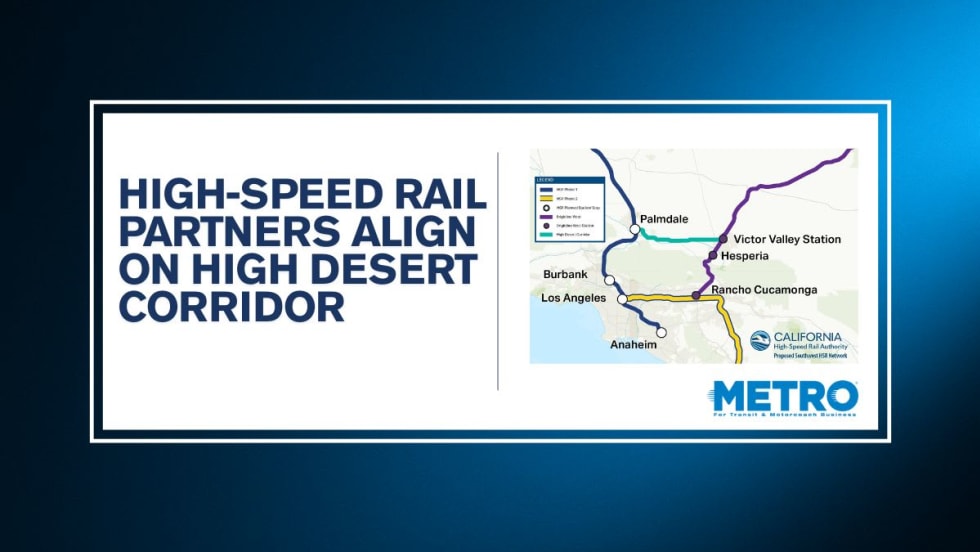
California High-Speed Rail Authority Signs MOU to Advance High Desert Corridor
The agreement deepens collaboration between the California High-Speed Rail Authority and the High Desert Corridor Joint Powers Agency, supporting design integration, cost savings, and faster delivery of a key Southern California rail link.
Read More →
Building the Next Generation of Transit Technology
In this edition of METROspectives, Luminator CEO Magnus Friberg discusses the company's transformation, the growing role of AI and software, and what's next for transit technology.
Read More →