



First Oklahoma City Streetcar delivered
Each streetcar can carry 104 passengers, and each stop will be served every 12 to 15 minutes.

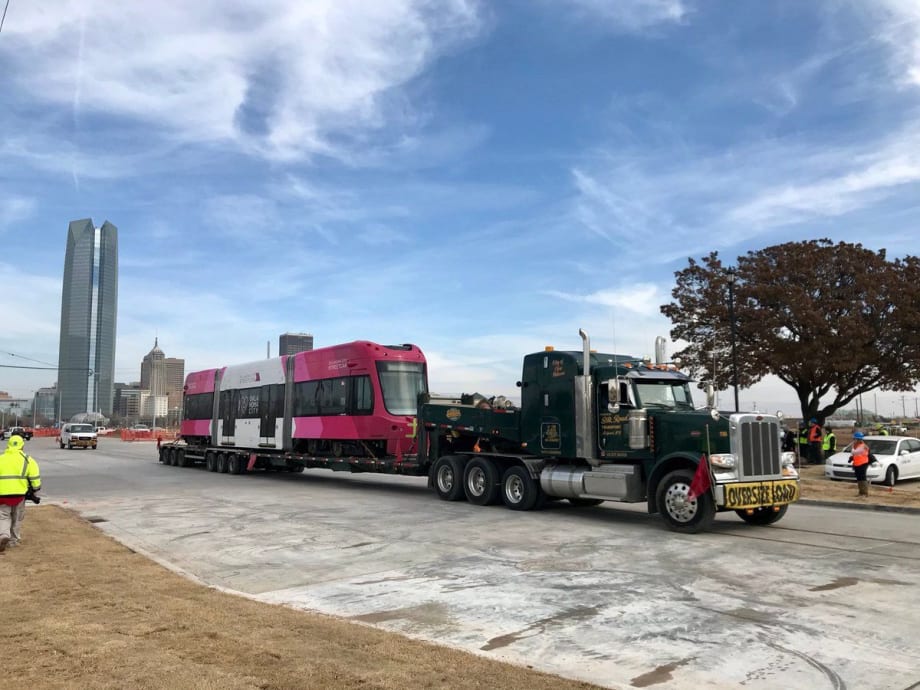
The streetcars are delivered by truck from Pennsylvania, where they’re built by Brookville Equipment Corp. Photo: Oklahoma City Streetcar/Twitter
The streetcars are delivered by truck from Pennsylvania, where they’re built by Brookville Equipment Corp. Photo: Oklahoma City Streetcar/Twitter
The first of seven modern streetcars for the MAPS 3 Oklahoma City Streetcar line has been delivered, another milestone before service is expected to begin late this year.
MAPS 3 is a $777 million capital improvement program to improve the quality of life in Oklahoma City. It is funded by a 1-cent sales tax initiative that began in April 2010 and ended in December 2017. The streetcar line is one of eight projects being funded by the program.
“It’s an exciting step in the process to have our first modern streetcar delivered to our maintenance facility,” said MAPS 3 Program Manager David Todd. “We expect to begin testing the streetcars on the Bricktown Loop this summer, so people will see them on the street pretty soon.”
The other six streetcars will be delivered one at a time about every three weeks. They’re delivered by truck from Pennsylvania, where they’re built by Brookville Equipment Corp.
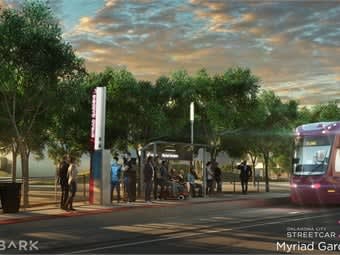
The OKC Streetcar will serve 22 stops (rendering shown) with five streetcars. Image: Oklahoma City Streetcar
EMBARK will operate the OKC Streetcar as part of the City’s public transit system.
The streetcar will have two route options: a 2-mile Bricktown loop, and a 4.8-mile mainline serving the rest of the central urban core.
The OKC Streetcar will serve 22 stops with five streetcars, which ride on rails flush with the street. The streetcars use overhead wires for electric power on part of the route, and batteries for the rest.
Each streetcar can carry 104 passengers, and each stop will be served every 12 to 15 minutes.
RELATED: Looking Ahead: The Future of Streetcars
The streetcar will use City streets in the same way as other vehicles, obeying traffic signals and other rules of the road. EMBARK is developing a safety campaign to educate drivers, pedestrians and cyclists how to avoid accidents once streetcar service begins.
Each OKC Streetcar stop is ADA-accessible for easy boarding with signage, real-time arrival information, covered shelters and a ticket vending machine.
The project budget is $131 million and includes a storage and maintenance facility completed last year.
RELATED: Understanding Streetcar Costs, Funding, Operations and Partnerships
Herzog-Stacey and Witbeck is building the rail line. Consultants include ADG, Jacobs Engineering, AECOM and SOJ. EMBARK contracted Herzog Transit Services to manage OKC Streetcar’s day-to-day operations.
MAPS 3 funds eight projects: Downtown Convention Center, Downtown Public Park, Modern Streetcar/Transit, Oklahoma River Improvements, Oklahoma State Fairgrounds Improvements, Senior Health and Wellness Centers, Trails and Sidewalks.
More Rail

New York MTA Advances Final Contract for Second Avenue Subway Expansion
Contract Four is the largest in the Second Avenue Subway Phase 2 project and includes construction of station infrastructure, tracks, and signals for the subway expansion, MTA officials said. Work on Contract Four will begin in 2027.
Read More →
San Diego MTS Breaks Monthly Trolley Ridership Record
Agency officials said July’s ridership indicates MTS’s continued recovery from the pandemic.
Read More →
Report Examines NJ TRANSIT Reliability, Funding Challenges
The Garden State Initiative analysis examines the roles of Amtrak infrastructure, fleet management, and agency operations while recommending a more performance-based approach to improving reliability.
Read More →
Stadler, CapMetro Sign Long-Term Rail Fleet Support Agreement
Beginning in 2027, Stadler will provide on-site technical expertise, spare parts support, training, and obsolescence management to help extend the reliability and longevity of CapMetro’s GTW fleet.
Read More →
Biz Briefs: Alstom Lands Canadian Contract, LYT to Supply California TSP, and More
In METRO's latest installment, we take a look at recent news from Complete Coach Works, Beep, FlixBus, and more partnerships making headlines across the transportation sector.
Read More →
CATS Gold Line Marks 5 Years of Service, 2.8M Passenger Trips
With a six-mile expansion planned, the Charlotte streetcar is positioned to connect more neighborhoods and major transit hubs across the region.
Read More →
Why Simulating Pedestrian Movement Has Become Essential for Modern Rail Stations
Pedestrian microsimulation is helping rail planners identify bottlenecks, test station designs, and prepare complex transit hubs for growing passenger volumes.
Read More →
Amtrak Begins Major Construction at New York’s Sunnyside Yard
The new maintenance facility will support Amtrak’s Airo trainsets while improving maintenance efficiency and turnaround times in New York.
Read More →
Chicago Leaders Unveil Plans for O’Hare Airport Express Train
The privately developed project would offer a 15-minute trip between downtown and O’Hare’s Terminal 2, with trains operating every 15 minutes on a dedicated track. The service would use battery-electric trains and three existing freight rail rights-of-way.
Read More →
OCTA Maps Out 30-Year Strategy to Protect Coastal Rail Corridor
The draft feasibility report identifies strategies to protect the coastal rail line for decades as the agency continues near-term stabilization and sand placement efforts.
Read More →