



Fla.'s JTA, Greyhound open LEED-certified intercity bus terminal
The one-story, 10,000 square foot bus terminal features an indoor waiting area, ticketing offices, a cafeteria, restrooms, nine bus bays, parking, and a customer drop off area on Stuart Street.

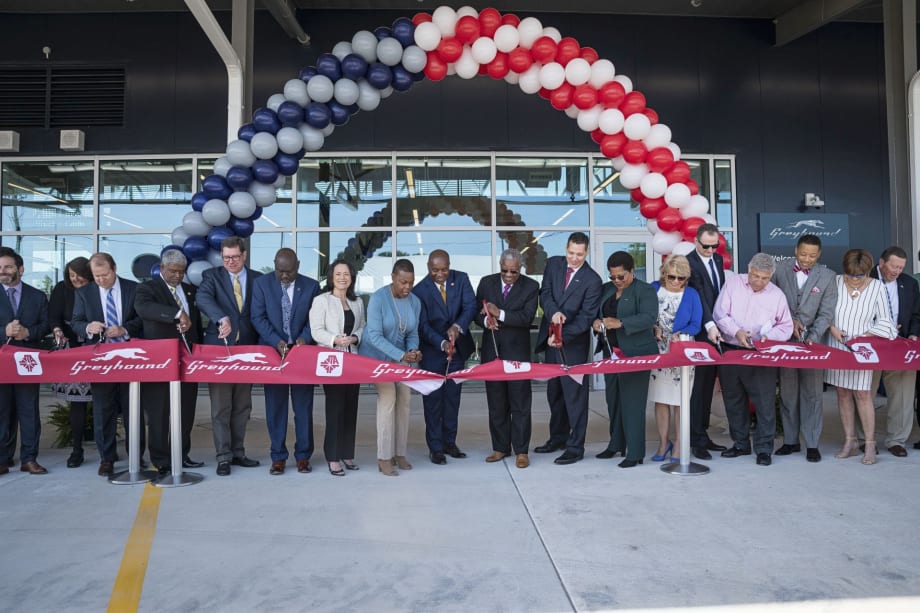
In attendance at the ceremony were several state and local dignitaries.
JTA
In attendance at the ceremony were several state and local dignitaries.
JTA
The Jacksonville Transportation Authority (JTA) held a ribbon cutting ceremony to celebrate the completion of Phase I (Intercity Bus Terminal) of the Jacksonville Regional Transportation Center (JRTC).
“The Intercity Bus Terminal is the first pillar of the Jacksonville Regional Transportation Center,” said JTA CEO Nathaniel P. Ford Sr. “JTA is pleased to provide Greyhound Lines Inc. with this new state-of-the-art home. The JRTC is fast becoming a gateway to the region and a catalyst for economic activity.”
The Intercity Bus Terminal was designed and built by the JTA and will be leased to Greyhound. The one-story, 10,000 square foot bus terminal features an indoor waiting area, ticketing offices, a cafeteria, restrooms, nine bus bays, parking, and a customer drop off area on Stuart Street.
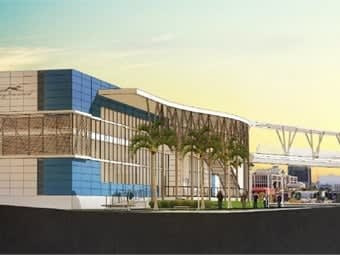
A rendering of the Jacksonville Regional Transportation Center.
JTA
The bus terminal has been built to meet Leadership in Energy & Environmental Design (LEED) certification requirements. LEED is a globally recognized symbol of excellence in green building that ensures electricity cost savings, lower carbon emissions, and healthier environments. The building utilizes an energy efficient heating, ventilation, and air conditioning system, as well as LED lighting and windows.
“The Jacksonville Regional Transportation Center will undoubtedly play a critical role in the continued progress of this community,” said Evan Burak, regional VP for Greyhound. “Being able to offer service from this beautiful location is an honor, and we are grateful to the Jacksonville Transportation Authority for making us an integral part of this project.”
The state-of-the-art transportation hub will connect local, regional, and intercity modes of transportation, including the First Coast Flyer bus rapid transit system, fixed bus routes, the Skyway/U²C, Greyhound and other intercity carriers, ride-share, bike-share, and possibly Amtrak and commuter rail stations in the future. Phase II includes an approximately 40,000 square foot Administration Building. The estimated completion date for Phase II is January 2020.
More Management

METRO Opens Submissions for 2026 Motorcoach Awards
Nominations are now being accepted for METRO Magazine’s Operator of the Year and Innovative Operator of the Year awards.
Read More →
New York MTA Advances Final Contract for Second Avenue Subway Expansion
Contract Four is the largest in the Second Avenue Subway Phase 2 project and includes construction of station infrastructure, tracks, and signals for the subway expansion, MTA officials said. Work on Contract Four will begin in 2027.
Read More →
Transit Agencies Highlight Safety Gains at National Summit
Leaders from 15 major transit systems shared crime-reduction results and safety initiatives while discussing the role of continued federal support.
Read More →

NITA Names New Leadership, Expands Reduced-Fare Program at First Board Meeting
The new regional transit authority appointed its first board chair and interim executive director while extending reduced fares across CTA, Metra, and Pace for eligible riders.
Read More →
Beyond the Checklist: A Structured Approach to Transit Maintenance
Reliability-Centered Maintenance helps transit agencies move beyond routine checklists to focus limited resources on the assets and failures that have the greatest impact on safety, reliability, and service.
Read More →
APTA 2026 Nominating Committee Selects Leadership Slate, Names Chair and Vice Chair Nominees
Leadership changes will help shape the association’s priorities and its representation of the transportation industry during the 2026–2027 term.
Read More →
DART Launches Major Security, Fare Enforcement Initiative
The 90-day demonstration will deploy coordinated security teams at five light rail stations while testing controlled access and gathering data to guide future investments.
Read More →
Advancing Fare Collection Through Technology and Innovation
Learn about delivering 1300 gates at 91 stations while managing fare evasion. Explore the large scale deployment, solution customization and real-world results that affect the region. Prepare for deployment in your region now.
Read More →
Game Day in Motion: Moving Millions During the 2026 World Cup
Between packed transit stations and team motorcoaches, see how agencies and operators across North America tackled the transportation demands of the 2026 FIFA World Cup.
Read More →
Surface Transportation Extension Averts Shutdown, Leaves Transit Funding Gap
The stopgap keeps federal transportation programs moving, but missing advance funding could complicate the transit and rail projects agencies are planning next.
Read More →