




Related: How the Motorcoach Industry Tackling the Driver Shortage
FMCSA awards grants to train military vets to drive buses, trucks
The current Commercial Motor Vehicle - Operator Safety Training Grant Program awards are projected to go toward training more than 250 people.
October 18, 2016
2 min to read
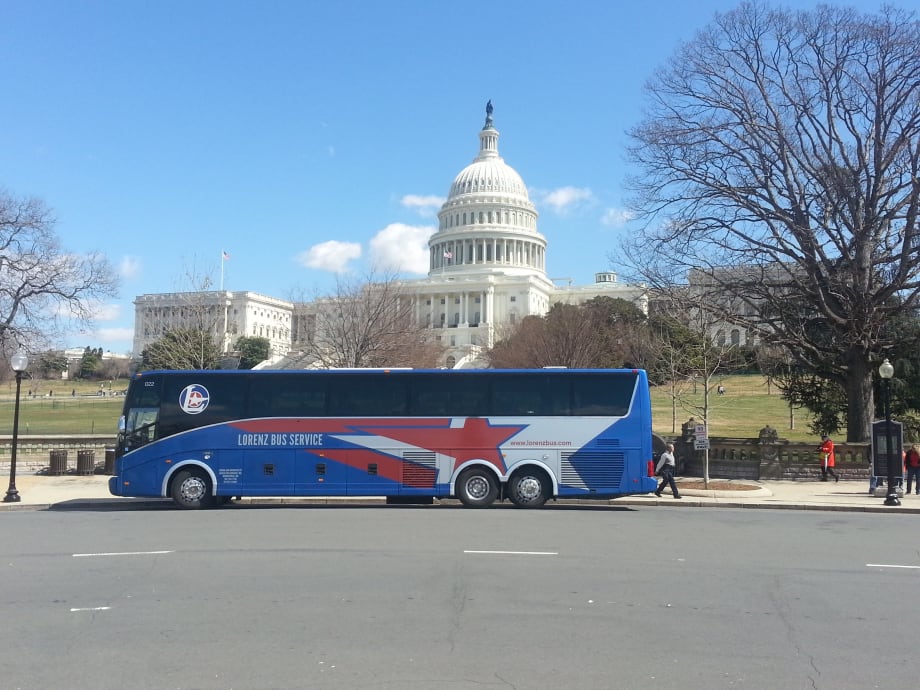
The Federal Motor Carrier Safety Administration (FMCSA) awarded nearly $1 million in grants to seven technical and community colleges across the country to help train veterans and their families for jobs as commercial bus and truck drivers. The funding is provided through FMCSA’s Commercial Motor Vehicle Operator Safety Training (CMV-OST) grant program.
“These types of programs are just one small way in which we can show our appreciation and commitment to our nation’s veterans, and thank them for their brave service,” said U.S. Transportation Secretary Anthony Foxx. “These men and women represent the absolute finest of our country, and with the help of programs like this, they will be prepared to be some of the safest commercial drivers on the road.”
FMCSA awards CMV-OST grants to a variety of educational institutions that provide truck driving training, including accredited public or private colleges, universities, vocational-technical schools, post-secondary educational institutions, truck driver training schools, associations, and state and local governments, including federally-recognized Native American tribal governments.
The 2016 FMCSA grants announced are projected to provide training for more than 250 students.
The awards were made to the following organizations:
Joliet Junior College, Joliet, Ill.
Hawkeye Community College, Waterloo, Iowa
Johnson County Community College, Overland Park, Kan.
Central Technical Center, Drumright, Okla.
Rogue Community College District, Grants Pass, Ore.
The Sage Corporation, Camp Hill, Pa.
Tidewater Community College, Norfolk, Va.
The Commercial Motor Vehicle - Operator Safety Training Grant Program was established by Congress in 2005 through the SAFETEA-LU to expand the number of commercial driver’s license (CDL) holders possessing enhanced operator safety training to help reduce the severity and number of crashes on U.S. roads involving large trucks and buses.
In addition to providing grants under the CMV-OST program, FMCSA is proposing to take additional steps that recognize the unique skills and training obtained by members of our armed services. Specifically, as part of the agency’s continued commitment to supporting our veterans, and as required by the FAST Act, FMCSA is proposing a three-year pilot program which allows a limited number of individuals between the ages of 18 and 21 to operate commercial motor vehicles in interstate commerce if they received specified heavy-vehicle driver training while in military service and are sponsored by a participating motor carrier.
More Motorcoach

METRO Opens Submissions for 2026 Motorcoach Awards
Nominations are now being accepted for METRO Magazine’s Operator of the Year and Innovative Operator of the Year awards.
Read More →
Biz Briefs: Alstom Lands Canadian Contract, LYT to Supply California TSP, and More
In METRO's latest installment, we take a look at recent news from Complete Coach Works, Beep, FlixBus, and more partnerships making headlines across the transportation sector.
Read More →
Biz Briefs: RIPTA Unveils New Frontrunners, Clevland RTA Adds New Siemens, and More
In METRO's latest installment, we take a look at recent news from Siemens, Prevost, Dodge, and more partnerships making headlines across the transportation sector.
Read More →
People Movement: Holly Arnold Joins Transdev and More
In this edition, we also cover recent appointments and announcements at Pace, CamTran, MCI, and more, showcasing the individuals helping to shape the future of transportation.
Read More →
ABA Report: Motorcoach Travel Generates $161.6B Economic Impact
The 2025 analysis finds motorcoach travel supported nearly 900,000 jobs and generated $28 billion in federal, state, and local taxes.
Read More →
CharterUP’s Armir Harris on Technology, AI, and the Future of Group Mobility
In a recent episode of METROspectives, CharterUP Founder/CEO Armir Harris discussed the company’s evolution from an online charter bus marketplace into a technology platform supporting public- and private-sector mobility and much more.
Read More →
People Movement: ABC Names John Walsh as Chief Commercial Officer
In this edition, METRO also covers recent appointments and announcements at the DART, STV, and more, showcasing the individuals helping to shape the future of transportation.
Read More →
From Surviving to Thriving: Building Stronger Transportation Organizations
Bus Business Consultants founder Brian Dickson shares lessons on leadership, organizational health, and creating options for long-term success in a changing transportation industry.
Read More →
Biz Briefs: Luminator Marks Milestone and More
From manufacturers and suppliers to transit agencies and motorcoach operators, these updates offer a snapshot of the projects, partnerships and business moves driving the industry forward.
Read More →
ABAF Study Reveals Growing Insurance Crisis for Motorcoach Operators
Preliminary findings show 98% of operators faced premium increases over the past five years, while shrinking insurer participation is putting added pressure on businesses and customers.
Read More →