



FMCSA proposes requirement for electronic on-board recorders
Rule would require interstate commercial truck and bus companies to install electronic on-board recorders to monitor their drivers' hours-of-service (HOS) compliance. The requirement also would relieve interstate motor carriers from retaining certain HOS supporting documents, such as delivery and toll receipts.

On Monday, the Federal Motor Carrier Safety Administration (FMCSA) issued a regulatory proposal that would require interstate commercial truck and bus companies to install electronic on-board recorders (EOBRs) to monitor their drivers' hours-of-service (HOS) compliance.
The proposed rule also would relieve interstate motor carriers from retaining certain HOS supporting documents, such as delivery and toll receipts, which are currently used to verify the total number of hours drivers spend operating the vehicle.
This part of the proposal fulfills an order of the U.S. Court of Appeals for the District of Columbia, requiring FMCSA to publish a Notice of Proposed Rulemaking regarding supporting documents by Jan. 31, 2011.
Several carriers, including Schneider National, Maverick USA, J.B. Hunt, Knight Transportation and U.S. Express Enterprise, have already installed EOBR technology on their fleets. Approximately 500,000 carriers would be affected by the proposed rule.
Under the proposal, interstate carriers that currently use Records of Duty (RODS) logbooks to document drivers' HOS would be required to use EOBRs. Short-haul interstate carriers that use timecards to document HOS would not be required to use EOBRs.
Carriers that violate this EOBR requirement would face civil penalties of up to $11,000 for each offense. Non-compliance would also negatively impact a carrier's safety fitness rating and DOT operating authority. In April 2010, FMCSA issued a final rule that mandates EOBRs for interstate carriers with serious patterns of HOS violations.
This proposed rule also continues the U.S. DOT's partnership with Cornell on the e-Rulemaking Initiative, an important step toward keeping President Obama's promise of opening government to more effective citizen participation.
The Cornell e-Rulemaking Initiative makes the federal regulatory process more accessible to the public through Regulation Room, an online public participation environment where people can learn about and discuss proposed federal regulations and provide effective feedback to the U.S. DOT.
Citizens can find more information on the Cornell online effort and provide comments on the proposed rule at regulationroom.org over the next 60 days. The U.S. DOT encourages participation in this rulemaking through Regulation Room, but the public may also submit comments to the U.S. DOT docket at regulations.gov.
The comment period begins once the proposed rule is published in the Federal Register. Read the proposal and information about how to submit comments here.
More Motorcoach

From Surviving to Thriving: Building Stronger Transportation Organizations
Bus Business Consultants founder Brian Dickson shares lessons on leadership, organizational health, and creating options for long-term success in a changing transportation industry.
Read More →
Report: Canadian Motorcoach Industry Generates $4.4B in Economic Impact
The 2025 Motorcoach Economic Impact Report finds motorcoach travel supported nearly 25,000 jobs and generated $980 million in federal, provincial, and local taxes.
Read More →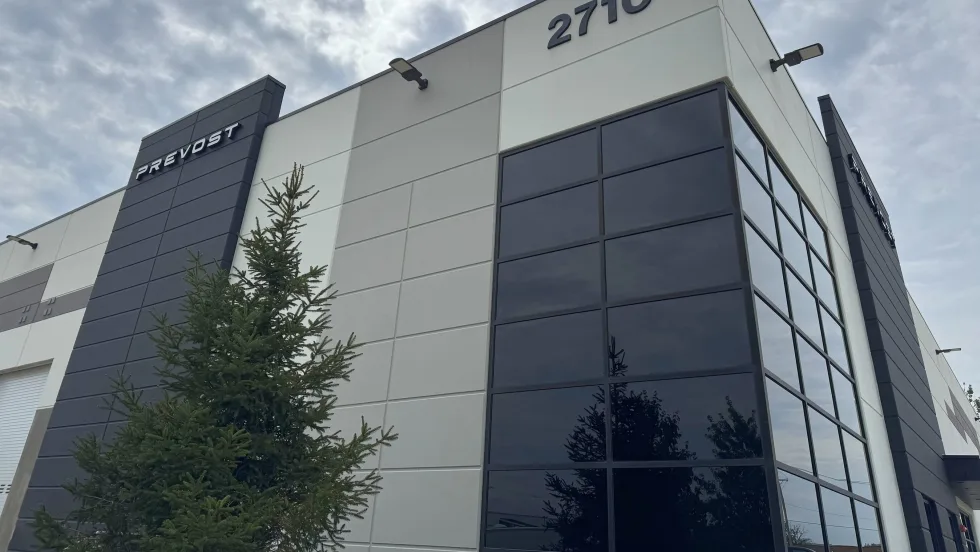
Prevost Opens Expanded Chicago-Area Service Center
The $8.1 million Elk Grove Village investment nearly triples facility space while adding service capacity, parts storage, and customer amenities.
Read More →
People Movement: Dan Dipert Coaches Adds Third-Generation Leader, Keolis Names New Valley Metro VP/GM, and More
In this edition, we also cover recent appointments and announcements at the Wabtec, SilverRide, HNTB, and more, showcasing the individuals helping to shape the future of transportation.
Read More →
METRO Opens Submissions for 2026 Motorcoach Awards
Nominations are now being accepted for METRO Magazine’s Operator of the Year and Innovative Operator of the Year awards.
Read More →
Biz Briefs: Alstom Lands Canadian Contract, LYT to Supply California TSP, and More
In METRO's latest installment, we take a look at recent news from Complete Coach Works, Beep, FlixBus, and more partnerships making headlines across the transportation sector.
Read More →
Biz Briefs: RIPTA Unveils New Frontrunners, Clevland RTA Adds New Siemens, and More
In METRO's latest installment, we take a look at recent news from Siemens, Prevost, Dodge, and more partnerships making headlines across the transportation sector.
Read More →
People Movement: Holly Arnold Joins Transdev and More
In this edition, we also cover recent appointments and announcements at Pace, CamTran, MCI, and more, showcasing the individuals helping to shape the future of transportation.
Read More →
ABA Report: Motorcoach Travel Generates $161.6B Economic Impact
The 2025 analysis finds motorcoach travel supported nearly 900,000 jobs and generated $28 billion in federal, state, and local taxes.
Read More →
CharterUP’s Armir Harris on Technology, AI, and the Future of Group Mobility
In a recent episode of METROspectives, CharterUP Founder/CEO Armir Harris discussed the company’s evolution from an online charter bus marketplace into a technology platform supporting public- and private-sector mobility and much more.
Read More →